Category: Speciality Sprayers

Main category for all sprayers that are not horizontal booms

  • Spray Coverage in Carrot, Onion and Potato

    Spray Coverage in Carrot, Onion and Potato

    This research was performed with Dennis Van Dyk (@Dennis_VanDyk), vegetable specialist with the Ontario Ministry of Agriculture, Food and Rural Affairs.

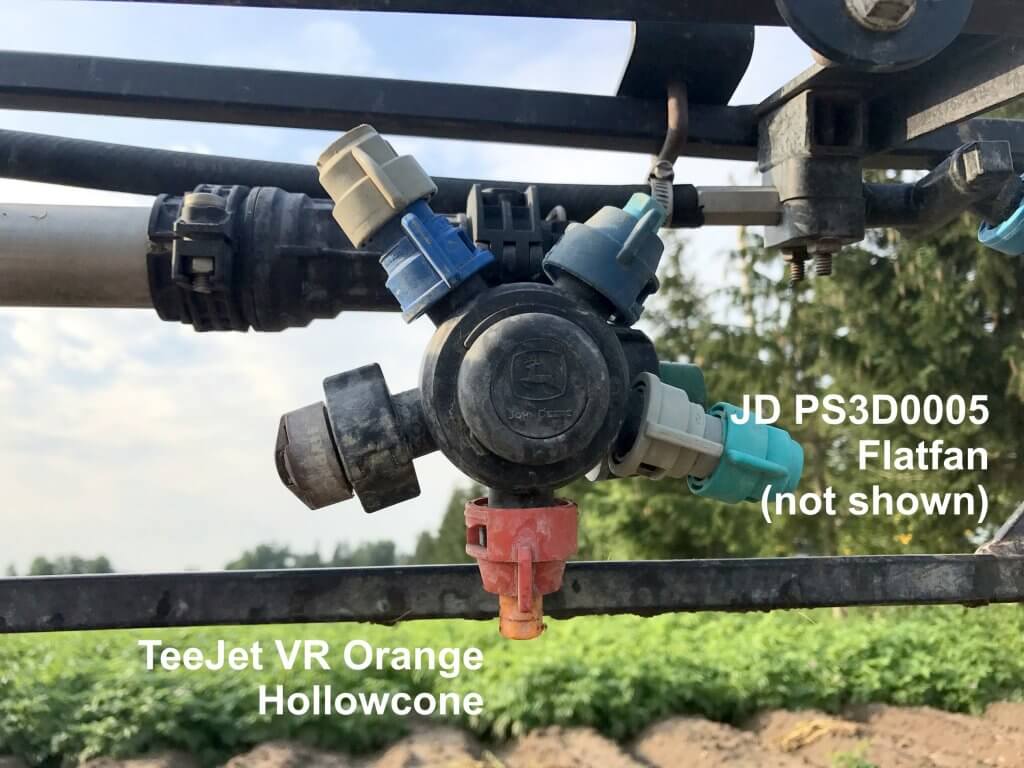
    Prior to 2017, Syngenta introduced the UK to the Defy 3D nozzle, which is a 100° flat fan, designed to run alternating 38° forward or backward along the boom. They prescribed a boom height of 50 to 75 cm, 30-40 psi, and travel speeds of 10 to 14 km/h in cereals and vegetables. Compared to a conventional flat fan, they claimed that the angle and Medium-Coarse droplets promise less drift and improved coverage.

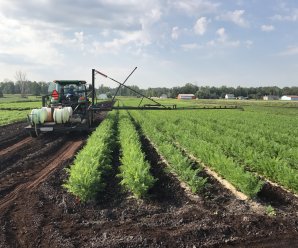
    In 2017, Hypro and John Deere began distributing the Defy 3D in North America. Our goal was to explore coverage from the 3D in vegetable crops. We compared the nozzle’s performance to common grower practices in onion, potato and carrot in the Holland Marsh area of Ontario.

    Experiment

    We used a technique called fluorimetry. A fluorescent dye (Rhodamine WT) was sprayed at 2 mL / L from a calibrated sprayer based on protocols generously provided by Dr. Tom Wolf.
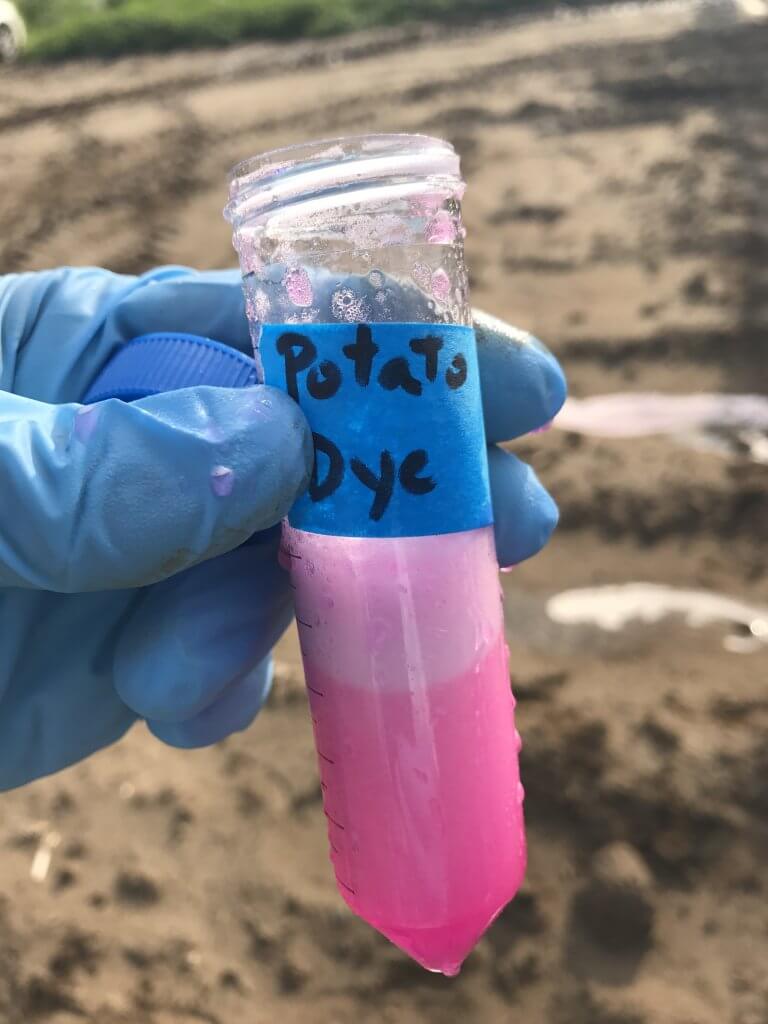
    Tissue samples from the top, middle and bottom of the canopy were collected from random plants.

    The samples were rinsed with a volume of dH2O and this rinsate was then tested to determine how much dye was recovered.

    The tissues collected were dried and weighed to normalize the samples to µL of dye per gram dry weight to allow for comparison.

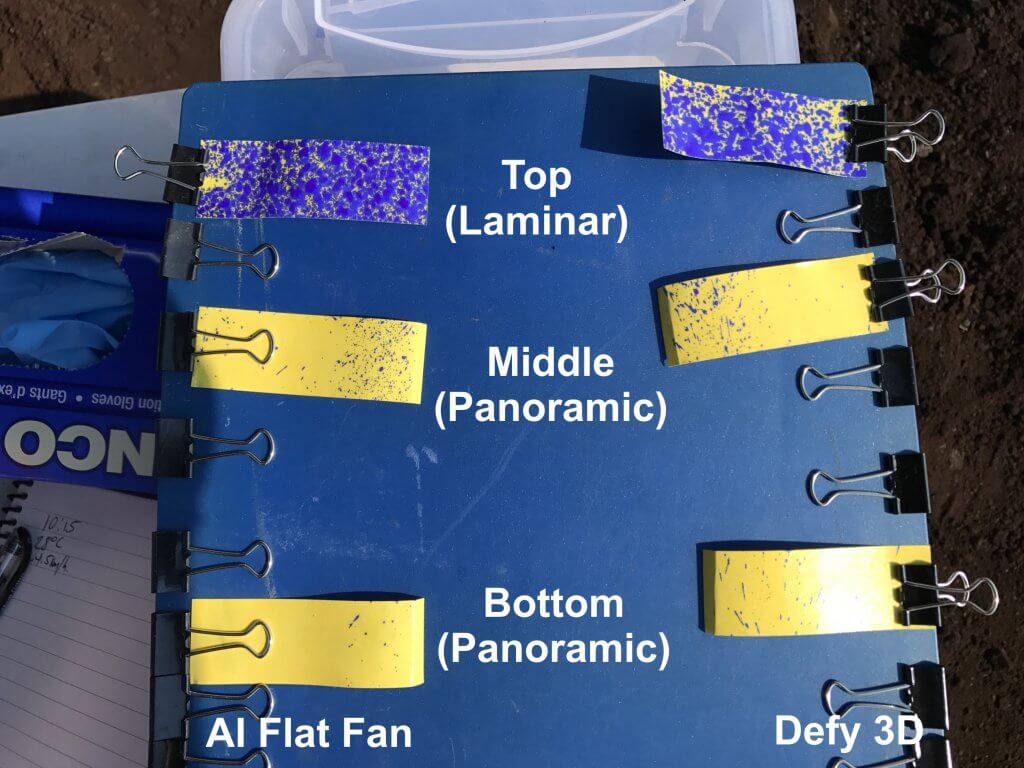
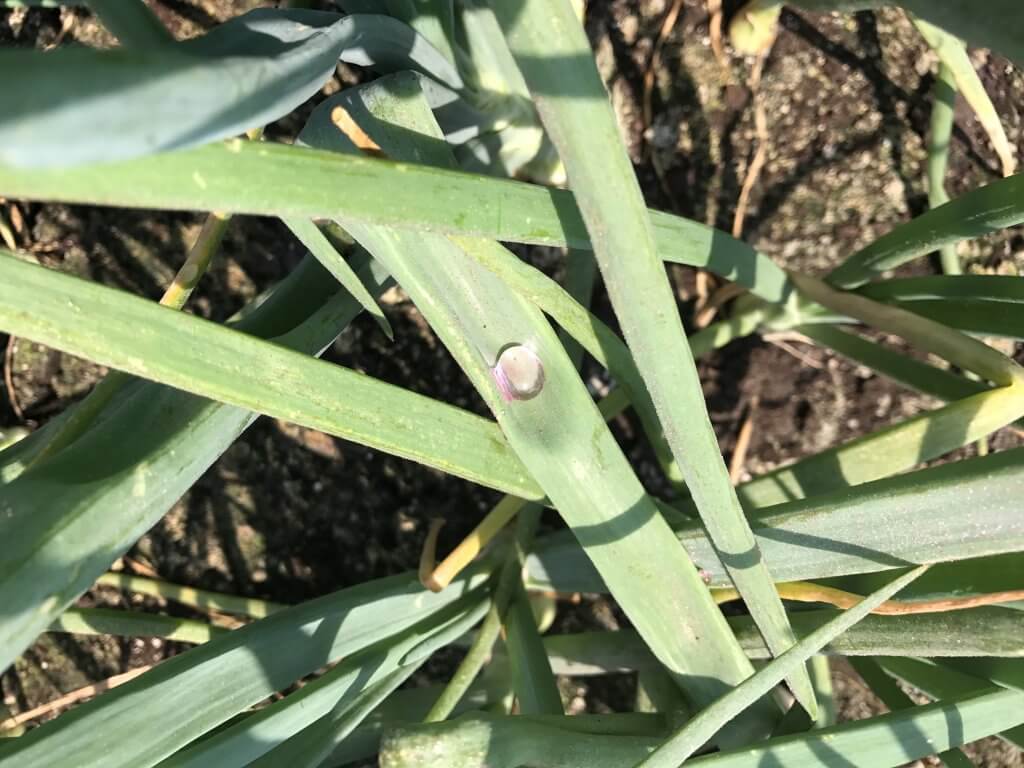
    In addition, we used water-sensitive paper as a check in key locations in the canopy to provide laminar and panoramic coverage. Papers were digitized and coverage determined as a percentage of the surface covered.

    In carrot and onion, we compared a hollowcone, an air-induction flatfan, and alternating 03 3D’s at 500 L/ha (~40 cm boom height, ~3 km/h travel speed, ~27ºC, 3-9 km/h crosswind, ~65% RH).

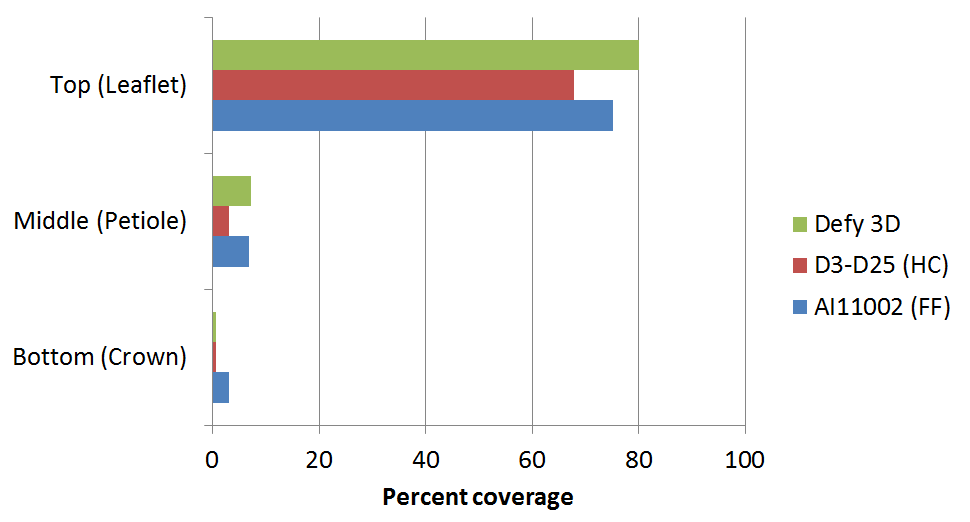
    In potato we compared the alternating 05 3D’s to a hollowcone at 200 L/ha (~55 cm boom height, ~10.5 km/h travel speed, ~22ºC, 6-8 km/h crosswind, ~65% RH).

    Water-sensitive papers were originally intended as a coverage check, and not as a source of analysis, but their use revealed interesting information. The following images are the papers recovered a single pass in each crop.

    Carrot

    Onion
    Potato

    Results

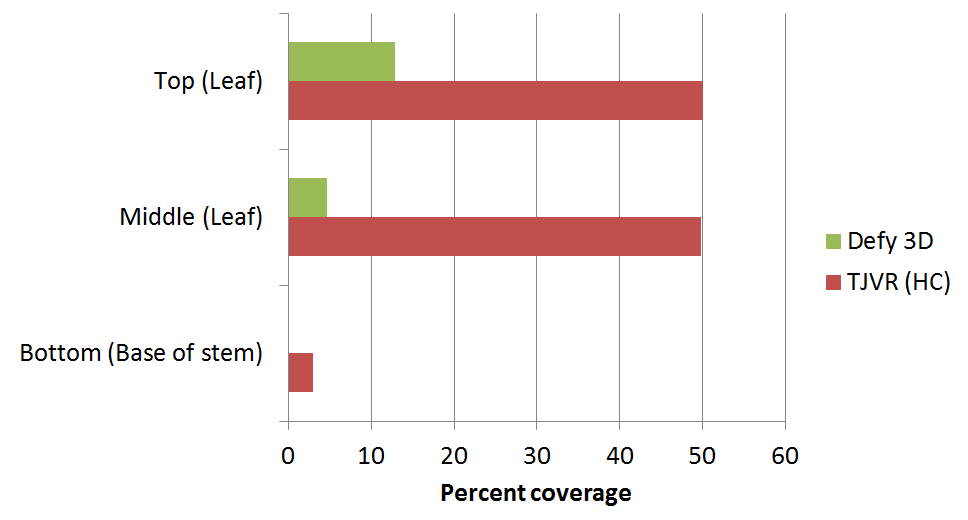
    The following table represents the percent coverage of these paper targets. Papers were digitized using a WordCard Pro business card scanner and analysis made using DepositScan software. This table is small, but you can zoom in for a quick comparison. The following three histograms show the same data graphically for carrot, onion and potato, respectively. Remember, this only represents a single pass, so don’t draw any conclusions about coverage yet.

    Carrot
    Onion
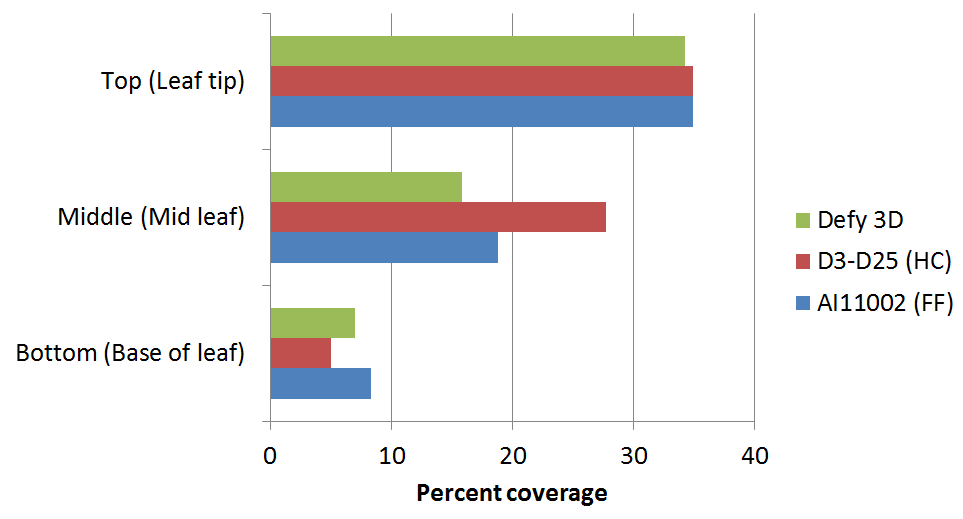
    Potato
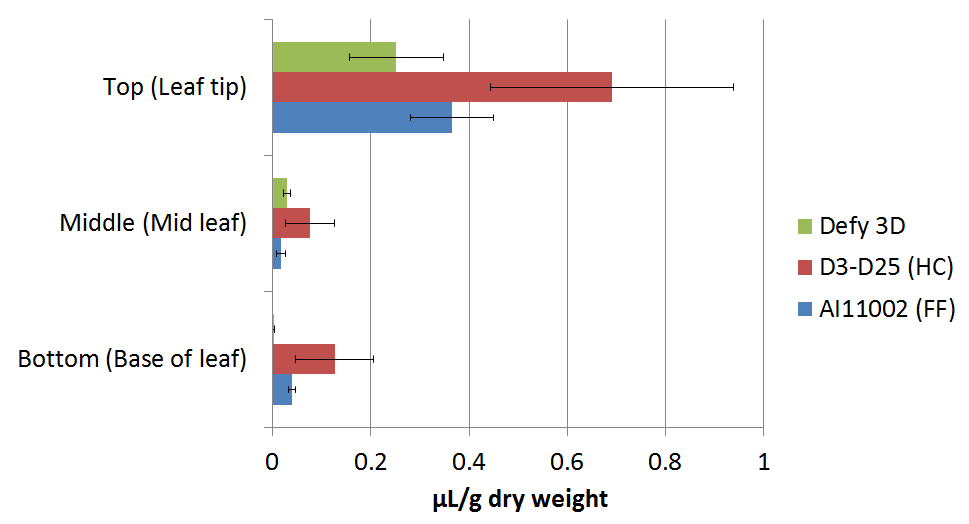
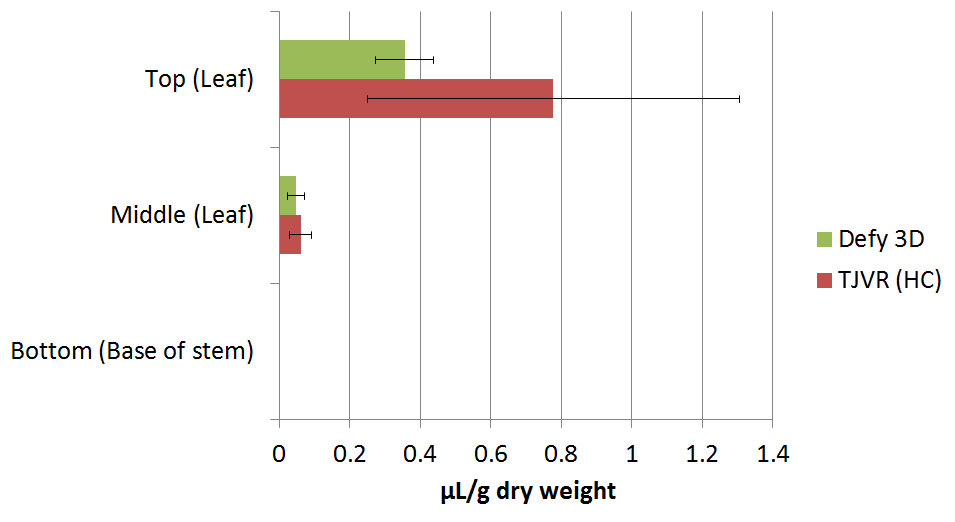
    It was interesting to note differences in coverage observed on the papers versus the results of the fluorimetric analysis. It was anticipated that while water-sensitive paper serves for rough approximation of deposition, fluorimetry would be far more accurate. This is because of the droplet spread on the paper, and the evaporation and concentration of a spray droplet en route to the target. Again, here is a small table, and again, the next three histograms show the same data graphically for carrot, onion and potato, respectively.

    Carrot

    Onion
    Potato
    Observations

    While water-sensitive paper is an excellent diagnostic tool for coverage, fluorimetry allows for greater resolution. The high variability in coverage meant little or no statistical significance, however the means suggested the following:

    • In carrot, the 3D deposited more spray at the top of the canopy.
    • In onion, the hollowcone spray had a higher average deposit, and penetrated more deeply into the canopy.
    • In potato, the hollowcone deposited more spray at the top, with little or no difference mid-canopy.

    Each nozzle performed well at the top of the canopy, which is quite easy to hit. Certainly they exceeded any threshold for pest control. With the possible exception of hollowcone in onion, nozzle choice had only minor impact on mid-bottom canopy coverage. And so, if coverage is not a factor for distinguishing between these nozzles, we should consider drift potential. Due to the comparably smaller droplet spray quality, the hollowcone is far more prone to off target movement. This leads us to select the AI flat fan or the 3D as the more drift-conscious alternatives.

    Future analysis would benefit from a larger sample size to reduce variability, and the inclusion of an air-assist boom to better direct spray into the canopy.

    Applitech Canada (Hypro / SHURflo) is gratefully acknowledged for the 3D nozzles. Thanks to Kevin D Vander Kooi (U of G Muck Crops Station) and Paul Lynch (Producer). Assistance from Will Short, Brittany Lacasse and Laura Riches is gratefully acknowledged. Research made possible through funding from Horticultural Crops Ontario.
  • The Agitation over Agitation

    The Agitation over Agitation

    Sprayers101 recently received a couple of seemingly unrelated questions about airblast sprayers:

    What are the advantages and disadvantages of mechanical versus hydraulic agitation? Why would someone want a stainless tank versus the cheaper poly or fiberglass options?

    Recognizing that each manufacturer has their own reasons for the features and materials used in their sprayers, we posed these questions to Mr. Kim Blagborne (formerly of Slimline Manufacturing). The following article was written from Kim’s response, and it turns out these two questions are very much related. Kim writes:

    This is a great debate among customers and manufacturers, and it’s difficult to stay neutral. Let’s consider the following:

    Hydraulic Agitation

    The flow required for hydraulic agitation requires about 30% of the pumps total capacity. This is very important because many sprayers cannot achieve, or maintain, this minimum requirement whilst spraying. This may be why it’s rare for a sales person to demonstrate agitation while the sprayer is spraying; quite often, the agitation slows or even stops. And, of course, because everyone gets wet.

    Let’s say an airblast sprayer has a pump with a manufacturer-listed capacity of 26 gallons per minute (gpm) (Click to download the spec sheet for the pump). The figure in that output chart is determined on a bench at 540 rpm and at 50 psi. However, when an operator uses that pump in the field, they run it at ~150 psi, and that brings the pump capacity down a bit to 25.5 gpm.

    Now we build in the line pressure drop associated with the sprayer’s plumbing. Effectively, another 8-10% of the pump’s output is lost to plumbing (a figure easily measured by collecting the total output capacity of the pump). Let’s say we are now down to a practical capacity of 23 gpm.

    If the operator’s crops are on 14 foot rows, it would be reasonable to spray 200 gpa at a travel speed of 3 mph at 150 psi. With both booms spraying that’s a required flow of 16.8 gpm.

    Remember, our hypothetical 26 gpm pump can only provide 23 gpm in the field. When we subtract the 16.8 gpm required for spraying, we’re left with 6.3 gpm excess capacity for agitation. But, we said we needed 30% of the pump’s 26 gpm capacity, and that comes out to 7.8 gpm. We’re short by 1.5 gpm, or stated differently, we’re about 20% short of what we need.

    Why don’t we see that deficit? Because the flow to the booms is prioritized, and therefore the sprayer output matches the calibration, so everything seems OK. But no one sees the reduced return flow through the regulator, and certainly no one peeks into the tank while spraying to see that the hydraulic agitation is greatly reduced.

    And so, while everything looked great during loading, the spray mix (especially SC and WDG formulations) may not stay suspended correctly during spraying. In extreme cases, that could lead to burning a crop (high concentration) at the start of a spray job, and reduced efficacy (low concentration) at the end. We’re quick to blame the chemical, but no one ever thinks to question hydraulic agitation.

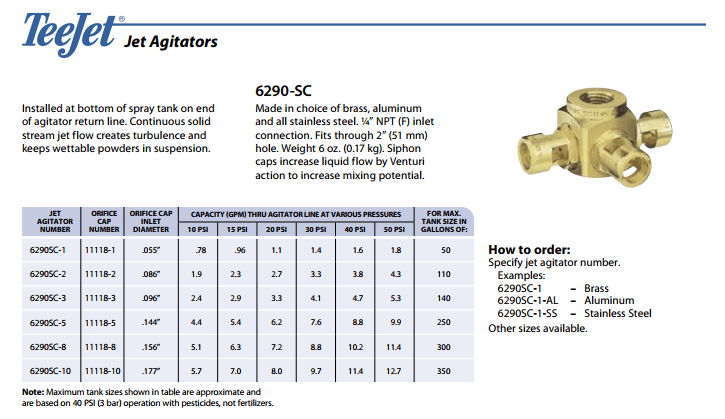
    Let’s consider it from another angle: TeeJet suggests a model number 62905c-5 jet agitator for a sprayer with a 250 US gallon tank. To correctly agitate the contents of this tank, we will need 30 psi and 7.6 gpm (see the chart below).

    Unfortunately, there is no simple way for an operator to measure the agitation pressure or the flow, so it goes unchecked. The only way to determine if the flow demand is satisfied is to apply the generic rule of 30% of pump capacity and make an estimate. That’s pretty loose math since we’ve already established that the listed capacity may not reflect reality.

    Still another angle: Many operators now employ the Gear Up, Throttle Down (GUTD) approach to match their sprayer air settings to the crop canopy. However, when we reduce PTO input speed we also reduce pump capacity. Remember our piston diaphragm pump with the 26 gpm capacity at 540 rpm? We still need 16.8 gpm to spray, but reducing the rpm’s by 100, per GUTD, drops our pump output to only 23.16 gpm.

    23.16 minus 16.8 equals 6.36, and we needed 7.8 gpm to maintain sufficient hydraulic agitation. Oops.

    Mechanical Agitation and Tank Material

    There are definite advantages to mechanical agitation. It is not affected by the PTO speed because it is already excessive at 540 rpm. This means there is no pump capacity issue and it allows the operator to take advantage of GUTD.

    There are also a few disadvantages. Unlike a hydraulic system, mechanical agitation requires maintenance, such as regular (daily?) greasing. The packing where the the system inserts into the spray tank also requires occasional inspection and adjustment to prevent leaks.

    And of course there’s sticker shock. Many European manufacturers offer hydraulic agitation because it is ~$500.00 CAD less expensive. Further, mechanical agitation creates vibrational stress on tanks walls, which fiberglass or plastic tanks can’t handle for long. The solution is stainless tanks, which is a more expensive material. Further, stainless cannot be moulded around pumps and rotating parts, so more steel is required, adding to expense and weight.

    In my opinion, there is sufficient benefit to stainless to easily recover the investment. Beyond permitting mechanical agitation, there’s durability. We have stainless tanks built in 1948 that are still operating today, and we’ve never found a plastic or fiberglass tank that can claim that. There’s also sprayer sanitation. It has long been know that stainless cleans more easily and more reliably that plastic or fiberglass, especially as the tanks begin to age.

    Closing

    The decision to buy a sprayer with hydraulic agitation or mechanical agitation lies, ultimately, with the consumer. But be sure to look past the price tag, and under the hood. Ensure that you have sufficient agitation to properly suspend your tank mix, and give you the flexibility to Gear Up and Throttle Down to improve your spray coverage and efficacy.

  • Exploding Sprayer Myths (ep.9): Airblast Air

    Exploding Sprayer Myths (ep.9): Airblast Air

    In this, the season three finale of Exploding Sprayer Myths, we join Jason and the Tom-inator as they “tackle” airblast air settings. There are a whole suite of articles dedicated to this topic, linked below the video. It is, arguably, the most important adjustment you can make to an airblast sprayer.

    Will there be more Exploding Spray Myths episodes? In the words of a great man: “We’ll be back.”

    Special thanks to Don Murdoch and the Simcoe Research Station.

  • The Vermorel Nozzle – Humility in the Face of History

    The Vermorel Nozzle – Humility in the Face of History

    It’s a rainy Friday in 2017 and I decided to deal with the articles, factsheets, manuals and other sprayer-related documents that have been piling up on my desk for a year.

    My filing strategy is based on some advice I got from Dr. Bernard Panneton (Application Tech Guru) back in 2009. He said to read each document and then file them according to content, not by author or date. That way when I need something, I can search up the subject and find everything that might be relevant. More than 1,200 files later, the system works. No Dewey Decimals in my office, thank you.

    What I’ve noticed as I sift through this eclectic pile of wisdom, is that many of the application methods I experiment with, or generally promote, are rarely entirely novel. Crop protection has evolved considerably (think pulse width modulation, crop sensing and remote piloted aerial application systems), but the fundamentals of spraying haven’t changed that much.

    Case in point.

    I just found a photocopy of a 1906 book called “Ginseng – It’s Cultivation, Harvesting, Marketing and Market Value, with a Short Account of Its History and Botany“. Great title. We obviously appreciated florid language in technical manuals 100 years ago. Here’s an excerpt that caught my eye:

    “When applied to plants, the finest nozzle obtainable must be used. The Vermorel is perhaps the best. Now make no mistake: this spray must be a spray, not a dribble, nor a drizzle, nor a squirt, but a mist. It must look like a little fog at the end of the hose and must reach every part of the plant, particularly the undersides of the leaves, mind, just enough so it won’t trickle off.”

    Poetry. And to make my point, it’s similar to what I’d tell a ginseng grower today. Granted, I’d lead them into a lower-range-of-Medium droplet size and help them achieve the described coverage using drop arms. But what on Earth is a “Vermorel nozzle”? That’s not one I have in my motley collection.

    I turned to Virginia Tech’s Museum of Pest Management. I hope they’ll forgive me for lifting their content, but it’s too wonderful not to share. They note the contributions of Charles Valentine Riley. Born in London, England in 1843. He was a multi-talented Renaissance man. He was a pioneer of entomology in the United States and is often referred to as the founder of biological control in America.

    Charles Valentine Riley

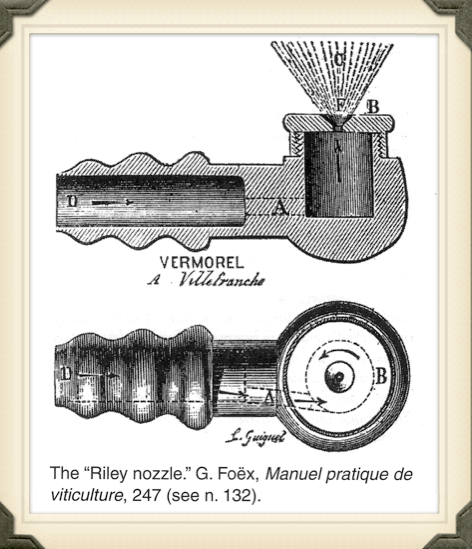
    Two of his greatest contributions to pest management included founding the field of biological control and the invention of the Riley spray nozzle (1889). The Riley nozzle was sold as the Vermorel nozzle. It produced a fan pattern and was the primary nozzle used in pesticide application in the United States and Europe well into the 20th century. The auspicious Mr. Riley died in a bicycle accident in 1895.

    The Vermorel nee Riley Nozzle

    It was Riley’s nozzle, and the invention of some other early European pesticide application devices, that inspired W.B. Alwood (publisher of orchard spraying techniques c.1899) to import these devices and adopt them to Virginia conditions. The rest is history.

    I tell you this because of what I found beneath the book touting the Vermorel; A 2015 TeeJet brochure for their TXVK hollow cone nozzles. I’m aware that the engineering behind the TXVK molded poly body and ceramic orifice is considerable compared to the humble Vermoral. But on closer inspection the fundamental designs aren’t so different. That realization both surprised and pleased me and compelled me to write this article.

    I’m not certain what my point is. I suppose it’s just good to be reminded that the next time you want to invest time, money and effort into a “new idea” you might consider a little historical research. Odds are, you’re not the first person to recognize the problem, or propose a solution. A little time in the archives also instills respect for those that were there first. Let’s not waste time repeating their efforts, but stand on their shoulders and advance what they’ve already pioneered.

    And if anyone has one of Riley’s Vermorel nozzles, I’d love to add it to my collection. Drop me a line.

  • The Misplay of our Generation

    The Misplay of our Generation

    We tend to overestimate the effect of a technology in the short run and underestimate the effect in the long run.

    –Amara’s Law of Computing

    We tend to overestimate the effect of a stewardship mistake in the short run and underestimate the effect in the long run.

    –Wolf’s Adaptation of Amara’s Law to Agricultural Stewardship

    August 9, 2017

    Since June of 2017, we’ve been hearing reports of widespread dicamba damage symptoms in soybeans throughout the US mid-south and midwest. It appears that millions of acres could ultimately be affected, and yield impacts are unknown at this time.

    For those new to the issue, dicamba is a broadleaf herbicide in the Group 4 mode of action group, a benzoic acid. It’s an important tool for herbicide resistance management for weeds like palmer amaranth (Amaranthus palmeri) and waterhemp (A. tuberculatus), populations of which have become resistant to Group 2 (ALS inhibitors), Group 5 (triazines), Group 9 (glyphosate), Group 14 (PPO inhibitors) and Group 27 (HPPD inhibitors) in some places.

    Dicamba is a volatile herbicide, discovered in 1942 and first registered in the US in 1967. Its primary use was in corn and other cereal crops, lawns, and rights of way, at comparatively low doses, and relatively early in the season.

    Calling a pesticide volatile means it can evaporate after application, either from a liquid or a dry deposit, for hours or sometimes days after application. The resulting vapor cloud can move unpredictably, depending on atmospheric conditions, and affect plants long distances away. Higher temperatures increase vapor loss.

    Starting this year, dicamba-tolerant soybeans and cotton (Xtend varieties) were sprayed with new lower-volatility formulations of dicamba, XtendiMax, Engenia, and FeXapan, to control certain broadleaf weeds (including the Amaranth species above) without harming the soybeans. Problem is, dicamba can harm non-Xtend soybeans and other plants, even at very low doses. And these registrations were for applications that occurred later in the season, at higher doses than before.

    I usually don’t get involved in people’s decision about whether to spray, or what to spray. But I do get involved when it comes down to how to spray. That’s my job. The real question to me is “can this product be used safely in cotton and soybeans?” Right now, the jury’s out on that one.

    In my business, our guiding principles are what some people have called the “Three Es of Application”, Efficacy, Efficiency, & Environment.

    We use sprays to control pests. That’s the only reason. We have to apply them so that they work, or else it’s a wasted effort. That’s the efficacy part. We also need to use our resources, time, money, etc., efficiently so the whole process doesn’t bankrupt us and we have time left for other important tasks.  That’s efficiency. And finally, we need to protect the environment, and that means making sure the product lands where it’s intended.

    None of these three priorities trumps the others. All need to be met to the best degree possible. And due to ever-changing conditions, we will typically change our approach to emphasize one or two of these three over the others, to have a working system.

    Simply put, pesticides belong on target surfaces covered by the swath of the sprayer, and nowhere else. If they do move elsewhere (something we’ve come to view as inevitable), regulators conduct risk assessments to ensure that this movement does not result in harm. If harm is possible, mitigating tools such as application timing, product rate, spray method, and buffer zones may be imposed. If those tools aren’t enough to ensure safety, regulators deny product registration. That’s their job.

    But even if no harm is done by trespass, the products still need to be on-target. That’s stewardship. It’s a principle whose adherence gives license for a technology to be used. It gives others faith in our competence. Practicing this principle when it’s easy prepares us for hard times.

    I respect our regulatory process, and know it to be increasingly conservative with regards to risk the less data there are. I worked for the PMRA (the Canadian pesticide regulatory agency) as an application expert for five years. I know the system isn’t perfect and can make mistakes.  I know the system can be political. Usually it’s by being too careful. With dicamba, it looks like the opposite happened.

    The reason we’re seeing dicamba leaf cupping everywhere isn’t because all applicators suddenly forgot how to spray. They didn’t suddenly get reckless. They didn’t wilfully ignore all the training that the dicamba manufacturers and state and provincial governments developed in preparation for the product launch.

    Instead, dicamba drift reports arose from a combination of extreme sensitivity and easily identified symptoms, as well as an unexpected (by some) amount of vapor drift. Even good applications appeared to create problems. Despite warnings from local experts, regulators and registrants didn’t see it coming.

    Experienced agronomists have suggested that the observed dicamba trespass of 2017 implicates both temperature inversions and vapor drift. And although the new product labels advise against spraying under inversion conditions, they don’t say a word about vapor drift, the conditions that give rise to it, or how to protect against its occurrence. Not one word. I’ve searched the Xtendimax, Engenia and FeXapan labels. Nada.

    Seems that the regulators and registrants felt confident enough in the reduced volatility of dicamba, based on their internal empirical data and modeling, that they didn’t need to mention it on the label. Calling that a mistake is an understatement.

    I’d call it the biggest spray application misplay I’ve ever seen.

    A part of the problem may be the enormous scale on which this new use of dicamba was introduced, over 25 million acres of Xtend crops. Scale-up errors are common in many industries. Emergent properties related to scale can’t readily be predicted by empirical data and models. Especially when the underlying data are scant.

    So what to do? The continued success of agriculture depends to continued access to safe crop production tools. Irresponsible use threatens that. And by irresponsible use, I don’t just mean application. I also mean registration, promotion, sale, and support. The whole stewardship package.

    When problems occur, we need to be quick on our feet to acknowledge them, to support those affected, and to try to understand the cause and prevent the situation from continuing or getting worse.

    The current industry response appears to be the exact opposite. What I’ve seen is full of denial, downplaying, innuendo, blaming, and entrenchment.

    Why is such an important issue in pesticide stewardship handled so poorly?

    The immediate victims of this situation are the producers that depend on new technologies. But the long-term victim is agriculture as a whole. The lack of humility and leadership by many of the proponents of this technology, those with no small financial stake in its continued use, hurts not just them, but all of us involved in farming. This is not stewardship. It’s not license. It’s short sighted and reckless.

    Over my career, spray application has generally become safer for the operator and the environment. A big part of our success has been the adoption of low-drift nozzles, the de-facto standard for modern pesticide application. The development of less toxic and less persistent pesticides has also been very important. We can avoid a lot of problems with good chemistry. I’ve been proud to tell this story.

    I want to stay proud of our story. And in this case, that requires admitting to mistakes that were made and taking corrective action that is in the best interest of our entire industry. Agriculture will persist longer than company brands and titles. It takes priority.

    It’s still too early to fully understand all the reasons for the widespread dicamba damage. But it’s not too soon to say that much of this could have been prevented with a smaller rollout, with greater collaboration with government and university experts during registration, and with more honest information on dicamba volatility on product labels. Call it Volatility Humility.

    We’ll all pay for the mistakes that were made. We’ll likely have more stringent and expensive registration protocols. More restrictive application parameters. Strained relationships. More distrust of agriculture.

    And as always, an ounce of sweet prevention would have been much better than the pounds of bitter cure that will surely be required to make this right.