Category: General Operation

Articles that discuss general field sprayer operation and productivity factors

  • The Most Important Developments in Spraying

    The Most Important Developments in Spraying

    Some things have improved a lot. Others have lost ground.

    Some years ago, a few of us weed scientists sat around a table and debated the most important developments in agriculture in our lifetimes. It was a great discussion, and we arrived at a few that included direct seeding (for its soil and moisture conservation as well as improved fertilizer placement), GMO crops (for slowing Group 1 and 2 herbicide resistance), and the abandonment of summer fallow in much of western Canada. Let’s apply this exercise to spray application to see what we come up with.

    What follows are my version of the most important spray technology developments in the last 50 years.

    1. Low-drift Nozzles. Spray drift is the biggest time management challenge and also perhaps the biggest public relations battle. These nozzles reduce drift, making more time available for spraying and doing it safely and effectively.
    2. Rate Controllers. I both love and hate these things. On the one hand, a rate controller matches sprayer output to travel speed. On the other, it has allowed spray pressures to go wherever they need, even beyond the optimum, to match travel speed, and that can lead to nozzle performance issues.
    3. Pulse Width Modulation. The pulsing nozzle fixes the rate controller problem mentioned above. Now, travel speed and pressure are independent. Plus, of course, a whole host of other flow management options, such as turn compensation and rate boosting, become available.
    4. Optical Spot Spraying. Once you see these in action, you can’t go back. Why would you spray a whole field when weeds only cover 10% of it? Products like WEEDit and WeedSeeker are proven green-on-brown performers after years of field success around the world.
    5. GPS Guidance. Some of us grew up with foam or disk markers, others learned to aim for brave family members perched on headlands. Achieving accuracy was stressful, overlap was insurance, and misses were common. The importance of this development is probably under-estimated.
    6. Sectional Control. The ability to adjust the spray width in individual nozzle steps makes sense, and this can come with or without PWM. In fact, that alone can save 5% of an annual chemical bill compared to conventional sections measuring about 10 to 15 feet. And it’s definitely better than the left boom or right boom options from the 70 and 80s.
    7. Operator Comfort and Safety. The refuge of the cab makes longer days bearable for all equipment, but for spraying it dramatically improves safety as well.

    But we’re far from done. We still need work in these areas.

    1. Cleaning and Waste Management. I can’t imagine another industry where managing potentially hazardous leftover materials are left to the discretion and circumstances of the applicator. Let’s make it easy and fast to thoroughly clean the sprayer and safely dispose of leftovers. Step 1 is smarter and simpler plumbing.
    2. Boom Stability. Booms are too high, resulting in more drift and poorer nozzle performance, and adding to operator stress. The sole reason is unsatisfactory levelling. It’s possible to solve this, but it seems to not be a priority.
    3. Weight. The road to productivity seems to be paved with larger, heavier machines. The side effects are fuel consumption, compaction, getting stuck. Let’s get smarter with frame design and logistics and talk acres/h rather than tank capacity and power.
    4. Cost. All farm equipment has seen cost increases that far outstrip inflation or any reasonable accounting of productivity and features. Sprayers lead the way. Yes, it’s possible to spins this as a value proposition. But it shouldn’t be necessary.
    5. Drift Management. Sprayer design continues to ignore drift management. We need sprayers that produce less drift by design, and this requires consideration of tractor unit, wheel, and boom aerodynamics. It’s more than a droplet size issue.
    6. Direct Injection. Although very handy for single product application, the plethora of product formulations and mixes has limited the success of direct injection systems. The complexity of injecting at the nozzle, and the resulting lack of available systems, has stymied some very attractive options, such as site-specific rate or product use.
    7. Ergonomics. If you need training, or to call someone before using your new sprayer for the first time, something’s wrong. Interfaces need to be intuitive and simple. The golden age of spray monitors was the 1980s. Those featured a main power toggle switch, a pump power switch, boom section switches, an agitation switch, and a simple way to enter the important information which was basically desired application volume. The screen can still be pretty, and you can still paint and monitor or tweak all the functions if you like that. But let’s at least have different tiers so beginners can also use the machine. Make interfaces using the philosophy Steve Jobs instilled in his trusted designer Jony Ive with the first iPod: no more than three clicks to achieve any desired outcome.

    A few areas show promise and may suit certain niches.

    1. In-Crop Weed Sensing. The green-on-green sensing that has been made possible by machine learning has shown some encouraging early success. Continuing improvements will eventually bring its reliability to within commercially acceptable standards. There is significant activity below the radar in this area, as all players recognize the enormous upside of a breakthrough.
    2. Autonomy. While dispensing a pesticide adjacent to sensitive areas isn’t exactly the low-hanging fruit of autonomy, such field sprayers will have a fit in the temperate plains of North and South America, Australia, and Asia and may help solve the cost and weight problem.
    3. Drone Application. The rapid pace of advancement in remotely piloted aerial systems, along with a seemingly low barrier to entry of new companies, will put pressure on the industry to make a decision on this alternate application method. If it can be done safely, it will have a dramatic impact.

    If you want to improve your sprayer, don’t ignore the small things you can do in your operation. Although we’re conditioned to look for game-changing technology, the most sustained improvements don’t come from a single innovation, but from a period of persistent evolution. A lot of small improvements add up. Spray application is no different.
  • Perspective on Rates, Volumes and Coverage

    Perspective on Rates, Volumes and Coverage

    This short article is a thought exercise designed to give some perspective on chemical rates, carrier volumes and the foliar area we expect them to protect.

    Imagine we are spraying the fungicide Captan on highbush blueberry. In Canada, the label rate is to apply 2kg/ha (28.5oz/ac) of planted area. Captan is 80% active ingredient, so a quick unit conversion tells us our objective is to apply 160mg of active ingredient per m2 of planted area. Let us suppose we will use 500L of carrier per hectare (53.5 gal/ac), which converts to 50mL/m2.

    Now let’s say the blueberry patch is mature and well pruned. Each plant has a footprint of 1.2m by 1.2m (4ft by 4ft) and is 1.5m (5ft) high. The Leaf Area Index (LAI) is the one-sided green leaf area per unit ground surface area (LAI = leaf area / ground area) in broadleaf canopies. Assuming a conservative LAI of 2, that’s 2.88m2 (65ft2) of leaf surface area per plant. We double that figure since we want to spray both sides of the leaves, and then assuming the bushes are planted on 3m (10ft) alleys we arrive at a total foliar surface area per planted area of 3.25m2/m2 (3.25ft2/ft2).

    A grower with his mature, well-pruned blueberries. 4′ x 4′ on 10′ alleys.

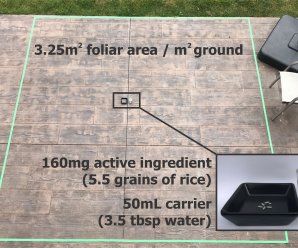
    Let’s take these figures and convert them to something we can picture. An average grain of rice weighs 29mg and there are 15mL in a single tablespoon. What this means is that a sprayer operator’s goal is to dissolve active ingredient with a weight equivalent to 5.5 grains of rice in 3.5 tbsp of water and distribute it evenly over 3.25m2 (35ft2) of surface area!

    Now that’s perspective.

    This photo shows how much foliar surface area exists in a square meter of mature highbush blueberry. In the centre is the typical amount of active ingredient and water that must be distributed over that area. It’s amazing what we ask of an air-assist sprayer.
  • Don’t try this tempting shortcut

    Don’t try this tempting shortcut

    There’s a call that I’ve been getting for 20 years now. It came again this week. Someone has a twincap with two small air-induced tips, and they’re applying herbicides and fungicides with low water volumes, often 5 gpa, sometimes less. They call because they want to know how much wind they can spray in. Is 30 km/h OK? They want my blessing.

    I don’t need to hear much more. Some nozzles are sold entirely on the premise that they provide superior coverage – more droplets per square inch – and that this improved coverage permits the reduction of water volumes. Furthermore, the claim goes, when water is reduced, the spray concentration increases and the whole darn package just works a lot faster and better.

    This line of thinking is as old as spraying itself. Applicators seek pesticide performance as well as productivity, and this approach gives them both. The proponents are well aware of their customers’ desires, and sell into it. “Use these tips and cut back on water. Any more than this just runs off anyways. You’ll get better coverage and better performance, get more spraying done.” It’s a convincing argument. Get an edge on your neighbour, the person who’s not in on the secret and is wasting time and water.

    Why don’t I embrace it? There are a few reasons.

    First, it doesn’t tell the whole story. Invariably it involves a twin nozzle setup. Use two nozzles, get more droplets, right? If that were true, believe me, I’d be advocating for quintuples.

    Fact is that the only factors that change droplet numbers are droplet size (spray quality) and water volume. Want more droplets at the same water volume? Make the spray finer. Want to keep spray quality and add droplets? Add water (not nozzles).

    The easiest way to improve coverage at the same volume is to use a finer nozzle, or to increase spray pressure. Depending on how far you go, you could make the spray finer and cut water, and still have more droplets per square inch.

    The hardest way to improve coverage is to purchase a twincap and buy two nozzles, each of them half the size. True, within any given nozzle type, smaller sized tips usually generate finer sprays. But why bother with two tips? They’re more expensive and plug more.

    If someone asks me how to improve coverage without changing water volume, I usually tell them to speed up a few mph. The rate controller will increase pressure and the spray gets finer. If speeding up is not possible, get one size smaller nozzle and run at higher pressure, same speed. Or keep nozzle and speed, and add some gpa, pressure will go up. It’s that easy. No twins necessary.

    Second, the twin nozzle/low volume approach exaggerates the value of the twin nozzle for herbicides. With small plants and relatively open canopies in the early season, plus our high booms and travel speeds, the twin tips are not adding a lot, if anything at all, to coverage. It remains a sum of droplet size and water volume, the angle is not important at this stage. Deposit is by turbulence and wind, most of the time.

    Third, low volume believers ignore a few potential problems. Drift is a big one. Low volume, fine spray operators are surrounded by nervous neighbours. They have fewer hours per day during which drift is acceptably low. And they definitely should not be on the field when wind is at 30 km/h. Basically, they’re a bit uncomfortable (at least they should be) and get less done per day.

    Another potential problem is evaporation. Most sprays, even when applied at lower volumes, are still 90% or more water. The same volume of water evaporates much quicker when atomized into smaller droplets. This has two main downsides: On their way to the canopy, small droplets evaporate and become even more drift prone, and may not impact at all. Those that impact evaporate shortly thereafter. Research has shown that pesticide uptake is better from wet than dry deposits.

    When Delta T (dry bulb minus wet bulb temperature) is high, evaporation can be so strong that it reduces pesticide performance or causes solvent burn. Fine sprays make it worse.

    I also hear about the use of oily adjuvants to control evaporation from small droplets. This could be even more dangerous. Small droplets drift, and evaporation to dryness is actually helpful in reducing the impact of that drift. How? It makes the small droplets disappear, with their remnants dispersing into the turbulent atmosphere. With oily adjuvants, the small droplets stick around and stay potent and their drift damage is much worse.

    Lastly, the practice is possibly off label. Water volume and spray quality label statements are designed to offer good performance and acceptable drift risk. While that part of the label is often a bit dated, it does provide better support from the manufacturer should something go wrong.

    If you’re spraying under hot, dry and windy conditions, the low volume, fine spray approach is irresponsible. Use sufficient water (7 to 12 gpa) to allow low-drift sprays, at least Coarse to Very Coarse, in some case, even coarser.

    Agronomists provide the best possible information for their clients, based on scientific evidence and experience and in accordance with their professional code of ethics. Sometimes the news we deliver aren’t what the customer wants to hear. But we have to represent the interests of all of us, collectively. I find that pretty important.

  • Tipping Sprayers and Spills

    Tipping Sprayers and Spills

    This short article is a reminder for sprayer operators to respect the possibility of tipping a sprayer. Every spring I catch wind of someone tipping over. When I can ask the operator questions I start with “Is everyone alright?” and “Was the sprayer full?“. Hopefully the answers are “Yes” and No“, but not always.

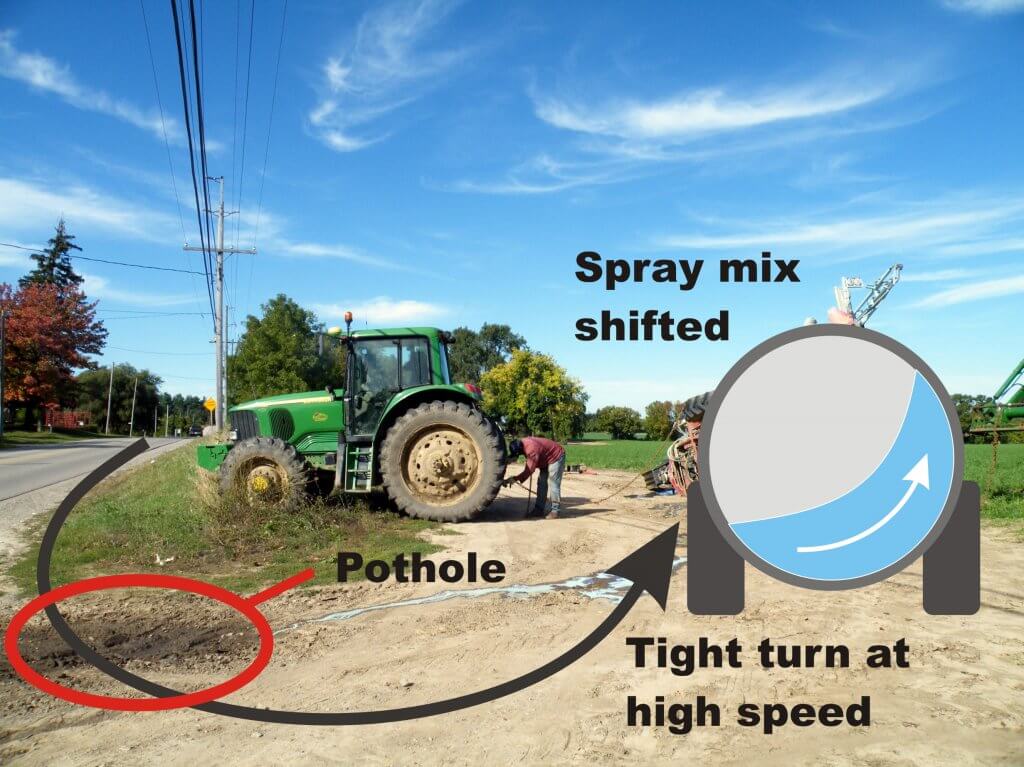
    The following factors are always involved:

    • Driving too fast. Usually entering a field at road speed.
    • Entering the field on a downhill slope and/or catching a pothole or soft shoulder.
    • Turning in a tight radius, usually 180 degrees. This is made worse when the sprayer is towed.
    • Sprayer is not completely full and “slosh” changes the centre of gravity.
    • Narrow tires and a narrow base.
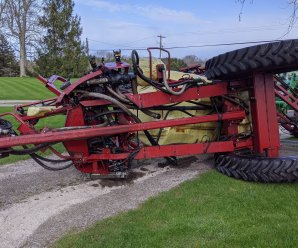
    Fortunately the sprayer wasn’t damaged and the spill was minor.
    A tight turn at high speed coupled with a depression in the entryway and tank slosh was enough to tip the unit. They had it righted and hauled out soon after. No one was hurt.

    I’ve heard as many cases involving seasoned operators as new operators. The next few pictures are of a veteran operator’s sprayer carrying 28%/ATS. Just like the images above, a tight turn at high speed sloshed the load just as a deep pot hole caught the outside front wheel. This sent the sprayer into a lane of traffic before it tipped back and over into the field. No one was hurt.

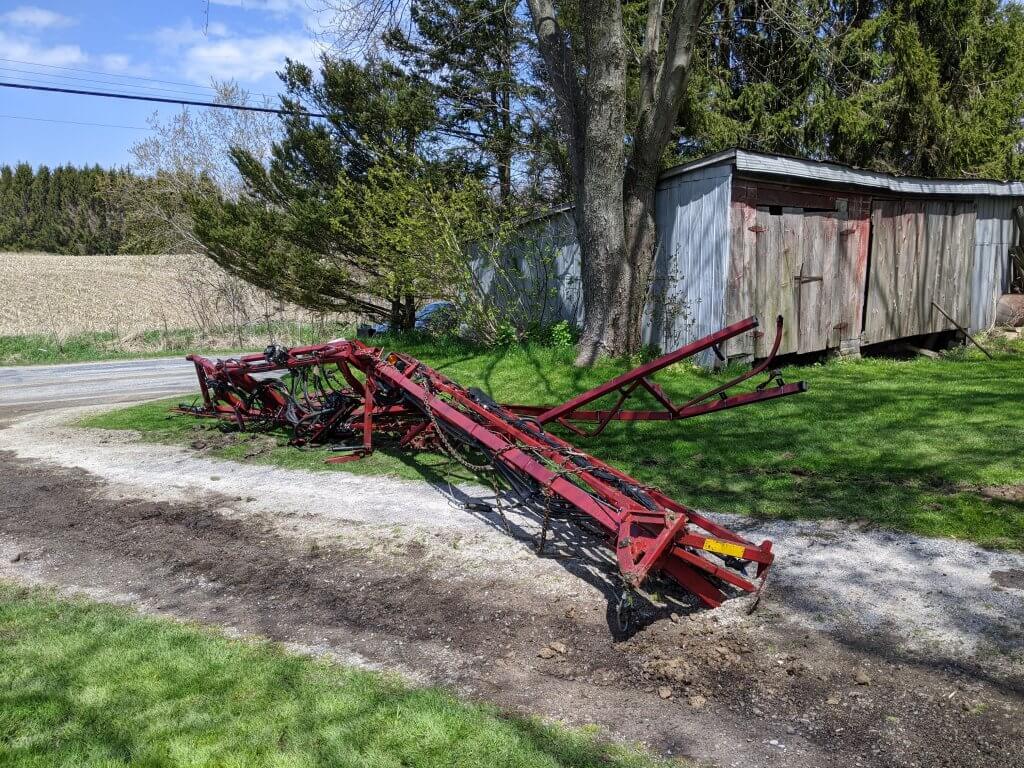
    Fortunately for the operator, the spill was contained in their field (not the road or ditches). The 90′ boom had to be cut off before the sprayer could be towed back to the yard to be sold off as parts. While the operator has looked at the bright side (an opportunity to upgrade) it has left them relying on a custom operator for spring spraying and making a hasty in-season equipment purchase.

    Lost a tire during the tow back to the yard.
    Crumpled boom after having to be cut from the sprayer.
    Not the way anyone wants to see their sprayer.

    Major Spill

    What follows are generic steps for what to do if there is a major spill. Always defer to the process outlined by your regional authority.

    1. If you do tip the sprayer, first protect yourself, then others, then animals in that order.
    2. Stop any exposure by removing clothing and washing as best you can.
    3. Stop people from entering the area.
    4. If it is safe to do so, try to prevent the spill from spreading.
    5. Contact your local spill centre. In Ontario, the Spills Action Centre will receive calls 24 hours a day at 1-800-268-6060. Consult with your municipality for their spill reporting contact numbers.

    Take home

    Of course we’d rather avoid this problem altogether. Be sure to slow down before turning into a field. Take the turn as gradually as possible. Remember that soft spring ground and new pot holes can become serious obstacles – consider scouting the entry before the first spray or at minimum getting out of the cab and checking before entering.

  • Reducing Selection Pressure for Herbicide Resistance

    Reducing Selection Pressure for Herbicide Resistance

    Herbicide resistance has been called the number one threat to conventional herbicide-based weed management strategies.

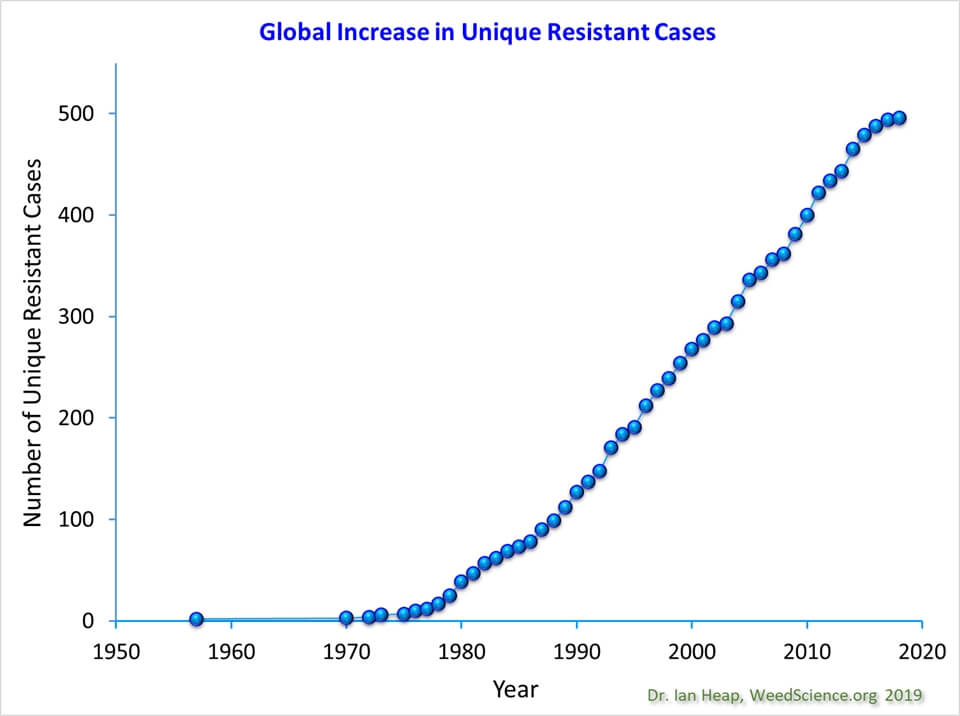
    Since the 1970s, the number of cases of herbicide resistant weeds has shown a linear increase both globally (currently at about 500 documented unique weed species x mode of action cases) and within Canada (at about 70 such cases), according to the herbicide resistance website WeedScience.org. The rate of increase has been constant, and there is not yet any reason to believe that growth in the number of cases will slow.

    Figure 1: Growth of global herbicide resistance cases (Source: WeedScience.org)

    By using herbicides, we select for weed biotypes that, for some reason, can tolerate the product. Mutations which confer herbicide resistance are rare, but present at very low levels in most weed populations. Repeated use of the same mode of action will increase the relative frequency of the resistant biotype until it becomes noticeable, and shortly thereafter, problematic.

    The best-known forms of resistance involve single-gene mutations that alter herbicide target sites (target sites might be enzymes that produce essential plant cell building blocks) so that herbicide binding is reduced, resulting in reduced control. As a result, the target pathway keeps working, and the plant grows normally after herbicide application. Other forms of resistance involve the overproduction of the target enzyme by the plant, mechanisms that either metabolize or sequester the herbicides, or changes in uptake of the herbicide. The main mechanisms are summarized in this table:

    Table 1: Mechanisms of herbicide resistance*

    Resistant ClassMechanism
    Target SiteTarget site mutation
    Increased gene copy number
    Enzyme over-expression
    Non Target-SiteEnhanced metabolism
    Differential uptake
    Differential redistribution
    Sequestration
    Delayed germination
    Rapid necrosis / defoliation

    *Source: Bo AB, Won OJ, Sin HT, Lee JJ, Park KW. 2017. Mechanisms of herbicide resistance in weeds. Korean Journal of Agricultural Science 44:001-015.

    The simple act of using a herbicide can select for resistance to that herbicide. While we can’t predict or prevent resistance entirely, we can slow its onset by reducing the frequency of herbicide use, for example by integrating cultural controls such as crop rotation, seeding rate, cultivar competitiveness, and other factors into our agricultural systems.

    A powerful option to slow resistance development is to reduce our reliance on a single mode of action, either by rotating modes of action in successive sprays, or, more importantly, by tank mixing multiple effective modes of action (MEMoA) whenever we make an application.

    Let’s not kid ourselves. The recent discovery of glyphosate (e.g. Roundup) -resistant wild oats in Australia, and glufosinate (e.g. Liberty) -resistant ryegrasses in several countries is sobering.  Relying more on these herbicides will only increase selection pressure.

    If we decide to use herbicides, we need to look at the situation from the perspective of delaying the onset of resistance. What we’re trying to do is buy some time, so that new strategies can be developed.

    How can spray application methods slow the onset of resistance?

    The use of herbicides will continue to select for resistance. The best we can hope to achieve within a herbicide system is to delay that eventuality.

    To better understand our options, we need to talk about a specific type of herbicide resistance called polygenic resistance. This refers to accumulation of additive genes of small effect over time, a process that is more efficient in plants that share genetic material among plants in a population, i.e., they outcross.

    Outcrossing plants receive genetic material from others, increasing their genetic diversity, and therefore their ability to adapt.

    In a field, a population of any specific weed may contain some individuals that have slightly greater tolerance to a herbicide than others. If we apply a slightly lower than label herbicide dose to those individuals, they might survive the application and eventually cross with other survivors and set seed. Their offspring may be as tolerant or even more tolerant than their parents. If this repeats itself over successive generations, the additive effects build until finally, low-level resistance becomes full-blown resistance and even label rate herbicides no longer work. This resistance isn’t a single gene mutation, it’s simply an accumulation of tolerance due to several genes which impact how much of the herbicide active ingredient reaches the target site.

    In a recent study at the University of Arkansas, susceptible Palmer amaranth (P. amaranth has both male and female plants and is therefore an obligate outcrosser) was treated with a range of dicamba doses to identify individuals that survived the higher doses. The researchers allowed the survivors to cross, and then grew out their seed, then repeating the procedure. After just three generations, the experiment produced individuals with a three-fold increase in LD50 (compare LD50 at P0 (111) to P3 (309) in Table 2). Recall that LD50 refers to the dose required to observe 50% of the full effect.

    Table 2: Dicamba doses (g ae/ha) required for 50% (LD50) and 90% (LD90) control of Palmer amaranth populations selected following sublethal doses of dicamba in the greenhouse.*

    HerbicideSelected PopulationLD50LD90
    DicambaP0111213
    P1198482
    P2221546
    P3309838

    *Source: Tehranchian, P. et al.  2017.  Recurrent sublethal-dose selection for reduced susceptibility of Palmer amaranth (Amaranthus palmeri) to dicamba. Weed Science 2017 65:206–212.

    The lessons are three-fold:

    • Herbicide resistance cannot be prevented if herbicides are applied.
    • To prevent polygenic resistance, we need to apply the full label rate and avoid repeated sublethal doses, so that all weeds are killed;
    •  We need to apply Multiple Effective Modes of Action (MEMoA) whenever possible so that when one fails, the others have its back;

    How can this be achieved?

    1. Prevent application practices that result in less effective dosing. Larger weeds, or weeds growing in difficult environmental conditions, may require higher herbicide doses. Early application is helpful because small weeds are easier to control. In addition, crop canopy shading at later staging leads to dose reduction and increases dose variability. Spraying under windy conditions also reduces dose, and can increase deposit variability. For some herbicides such as glyphosate or diquat, the dust generated by wind or fast travel speeds can reduce effectiveness.
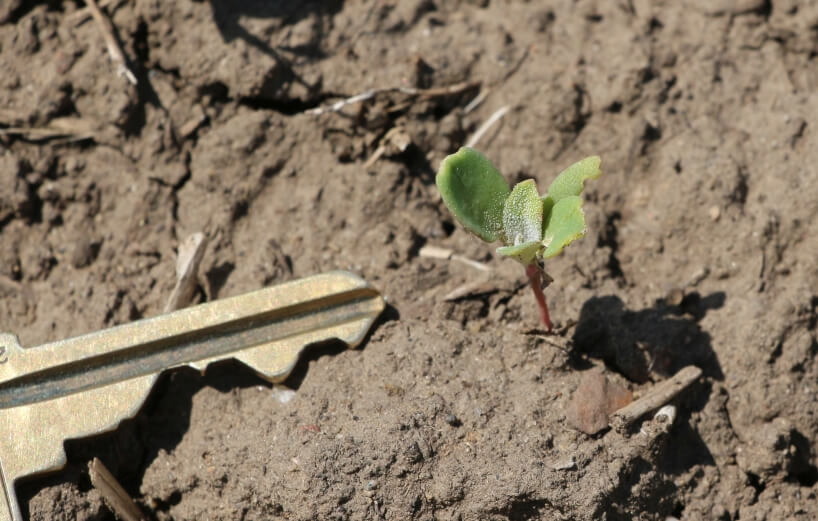
    Figure 2: Smaller, exposed weeds require lower doses to control
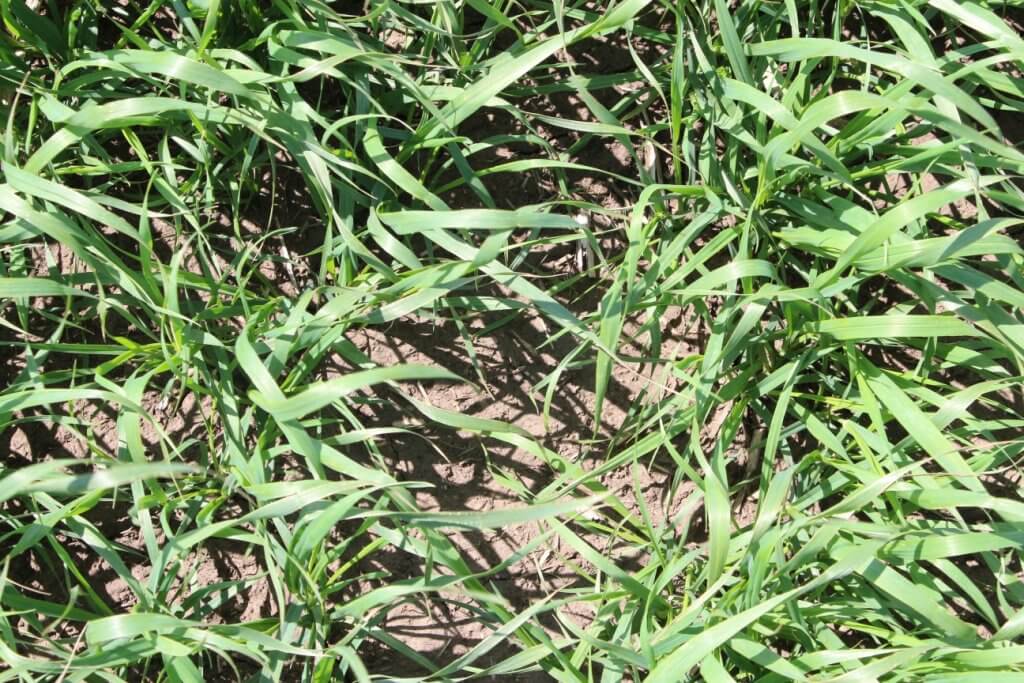
    Figure 3: Crop canopies provide valuable competition to help suppress weeds, but they can also intercept spray, reducing the dose received by weeds.
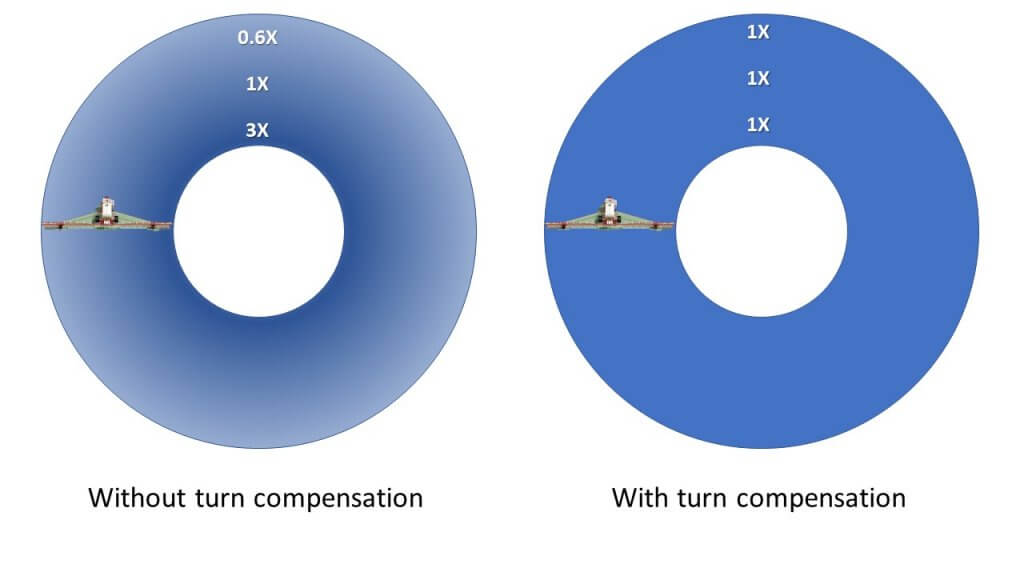
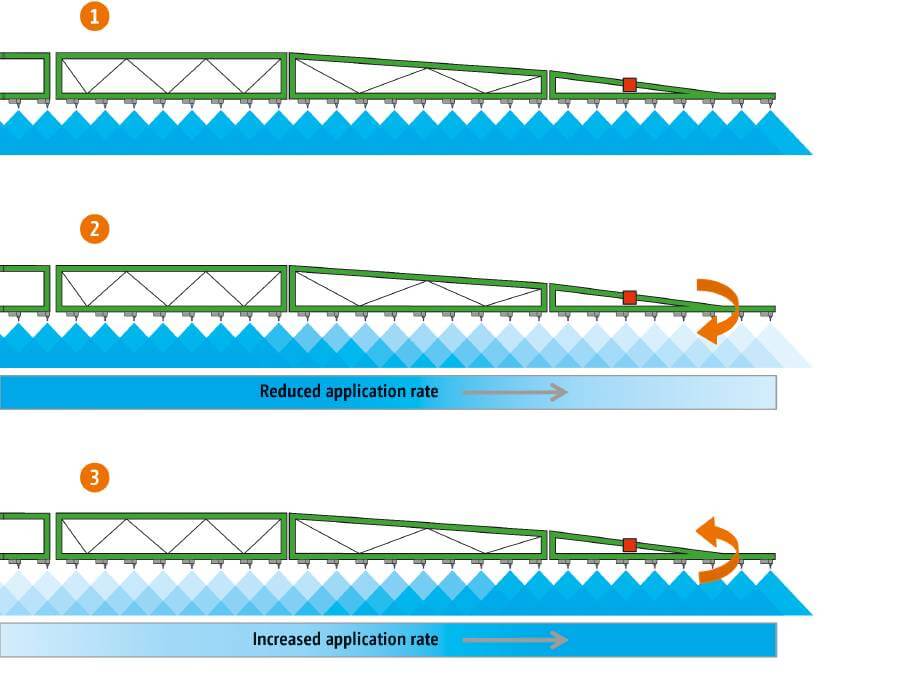
    • Get Pulse Width Modulation (PWM) with turn compensation. If your sprayer makes the same turn around the same feature year after year, then the outer boom region will under-dose the same part of the field over and over. This is the breeding ground for polygenic resistance. Look for this in field corners, around water bodies or tree bluffs, rock piles, etc.
    Figure 4: PWM correction of under-dosing during a turn
    • Prevent boom sway and yaw. Boom movements result in uneven application, which results in lower control. Pull-type sprayers with supporting wheels are best, but these are becoming rare. Suspended boom performance depends on the manufacturer and the levelling technology they use.  However, boom movement is usually more consistent with slower travel speeds.
    Figure 5: Boom yaw causing over- and under-application (Source: Farmonline.com.au)
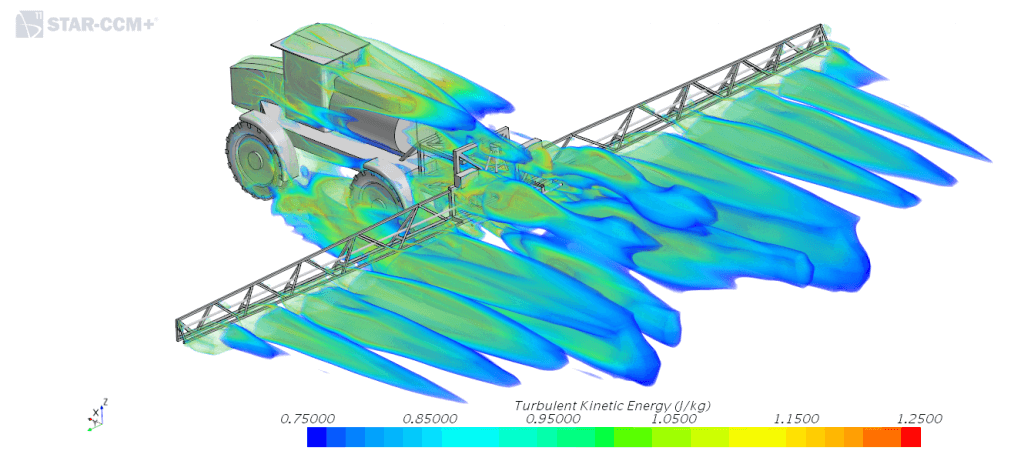
    • Minimize air turbulence. Large sprayers, and those moving at fast speeds, create aerodynamic turbulence that can displace spray. The main problem spots are wheels, in whose tracks measurably less spray is deposited.  The exact dynamics of turbulence is still unknown, but we do know that its magnitude can be reduced with slower travel speeds.
    Figure 6: Turbulence due to sprayer speed (Source: Dr. Hubert Landry, PAMI)
    • Consider spot spraying. The use of optical spot spray equipment, such as the new WEEDit Quadro, or Trimble’s WeedSeeker II, save product during burnoff or post-harvest. These savings can make the use of more elaborate, expensive tank mixes containing multiple effective modes of action, affordable.
    Figure 7: Optical Spot Spraying (WEEDit Quadro) (Source: WEED-it.com)
    • Avoid spray drift. Field margins that harbour weeds rarely receive a full dose of herbicide. Exposing these weeds to spray drift won’t kill them. But it will, over time, select for weeds that are more able to tolerate the herbicide.

    Implications

    Aside from specific technology such as PWM, improved booms, or a spot sprayer, the most effective fix for variable application doses is slower travel speed.

    While this may seem problematic when timing is critical and greater productivity is required, there is a way to drive more slowly and still get more done. We simply need to look at productivity differently.

    We tend to equate productivity with speed. Travel speed. But a spray day is filled with many hours of non-spray time – filling, cleaning, transporting, repairing, fueling, record-keeping, etc. How much time is lost to these activities depends on the operation, but for everyone, it’s useful to do time accounting.

    Record how a spray day’s time is spent. Pay attention to activities during which you can save time without much expense.

    ActionActual TimeTarget Time
    Fuelling, lubing  
    Loading jugs and totes  
    Checking label (rates, rainfastness…)  
    Filling tender tanks  
    Loading sprayer (in yard)  
    Transport to field  
    Entering field data into monitor  
    Checking, recording weather  
    Checking for pest, stage  
    Changing nozzles  
    Spraying load  
    Unplugging / replacing nozzles  
    Replacing nozzle body  
    Making turn  
    Filling sprayer  
    Getting sprayer unstuck  
    Driving to tender truck  
    Waiting for tender truck  
    Spraying out tank remainder  
    Cleaning tank  
    Cleaning filters  
    Flushing boom ends  
    Loading sprayer (in field)  
    TOTAL

    On any given spray day, less time spent filling, or transporting, is credited to spray time.  Our analysis shows that time lost to driving slower can more than be made up with these changes. The productivity gain gives more opportunity to spray under more ideal conditions that save yield and also ensure more uniform application.

    Using productivity analysis, spraying can become more uniform and help delay the onset of resistance.

    Note: The assistance of Dr. Charles Geddes, Research Scientist at AAFC Lethbridge, in drafting this article is appreciated.