Category: General Operation

Articles that discuss general field sprayer operation and productivity factors

  • 28% UAN in Winter Wheat: Drive-Along Diaries #2

    28% UAN in Winter Wheat: Drive-Along Diaries #2

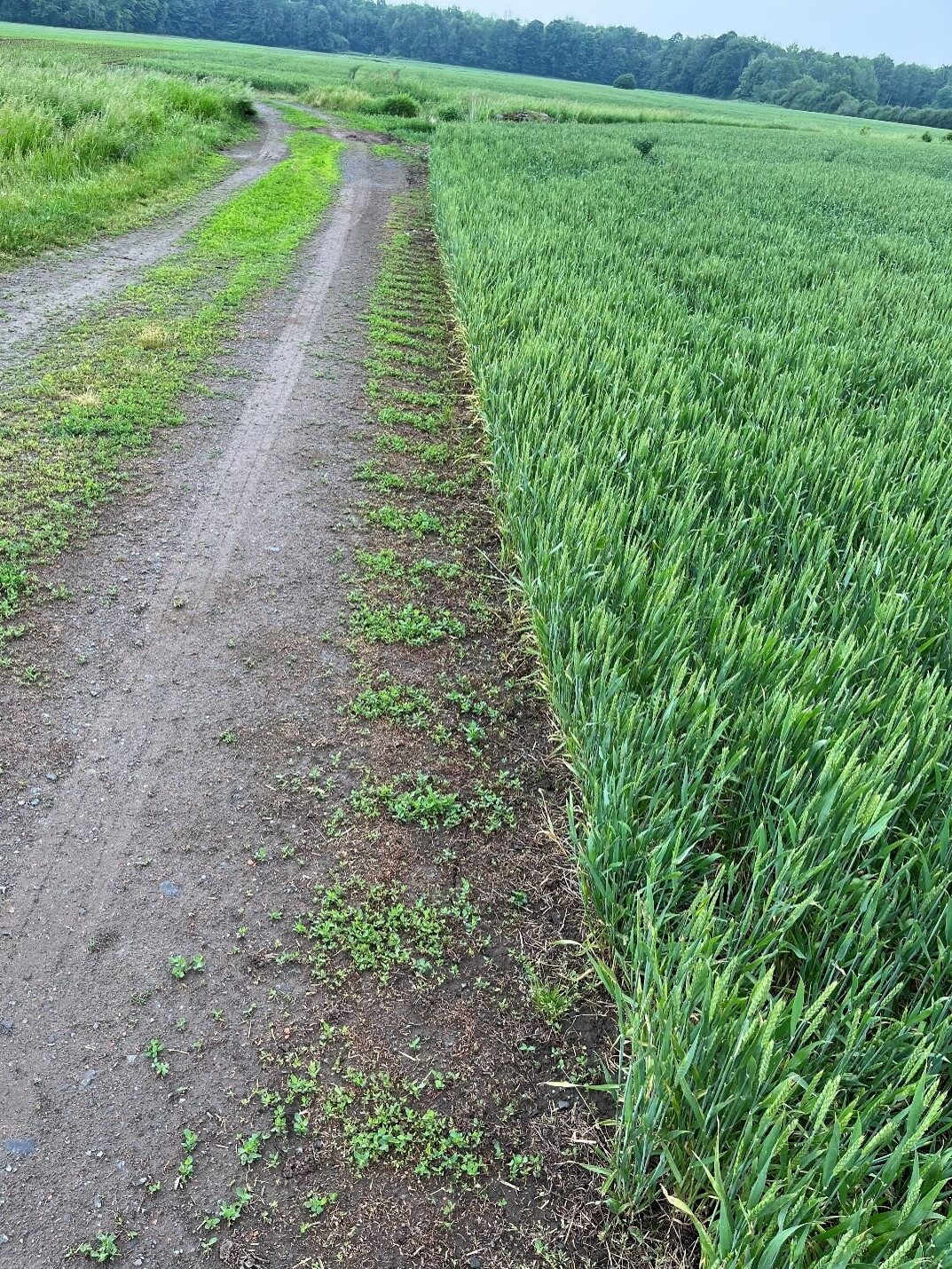
    I’d been pestering Dan Petker to let me come along as he and his father Paul applied 28% UAN to the winter wheat on their family farm in Port Rowan, Ontario.

    Me: “Today?”
    Dan: “Nope – Wheat’s not at the right stage.”
    Me: “Today?”
    Dan: “Nope – Rain in the forecast.”
    Me: “Today?”
    Dan: “We’ll see if the ground can hold a full sprayer. I’ll let you know.”

    April 26th, 8:00 am

    My first lesson was a reminder that farming requires a lot of advance planning and preparation because ultimately, it’s opportunistic. The Petkers were toeing the start line as they focused on weather forecasts, crop staging and field conditions. As soon as they determined that the wheat in the tram lines would bounce back rather than get mashed into the soil, they were ready to roll. I suppose I was opportunistic as well because as soon as I got the thumbs-up I dropped everything and raced to their farm.

    10:30 am

    When I arrived, I found Dan filling their tender wagon in the yard. All their farm inputs are stored in their chemical shed, including 27,000 gallons of 28% UAN. The wagon had two, 1,000 gallon tanks which Dan was filling from a 2” line. He said that as the season progressed, they would move up to faster fills by swapping to a 3” line. They weren’t in that kind of rush today and he didn’t want to have to lug the heavier line around if he didn’t need to. Fair enough. At that point Paul radioed from the sprayer to tell Dan he was ready for his first refill.
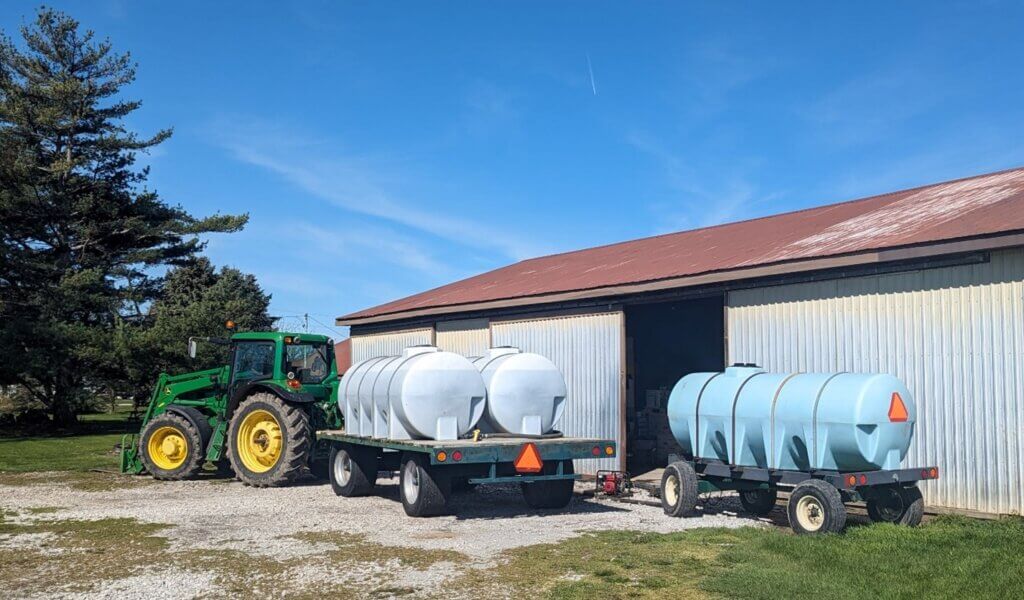
    As we drove to meet Paul, I learned that the goal was to spray two fields totaling 200 acres. A single, 1,000 gallon tankful would cover 20 acres. Dan noted that these soils were a loamy silt and clay mix that held nitrogen very well. On sandier soils, farmers often choose to split the application where a smaller amount is applied earlier in the season and the remainder later, but Dan said it never paid dividends on these fields. Of course, that reasoning may have been moot since it was such a wet spring; They couldn’t get out earlier even if they wanted to.

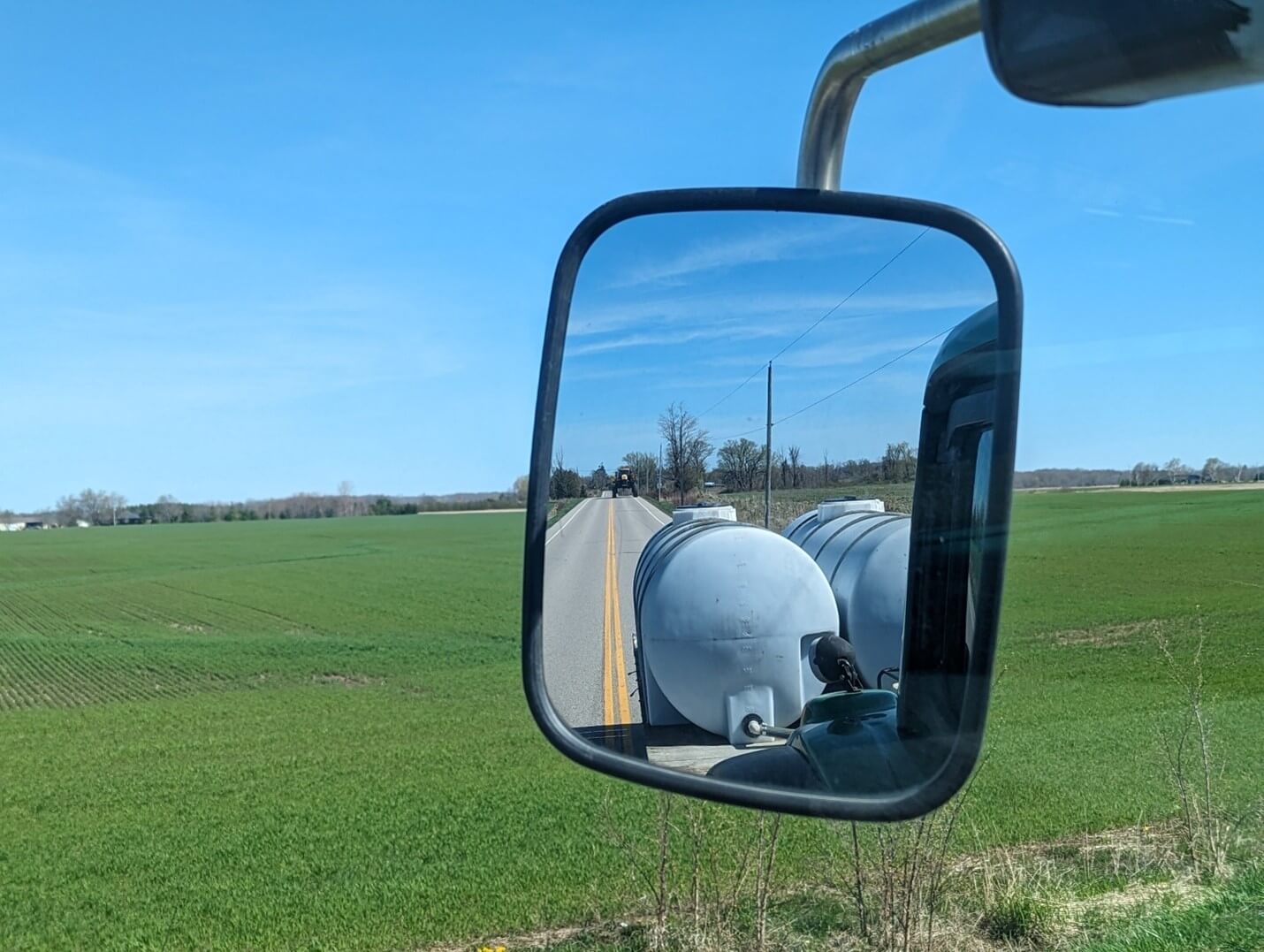
    The two fields were within a 5 km radius from the yard, so nothing was more than 10 minutes away. The county roads were narrow, but throughout they day I saw that the locals knew how to share the road with farm equipment; lots of polite waves and no one risked their necks trying to pass. Good to see.

    10:40 am

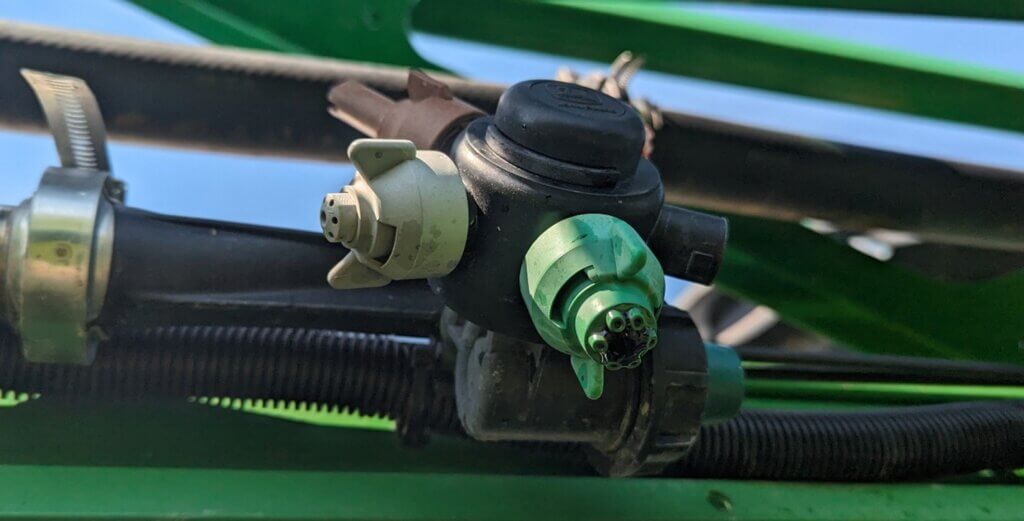
    We pulled up alongside the sprayer and Dan started filling as I greeted Paul, who’d I’d ride with for the rest of the day. We were using their John Deere R4038 equipped with Pentair Hypro six-stream fertilizer nozzles (FC-ESI-11015’s) on 15” centres. The Petkers used 06’s the year before and found they had to drive too slowly, so investing in these larger nozzles was a productivity booster.
    While filling, they both watched the sight gauge on the side of the sprayer. I asked why they didn’t use a flowmeter and they said it could be off by +/- 10 gallons, so if the sprayer was level, the sight gauge told them what they needed to know.

    10:50

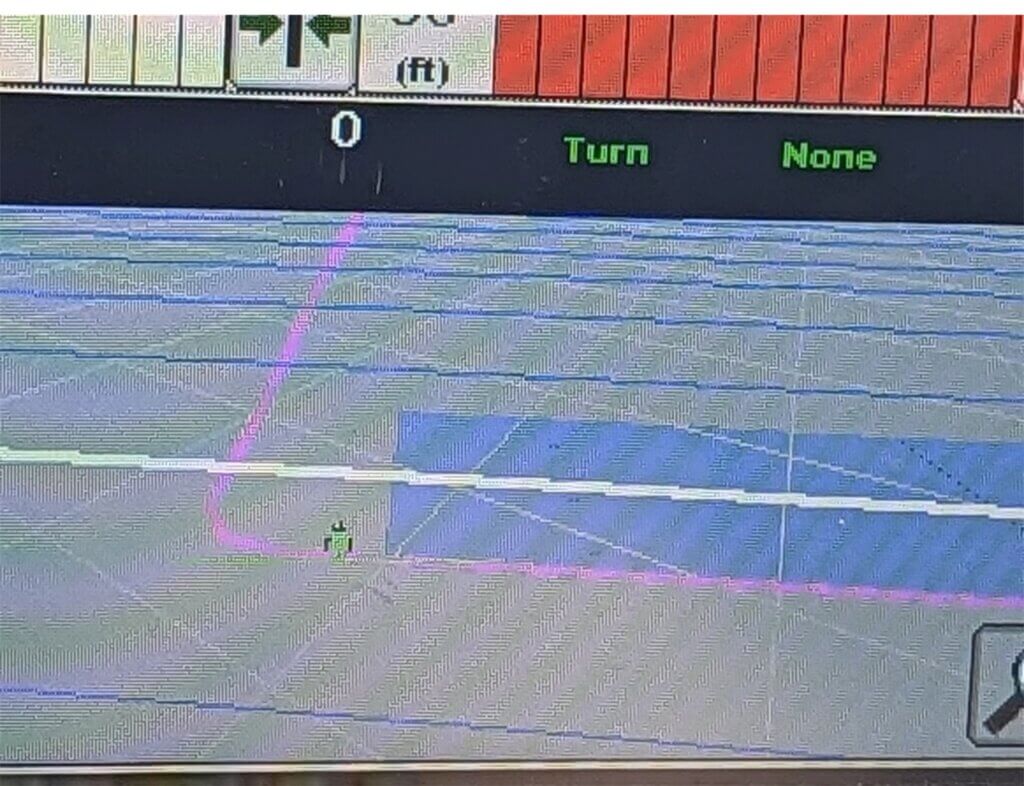
    I joined Paul in the cab and we drove into the field. Paul pointed out the pink field boundary on the monitor and grimaced at the rounded corners that were established during planting. He wanted to reset the A-B lines and square off those corners. His reasoning was to ensure weeds didn’t grow in the margins and affect yield. However, he also said it looked terrible and I got the impression this was as much about pride in a job well done as it was yield.

    We backed into the corner. Paul explained that the rate controller “hunts” a little as the sprayer speeds up over the first few meters and wouldn’t apply a full or consistent rate. By temporarily disengaging it until we got up to speed, we would avoid the weed escapes common to field corners. We’d be applying a slightly higher rate than required for those first few meters, but it was the lesser of two evils.

    He set the first pass using GPS: “Got-Paul-Steering” and I watched as the breakaway section started snagging the treeline on the edge of the field. I asked if that was a problem and he replied that he was driving slowly, and it didn’t bother anything. It was important to get those margins and the trees were always growing and dropping branches, so hits were inevitable.

    Soon we were back in the hands of GPS-guided autosteer and rate control and moving at a respectable 12 mph. 20 acres later we’d sprayed the 1,000 gallons and were headed back to meet Dan for a refill. On the way we noticed a triangular area that we missed while I was distracting Paul with questions. He said we’d double back later and let sectional control take care of it. Paul loved sectional control.

    11:30

    Soon Dan was empty, and we were full, so we got right back at it. I wouldn’t describe the field as hilly, but it was far from flat. On occasions where the sprayer dipped significantly, one side of the boom would sometimes kiss the ground while the other hung precipitously in the air. We had the boom height set to about 36” but Paul was manually raising each side if the boom got too close. You can forget the fantasy of sitting back and letting the machine do all the work; It certainly wasn’t the case, here.
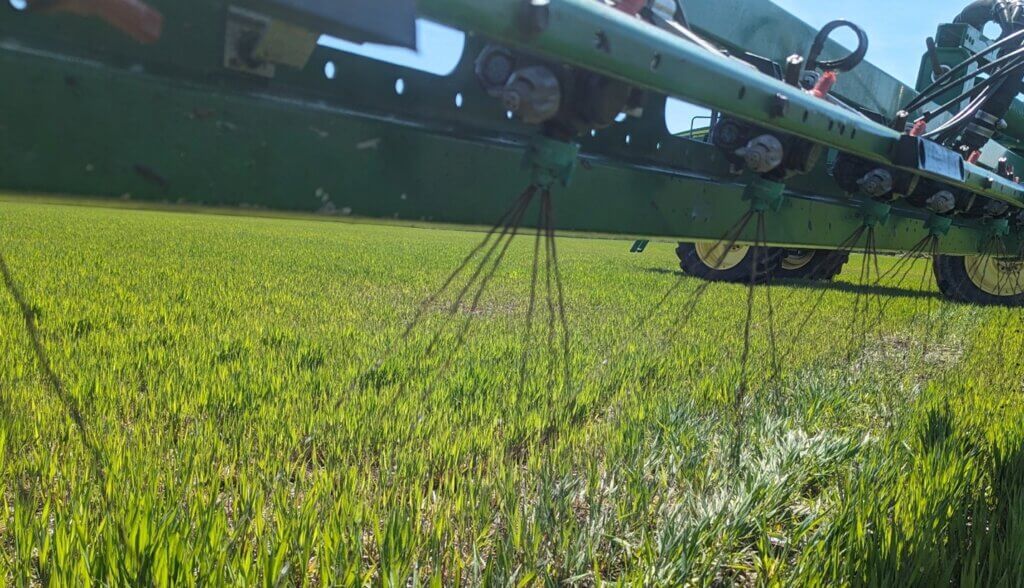
    Slower travel speed and a reasonably-low boom are the best practice for crop protection sprays. However, streamer nozzles don’t form droplets and overlap was maintained, so I wasn’t worried about our lively boom causing drift or coverage uniformity concerns. I was, however, increasingly focused on my lower back and teeth. The buddy-seat didn’t have the padding or air-ride suspension Paul was enjoying.

    When we hit level ground again, I began to appreciate the process of passing back and forth over a field. It was satisfying to watch the sprayer icon on the monitor filling the screen with blue as we covered ground. Like the old-school, low-res, 1980’s video games that ate all my hard-earned quarters. Then we were empty again and it was time to go beg for more quarters.
    11:46

    Dan was busy so we drove back to the yard rather than wait for tender. There was a Rogator on the road ahead of us and Paul pointed out the muck it was flinging from the tires. A quick peek behind us showed we weren’t tracking mud. Paul said it was because of their soil management practices – no-till left the fields better able to weather droughts and absorb rains. The Rogator was operating in fields that employed deep tillage and were full of standing water and now, muddy tire ruts. Paul pointed out a few such fields as we drove, and I could soon see for myself which fields were managed by the Petkers and which were not. In fact, I only saw one puddle of standing water in their fields that day when all around us were shallow swimming pools.

    12:15

    We filled, drove back to the field, and picked up where we left off. Paul noted they had to plant their wheat a little later than they would have liked because they were delayed getting the beans off. Despite that, he was very happy with the stand we were fertilizing. We were able to have this conversation because Paul (like Dan) did not listen to music or podcasts in the sprayer. He said it helped him focus and that he liked the peace. I think being alone with my thoughts all day would have driven me around the bend. And then we were empty again, so back to the yard.

    12:47

    We filled, drove back, engaged the A-B line, and started the last section of this field. I asked about sprayer sanitation. UAN is notoriously caustic and can cause compatibility issues with some products, so I wanted to know how diligent they were about rinsing or cleaning (two different things). Paul agreed that it was messy stuff and it got all over the sprayer. So, at the end of the day, they would perform a thorough rinse of the plumbing before washing the exterior out behind their equipment shop. We finished with 300 gallons left in the tank, so we elected to head over to the second field.

    1:10

    At field number two, Paul changed fields on the monitor and grumbled about the round corners on the boundary. He pointed out that the edge of this field wasn’t straight – it contoured along a wavy treeline. Paul briefly disengaged rate control, set the “A” point and started driving manually again, hugging the treeline and dipping in and out using Got-Paul-Steering until we’d cleared the trees. Now that the field boundary was straight, he erased the “A” point and set a new one before later setting the “B”. He looked over at me, anticipating my question, but I’d already guessed that Paul didn’t want to repeat that wavy line on every subsequent row. Instead, we’d now run parallel to a straight A-B line and let sectional control handle the overlaps on our twisty start. That earned me an approving smile. And to add to that feeling of pride, our tank emptied exactly at the end of that first row. Perfect.

    1:27

    Back at the yard for our refill, I thought about how long our previous fill times were compared to now. From this second field it was 10 minutes on the road, 10 minutes to fill, and 10 minutes back, so 30 minutes compared to maybe 15 for the first field. Longer than I thought it would be. At 1:48 we were back and spraying again and I was beginning to notice how technical this field was. We performed a number of three-point turns in order to back into corners while the monitor alternated between happy chirps and stern alarms as we passed over A-B lines. Then we were empty, so back we went for more.

    2:41

    To continue to video game metaphor, this field was an advanced level and the Big Boss was coming. Not only was the shape odd, but it had chain link fences, posts, more trees, a water course, and they stored some farm equipment on one part of it. Paul calmly negotiated all these obstacles with stops, starts, boom adjustments (either height changes or partial folds), and then, shockingly, asked me to drive.

    Paul: “Line up the tracks.”
    Me: “I’m trying.”
    Paul: “Do not try or you won’t get it right. Do!”
    Me: “…what!?”

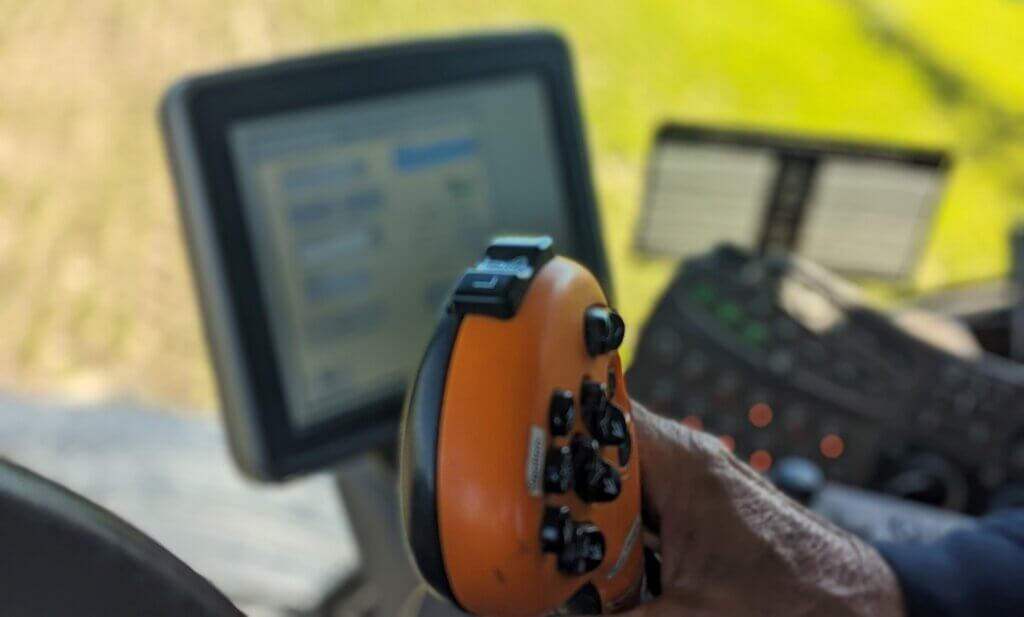
    As a card-carrying Star Wars fan, I thought Paul was teasing me. His Yoda impression was perfect. I asked if he’d seen Star Wars and he replied that he was vaguely aware of it. So, he was being sincere, and I relaxed knowing I was in good hands. I even negotiated a few turns under his tutelage. But I confess I was relieved when the hydrostatic lightsaber was back in his capable hands.
    3:04

    Empty. Drive. Fill. Drive. Spray at 3:43. The last section was quick and easy and once we’d finished, we headed to their equipment shop to find Dan waiting. Dan pointed out the nitrogen all over the sprayer and reinforced Paul’s assertion that they’d rinse it out and wash the exterior off later that evening.
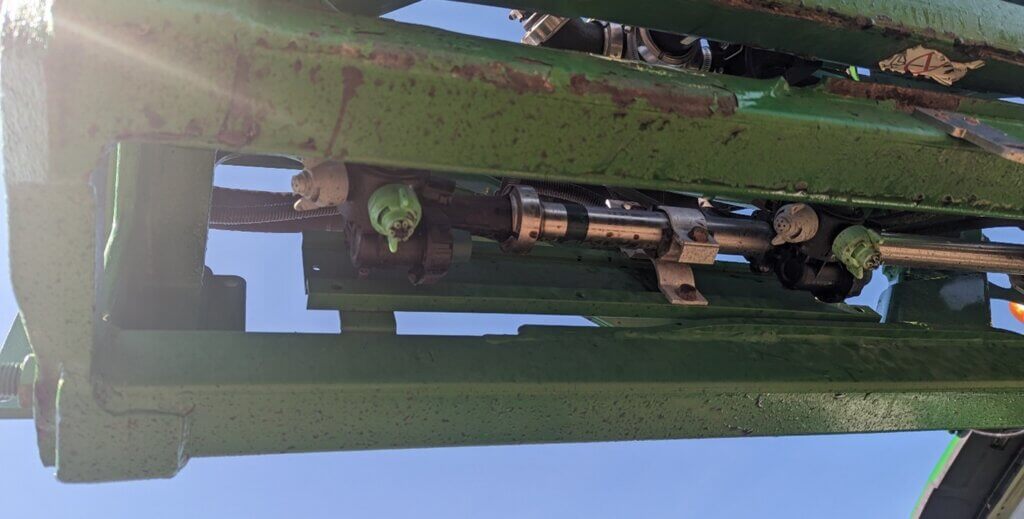
    He drove me back to the yard so I could retrieve my car and we said our goodbyes. As I was headed home, I happened to pass their equipment shop where I saw Paul, a man in his mid 70’s that hadn’t stopped to eat and had been spraying all day, hard at it washing off the exterior. Wow.

    Take Homes

    I’m guilty of over-emphasizing the fill-time aspect of spraying because that’s the biggest time-suck on productivity. However, some tank mixes (e.g. SC’s) don’t appreciate being rushed, and while time is always pressing, there are those occasions where it isn’t mission-critical. Fill-time never came up on this job. There were, however, other aspects that deserved attention.

    In the case of applying UAN to winter wheat on these irregularly shaped home-farm fields, it was more important to be attentive and manually adjust sprayer settings to fit the moment rather than always trust in the technology. Granted, the technology (namely rate control, boom leveling and GPS sectional control) was brilliant once we’d finished the headlands and dealt with any obstacles and topographical challenges.

    I also appreciated that this family has been farming for many years. Dan and his father had a practiced rhythm that made it look easier than it actually was. Equipment was prepared, decisions were made, and everything was in place well ahead of the application. That included how they managed their soil and knowing how their fields responded to nitrogen. They communicated well, using digital records and redundant written notes to ensure everything was coordinated and going to plan, and that good planning made for a good day.

    And it was a good day.

  • The Drive-Along Diaries: Prologue

    The Drive-Along Diaries: Prologue

    I feel it’s important to occasionally remind myself why I do what I do, and who I’m doing it for. With that, let me tell you a story.

    I was recently asked to give a presentation about spray coverage and drift mitigation to an arborist organization. I agreed but harboured reservations. I’ve given talks of this nature many, many times, but I rarely work with arborists. In preparation I looked back through my files and discovered I’d spoken to them 10 years ago. Coincidently, that was also the last time I’d encountered an arborist.

    So, what value could I possibly offer? My concern was that all I’d leave them with was a few “factoids” and the vague sense that they’d been entertained. But would I leave things better than I found them? What could I say that would move the needle and give them something actionable?

    Fortunately, I was paired with a veteran sprayer operator and together we worked out a presentation / demonstration. It went over very well, and I was relieved that people were engaged and asked insightful questions. Crisis averted.

    I believe the reason it worked was because I asked the operator about the real-world challenges (however unpopular) that he faced. We discussed and agreed upon a few lesser-of-two-evils solutions to share with the group. It was authentic, it was pragmatic, and it was appreciated.

    As a result, I decided to dedicate some time this spring/summer to riding along with a variety of sprayer operators as they perform their jobs. If they’d have me, I’d promise to stay out of their hair, acting only as an observer. I wouldn’t make suggestions and I wouldn’t criticize. I would ask the occasional question and I’d watch to see where policy and reality crossed paths.

    I was hoping for a few educational experiences that would inform my research trajectory and teach me a few tips and tricks to share at winter meetings. Perhaps I’d reinforce my understanding of spray application, or maybe I’d be forced to re-evaluate my position on what is a technical truth and what is a practical truth. At the very least I would get to see how professionals did their jobs, and which best practices got sacrificed when things didn’t go to plan.

    And, while I was at it, I decided to keep a journal to create articles in the vein of “A Day in the Life”. You’re reading the first one right now and I hope you find it as interesting to read about as I did to live it. It’s unlikely you work in all the agricultural spaces I’ll be writing about in this series but keep an open mind. The potential for cross-pollination is enormous; Perhaps your “cousin” sprayer operator has solved a problem you face in your own operation.

    And so, given our recent success, my first victim will be my new arborist-friend. You can read all about it here.

    A quick selfie in suburbia as I’m guided through a day in the life of an arborist.
  • Avoiding Skips from PWM Sprayers

    Avoiding Skips from PWM Sprayers

    Does this sound familiar?

    “This year was the first year we used a growth regulator on our wheat. After heading, we noticed a wavy pattern of different plant heights between 30 and 45° to the operating direction. It was only a couple inches difference and was difficult to photograph. We sprayed 12 gpa at 9 mph using TT11005 nozzles alternating forward and back at 35 psi and a 70% duty cycle. I’ve talked to other operators in Canada and in Europe and several customers have reported seeing this pattern, no matter which model of PWM sprayer. What’s happening?”

    Skips in cereal that are obvious to the eye can be difficult to photograph.

    The pulse width modulation is very likely responsible for the waves. We have a number of articles describing how PWM works, but here’s a brief recap of the relevant bits.

    A solenoid intermittently interrupts nozzle flow with a frequency between 10 and 100 times per second (depending on manufacturer). The proportion of the time the nozzle remains open is called the Duty Cycle. Each nozzle is linked to the neighbouring nozzles so that when one pulses on, the neighbour pulses off. So although you may only have half the nozzles spraying at any moment in time, sufficient overlap ensures there are no gaps in the pattern.

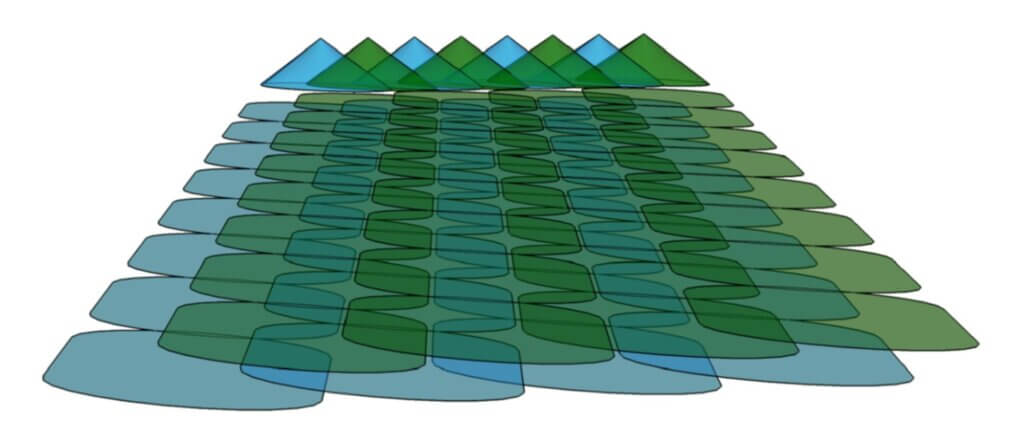
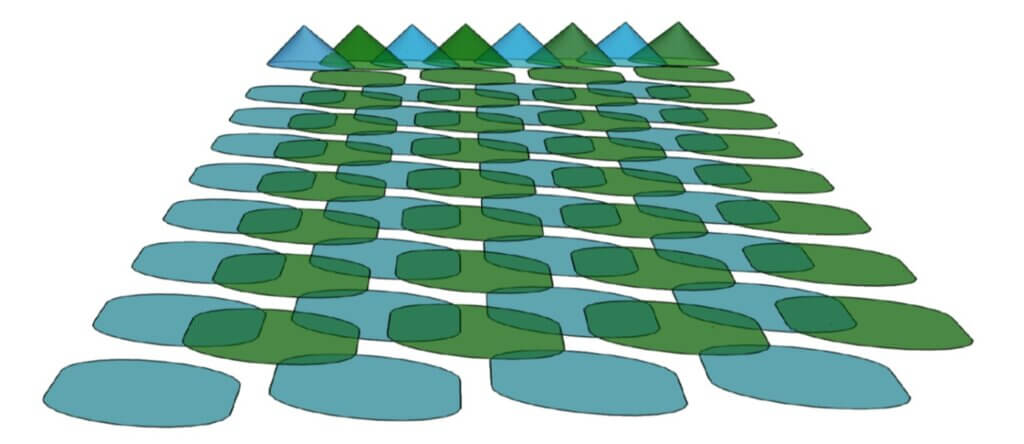
    However, depending on the combination of frequency and duty cycle, it is possible to lose that overlap between nozzles. This can cause a checkerboard pattern that appears to repeat in a diagonal line. The following two images are from www.Capstanag.com and they illustrate an ideal overlapping pattern and a pattern that creates skips.

    Here’s a 11008 at 10 gpa, 15 mph, 60% DC, 10 Hz, 21” boom.
    Here’s an 8008 tip at 5 gpa, 15 mph, 30% DC, 10 Hz, 21” boom.

    We can also sometimes see skips on the outer edges of sharp turns. In that case the outer boom section can be travelling two or three times as fast as the cab. In a conventional system, this would produce under-dosing in the outer region and over-dosing closer to the cab.

    Some degree of skipping may be more common than we realize. It’s only when we spray products that produce obvious visual symptoms at low doses that we can see a biological response. In the case of plant growth modifiers used to prevent lodging in cereals, we have a perfect storm situation. A region of reduced spray overlap, applied at a time when the crop is elongating rapidly, perhaps on rolling ground from an unstable boom height, can all conspire to create regions of reduced dose with striking visual symptoms.

    The following list describes conditions that can increase the potential for skips, and what you can do to avoid them.

    1. Low duty cycles. Cycles less than 60% should be avoided.
    2. Fast travel speeds. Faster speeds may help blend the spray in the swath a little, but too fast can create gaps and increase drift potential. At high travel speeds the system is usually operating at a high duty cycle unless an especially large nozzle size has been selected. Ideally, we want to run the duty cycle at 60-80%, but there are always exceptions. For example, according to Wilger, 90-92% is fine when you run at 20 gal/ac with their “15 gal tips”.
    3. Low booms. The lower the boom, the less overlap. Raising the boom to 24″ above the crop may help, but beware of drift.
    4. Narrow fan angles. Nozzle angles less than 110° reduce the degree of overlap and are less forgiving if the distance between nozzle and target decreases.
    5. Low pressure. Avoid operating at pressures below 35 PSI. Due to pressure drop at the solenoid, 40 PSI on the monitor might mean 28 PSI at the nozzle. Some nozzle tables account for solenoid-induced pressure drop and some do not. Low pressure may be insufficient to establish the full 110° pattern, and the resulting marginal overlap not only means inconsistent dose, but inconsistent droplet size because droplets are coarsest at the edge of the pattern. And, if that’s not already enough, note that air induction nozzles intended for use with PWM tend to create messy patterns at low pressures and low duty cycles.
    6. Especially coarse spray quality. Unless the label requires it, consider using spray qualities no larger than Very Coarse, particularly at low volumes. PWM frees the operator to use pressure independent of rate, so you may be able to accomplish this without swapping nozzles.
    7. Products that are highly dose-dependent. This one is likely unavoidable, but be aware they are the products most likely to produce obvious visual symptoms. In the case of PGR’s, we have not (yet?) seen any evidence that skips translate to reduced yield. Weed misses or sub-lethal doses of fungicide or insecticide might be another matter.
  • Mode of Action and Spray Quality

    Mode of Action and Spray Quality

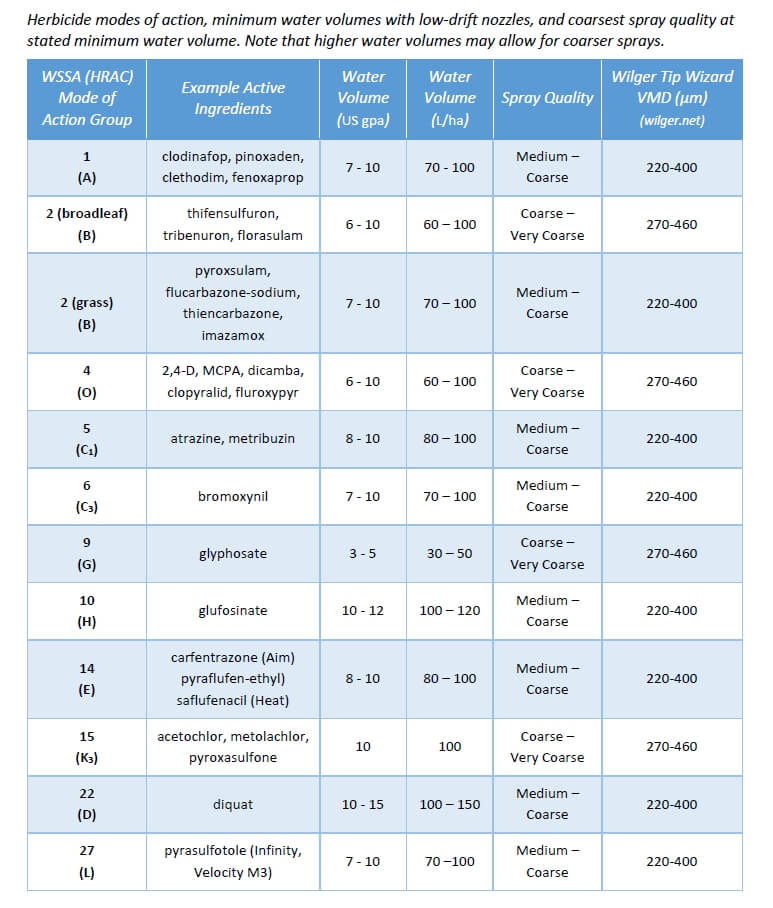
    The decision on which application method is best for herbicides boils down to two main factors: (a) target type and (b) mode of action. In general, it’s easier for sprays to stick to broadleaf plants on account of their comparatively larger leaf size and better wettability compared to grassy plants. There are exceptions, of course – at the cotyledon stage, broadleaf plants can be very small and a finer spray with tighter droplet spacing may be needed. Water sensitive paper is a very useful tool to make that assessment. Imagine if a tiny cotyledon could fit between deposits – that could be a miss!

    Some weeds are also more difficult to wet, and those may also need a finer spray or a better surfactant for proper leaf contact. An easy test is to apply plain water to the leaf with a spray bottle. If the water beads off or the droplets remain perched on top in discrete spheres, the surface is considered hard to wet. Most grassy weeds are hard to wet, while most broadleaf weeds are easy to wet.

    Grassy weeds are an especially difficult target because they have smaller, more vertically oriented leaves, and almost without exception are more difficult to wet than broadleaf species. All these factors call for finer sprays for effective targeting and spray retention.

    Broadleaf weeds usually have more horizontally oriented leaves which also happen to be larger. As a result, they can intercept larger droplets quite efficiently.

    There are about thirty mode of action (MOA) groups among the herbicides with about ten accounting for the majority in Canadian prairie agriculture. It’s probably an over-simplification to categorize them into just two groups – systemic and contact.  But that grouping goes a long way to making an application decision.

    Contact products (MOA Group 5, 6, 10, 14, 22, 27) must form a deposit that provides good coverage. Good coverage is an ambiguous term that basically means that droplets need to be closely spaced and cover a significant proportion of the surface area because their physiological effects occur under the droplet, and don’t spread far from there. One way to generate more droplets is to reduce droplet diameter, another is to add more water. A reasonable combination of both is ideal because simply making droplets smaller creates issues with evaporation and drift.

    Systemic products (MOA Group 1, 2, 4, 9) will translocate within the plant to their site of action after uptake. As a result, coverage is less important as long as sufficient dose is presented to the plant. In practice, this means coarser sprays and/or less water may be acceptable.

    When two factors are combined, either in a tank mix or a weed spectrum, the more limiting factor rules. Application of a tank mix or product that is active on both broadleaf and grass plants will be governed by the limitation placed on grass targets. A tank mix comprised of both systemic and contact products is governed by the limitations placed on contact products.

    A factor we should also consider is soil activity and the presence of residue. Studies have shown that soil-active products are relatively insensitive to droplet size. But if they have to travel through a layer of trash to get to the soil surface, more application volume is the best tool.

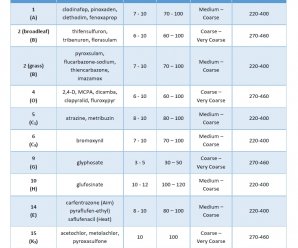
    Below are some recommended spray qualities and water volumes for use in Canada. The spray qualities listed in the table can be matched to a specific nozzle by referring to nozzle manufacturer catalogues, websites, or apps. Note that Wilger also offers traditional VMD measurements on their site, allowing users to be a bit more specific if necessary.

    Click here to download PDF

  • Recirculating Boom Options

    Recirculating Boom Options

    If you read this site, you know we’re fans of recirculating booms. We love them for three reasons:

    1. They save money and waste by recovering spray back to the tank during priming and rinsing
    2. They make boom cleaning easier by eliminating boom-ends
    3. Most require individual nozzle shutoff, which makes for better sectional control

    If you’re new to the concept of recirculating booms, read more here.

    Until recently, these booms were only available on sprayers imported from outside North America (Horsch, Amazone, Agrifac to mention three), or via France’s Pommier booms that have been available as retrofits for many years. In 2018, Agco introduced their Liquid Logic system on the Rogator line, becoming the first North American manufacturer to offer a recirculating boom at the factory. Pattison Liquid also offers Recirculating booms as standard equipment on their Connect Sniper pull-type sprayer.

    In the meantime, three boom retrofit kits and one sectional conversion kit have become available.

    Arag Australia‘s BRS (Boom Recirculation System)

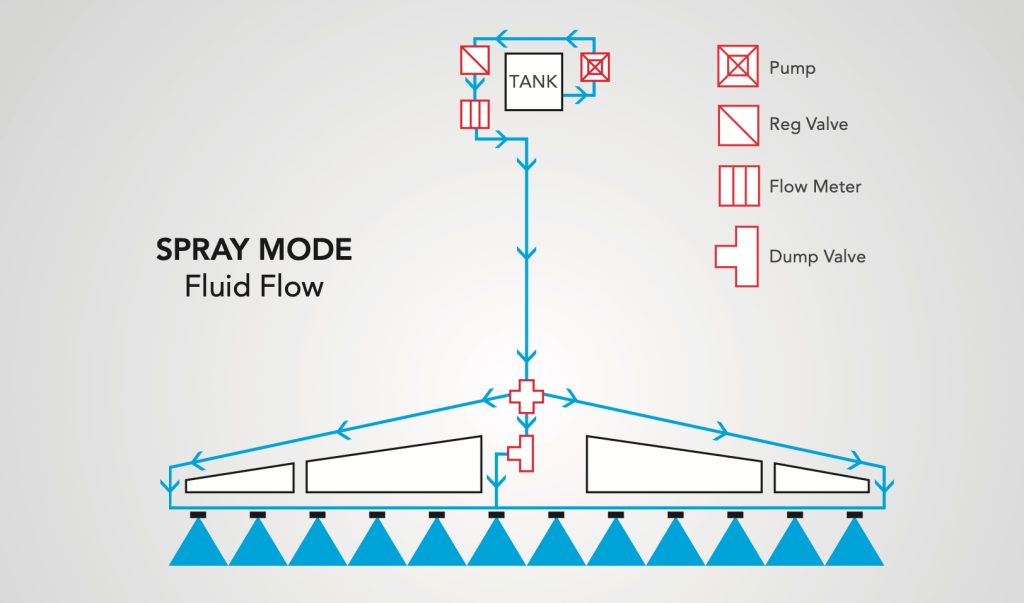
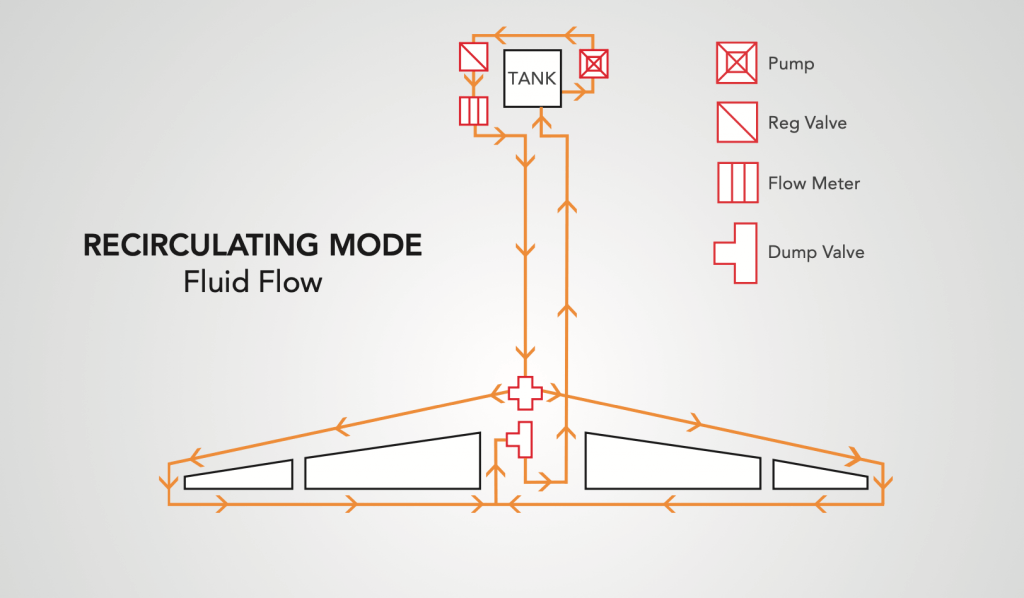
    The first was developed by Arag Australia, and is available there via Nozzles Online, and in Canada through Nozzle Ninja. Designed for John Deere R-Series and Case Patriot sprayers, the kit uses the existing line that feeds liquid to the outermost section and simply extend that line to the end where it enters the boom via two installed elbows. The liquid returns to the centre via the installed boom sections which are connected together by removing the boom end cap (or “aspirator” for John Deere) and replacing the gap with a section of hose. Back at the centre rack, the liquid from both booms meet in the middle. At this point, a three-way valve gives the choice to return the spray to the tank, or to receive pressure from the pump. There is also a manual valve that allows the return to be dumped for safe disposal.

    Arag Boom Recirculation System (Spray Mode)
    Arag Boom Recirculation System (Recirculation Mode)

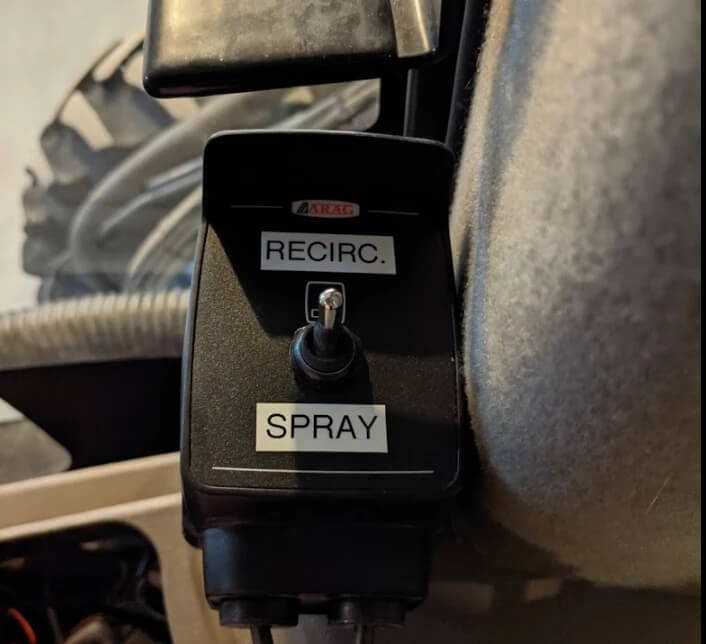
    The system does not tie into the sprayer’s electronics. instead, it adds a switch in the cab that the operator uses to switch from spray mode to recirculation mode. The switch is not activated at the end of each swath, but instead to prime or flush the boom.

    A switch is added so the user chooses recirculation or spray mode. The boom would recirculate to prime or flush, and remain in spray mode during the spray operation.

    Raven

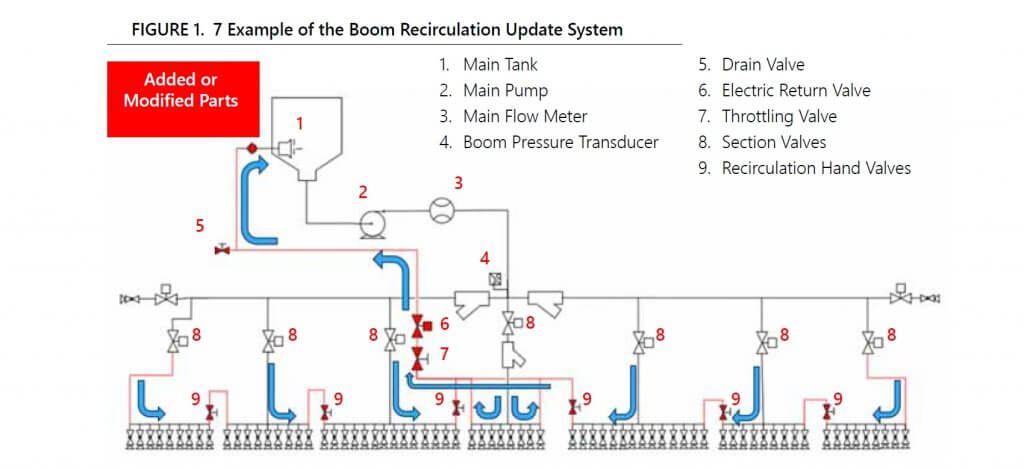
    Raven offers a recirculation kit for 3000, 4000, and 5000 series Case Patriot sprayers with Aim Command HD and an ISOBUS terminal. The approach is slightly different, as they retain the pressure feed through individual sections but also tie the sections together so the spray is returned to the tank. By including a shutoff valve between each section, the system retains the option to use conventional sectional control for high flow situations, or to isolate a section should a leak occur. The system can be configured and controlled from the sprayer monitor, either a Viper 4+, CR7, or CR12.

    Raven Boom Recircualtion System schematic (from Raven manual). Note the retention of section valves and the addition of manual valves between sections.

    John Deere

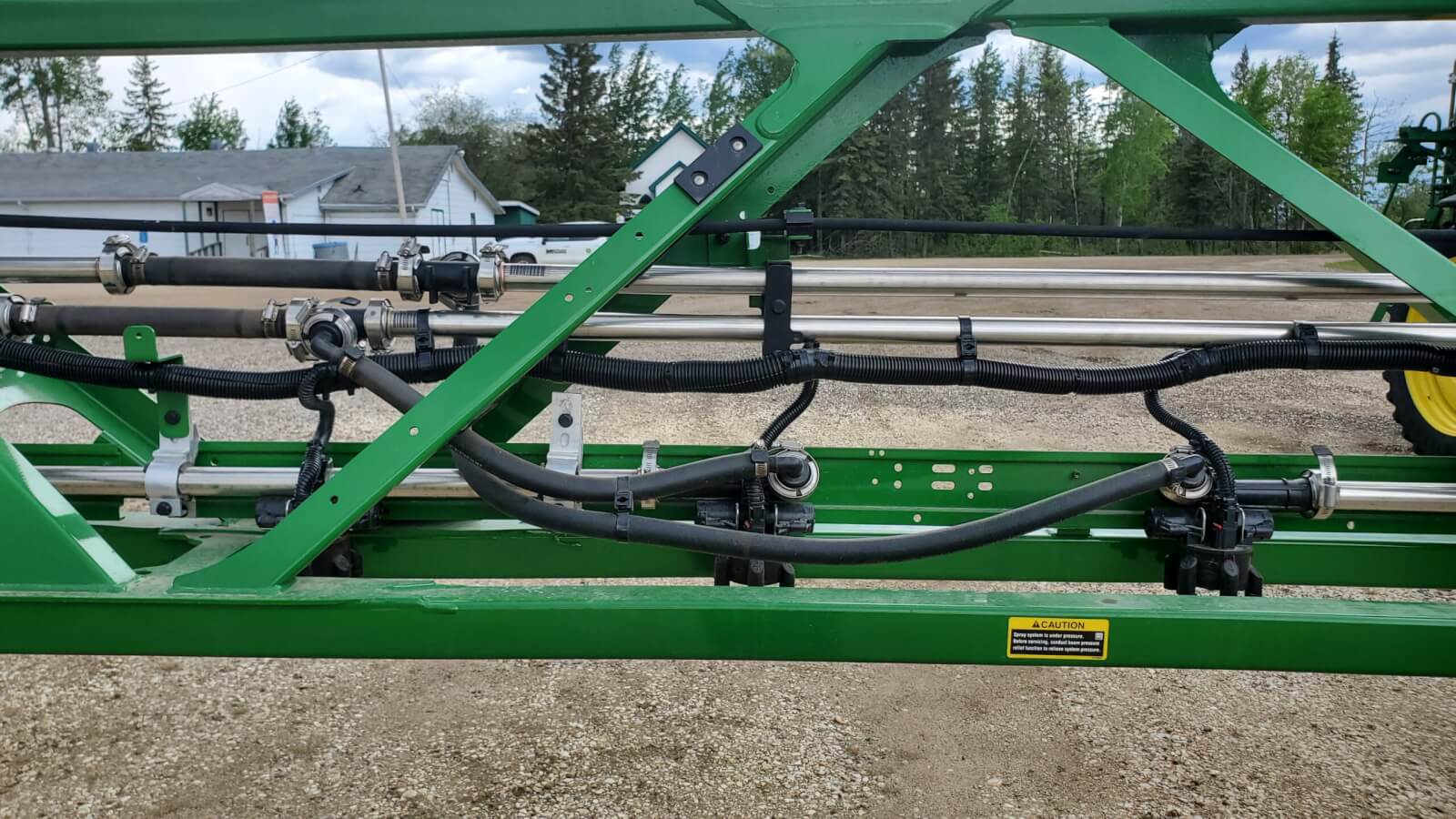
    On March 2, 2021, John Deere announced a 2022 factory option called Pressure Recirculation and Product Reclaim. The system keeps several existing sections and adds two steel lines the flull length of each boom wing. One is for supply, the other return. As these lines approach a section, the supply is fed to one end of the section and the return is connected to the other end. On a 120′ boom, there are five recirculating sections, two on each wing and the centre.

    This approach adds one more line than the other designs, and this line will hold materials that ultimately need to be cleaned, flushed, and possibly dumped or sprayed out for cleanout. A possible reason for the extra line is the ability to deliver 220 gpm to the boom, an advertised feature of John Deere high flow booms that may come in handy for topdressing liquid fertilizer. These levels of volume are not needed for pesticides.

    John Deere Boom Recirculation and Reclaim. Top two lines are supply and return and extend the length of each boom wing. These connect to the existing sections on each wing, creating several smaller recirculating sections.

    Latitude Ag

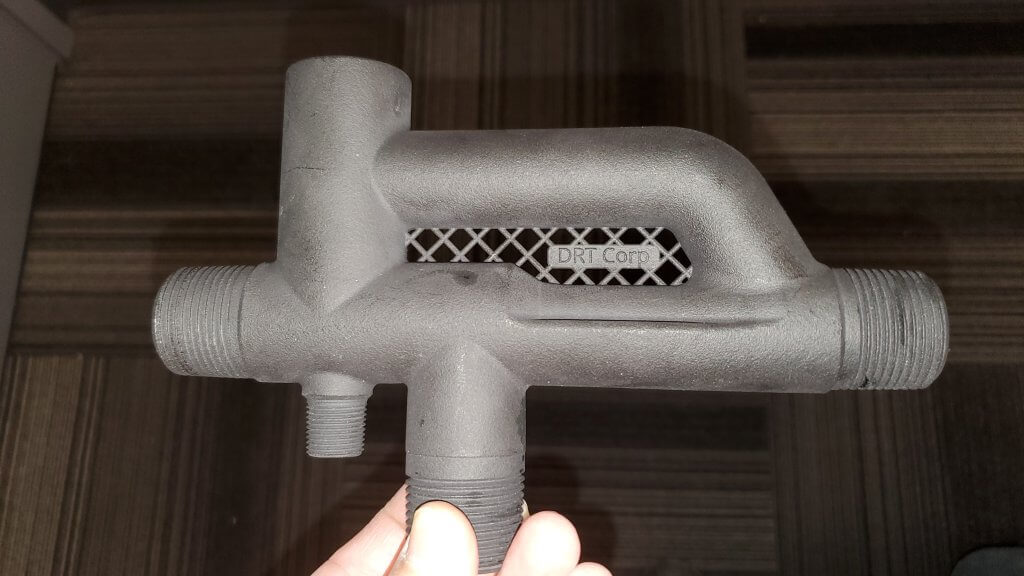
    This Wisconsin company has developed an innovative product that converts any existing plumbed section that contains boom ends into a recirculating section. It does this by incorporating a boom recirculation valve” (the “Merlin IC System“) into the original section feed line. Boom end caps are removed and replaced with sweeps and hoses that return flow to these boom valves. The flow from the boom ends is incorporated back into the sectional feed thanks to a venturi design in the recirculation valve.

    A prototype of the Merlin IC System valve made by Latitude Ag

    Advantages of this design include simplicity. No moving parts are required, the valve simply recirculates the flow from the boom ends automatically whenever that section operates. Existing sectional control, whether it’s by plumbed section or individual nozzle bodies, is unaffected. Flushing the boom with water is done with normal spraying. It takes some extra time to incorporate and dilute the contents of the boom end return lines but results in a clean boom and no section end residue. We’ve seen the results of testing and agree that it works.

    This product does not allow boom priming without spraying. However, a key advantage is that it can be used with direct injection since no product is returned to the tank. Latitude Ag says it will provide the necessary flow sensor and software to make this possible. As of 2025, this system may no longer be commercially available.

    Precision Planting ReClaim

    ReClaim is capable of operating on a sprayer with or without individual nozzle shutoff. For conventional nozzle bodies containing the original spring-loaded diaphragm check valves, the concept is to drop the liquid pressure below the cracking point of the check valves so flow continues through the sections and back to the tank without engaging the nozzles.

    Recirculation fittings are added to the end of each boom section. These feed into 3/4″ lines are installed on section ends, which in turn feed increasing diameter collector lines that eventually return all flow to the tank. Flow reaches the sections as before. When recirculation is turned on, flow exits the boom section through the new fittings and returns through 3/4″ lines to the centre of each section, where it enters 1” lines that take the flow to the center of each boom wing. There the flow in the 1” lines is combined moves to the center of the sprayer on 1.5” lines where it meets the flow from the other wing.  From there, the flow returns to the tank through an electronic ball valve and 2” line. This system ensures no back-pressure and balanced flow from each section.

    For some sprayer rate control systems such as John Deere, the pump won’t operate below about 20 psi despite operator settings. This means the priming or flushing procedure would trigger nozzles to spray if the bodies were fitted with spring-loaded diaphragm check valves. A pressure reduction kit (a second restrictor valve) is required to reduce the pressure sufficiently for ReClaim to work in these instances. More here.

    ReClaim operates independently of any electronic control systems, relying on a toggle switch to initiate recirculation. When flow back to the tank is detected, a light indicates that recirculation is working, and the operator waits approximately 60 sections for a 120’ boom to circulate all volume back to the tank. Download the operator’s guide, here.

    This system requires a lot of additional lines. A 120’ boom would require 120’ of additional 1” line and 60’ of 1.5” line. The manufacturer states that ReClaim adds about 14 gallons of volume that would need to be displaced back to the tank, adding to the standing volume. This volume can be circulated using solution from the main solution tank, or displaced back to the tank using flow from an existing clean water tank, or displaced using compressed air via an optional pneumatic port. It is not clear how spray mix in the ReClaim system can be removed from lines without returning it to the tank and draining it from there. Users should consider the additional surface area and volume that will have to be addressed during cleanout.

    Do It Yourself

    If none of the available options work for your sprayer, consider building your own system. Sprayer plumbing parts are available from the major manufacturers Banjo, Hypro, TeeJet, and Wilger. Wilger, in particular, has developed a nice suite of parts well suited to recirculating booms, including flanged sweeps and thin gauge steel booms, punched for nozzle bodies or unpunched to move product. See their support for DIY projects on this dedicated page: Wilger Retrofit.

    Take Home

    All these recirculation options improve the status quo of plumbed boom sections with boom ends. They should be considered essential equipment on sprayers.