Category: General Operation

Articles that discuss general field sprayer operation and productivity factors

  • Sprayer Top Tips – The Twitterverse has Spoken

    Sprayer Top Tips – The Twitterverse has Spoken

    In June, 2016 (back when Twitter was fun), someone tweeted a clever tip for sprayer operators. It got the usual round of likes and retweets, but it also inspired an idea. We decided to have a two week-long competition for the best North American tip under the hashtag #SprayerTopTips. The winner would receive a WeatherFlow windmeter. Shortly thereafter, Graham Smith (@retrofitparts) of RetroFit Parts generously volunteered a weather meter for the best UK submission.

    2016_sprayertoptips

    After two weeks, we received 43 Sprayer Top Tips. Some of the submissions were best practices, some were equipment tweaks and some were downright funny. Thanks to everyone that shared their ideas, practices and sense of humour. Since Twitter limits a tweet to 140 characters, we took the liberty of interpreting a few of the tweets to ensure everyone understands the content.

    Let’s be clear – we’re not endorsing any of the brands or practices here. There are some great ideas, but give it some thought if you’re thinking of adopting any of them. And so, in no particular order, here are the submissions for the 2016 #SprayerTopTips competition:

    ‏@a4nick  – Any smartphone with apps weather, windspeed, calculator, camera, set up guides and Twitter <to access the> global knowledge of operators.

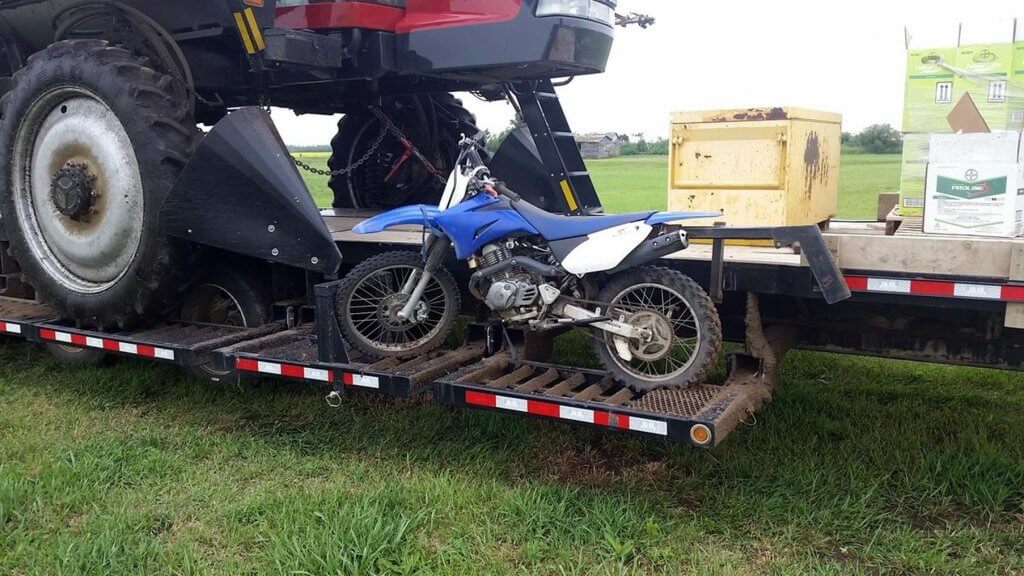
    @Camcar_Ent – Put the dirt bike on the trailer to allow it to be moved where the sprayer will need a fill.
    Camcar_ent

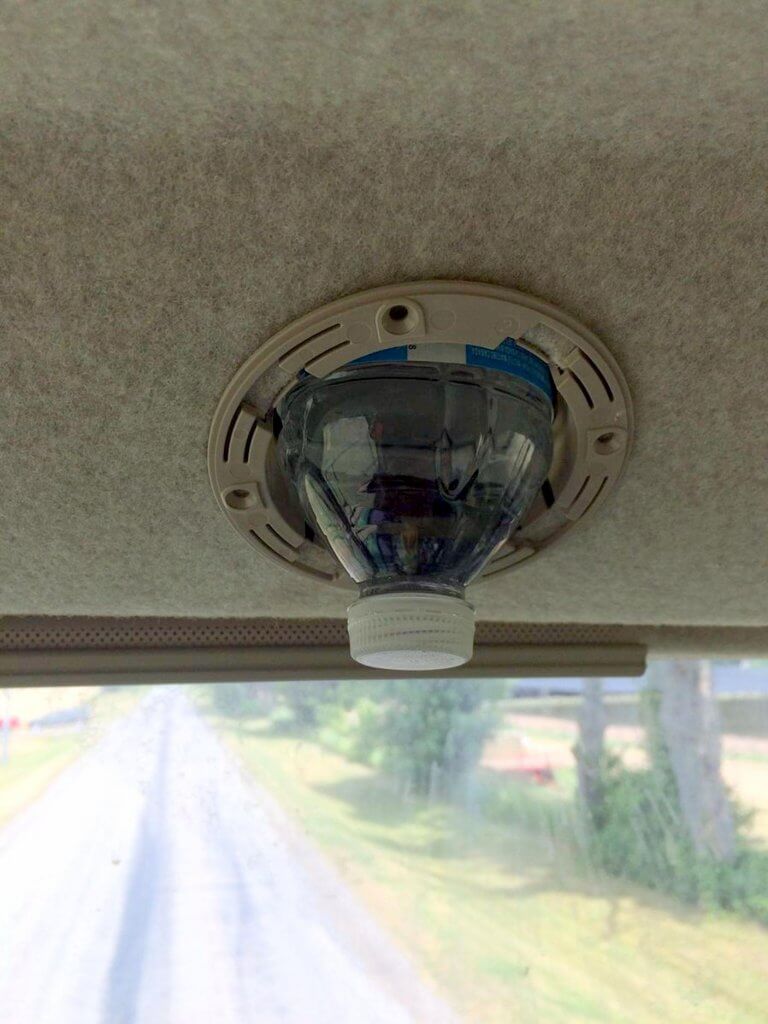
    @Paulvdb2016 – Finally found the water cooler in the John Deere R series cab!
    Paulvdb2016_2

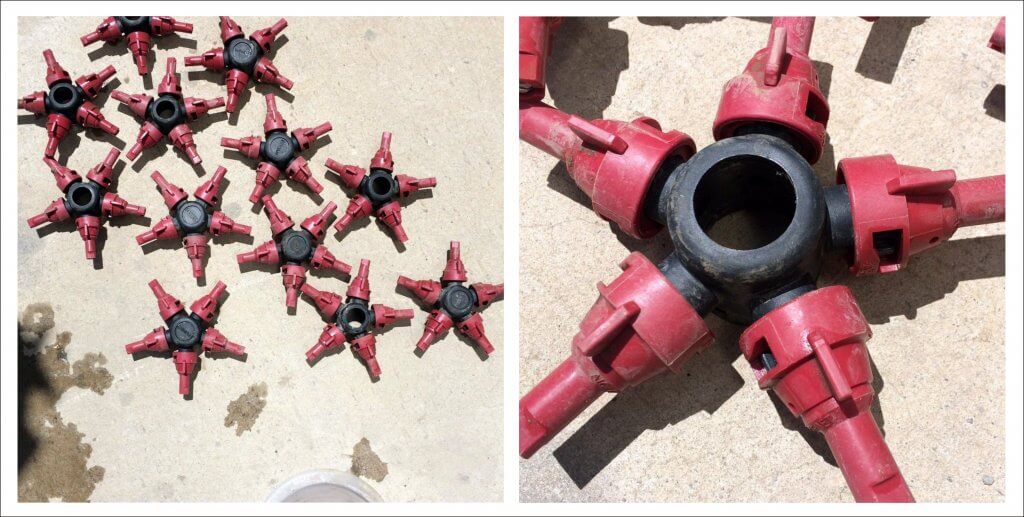
    @Paulvdb2016 – Everybody breaks a few nozzle bodies each year! Save the turret part to organize your extra nozzles (WIND METER WINNER)
    Paulvdb2016_1

    @LeightonBlashko – If your water/handler pump runs out of gas while spiking jugs, backflow will likely contaminate water tank. Keep fueled up!

    @fortkampnathan – Add <an> electric valve to <the> mix system to keep solution agitated when spraying, and shut off when tank is near empty. Total cleanout.

    @fortkampnathan – Valves on boom <section> ends to flush residue and prevent buildup in caps. Split <the> inductor and fill line to add <conditioner> with <the water>.

    @twistedironfarm – Flush booms with water at night when shutting down to prevent residue buildup. Even if using same product the next day.
    1tonyharding

    @landon707 – Don’t forget to feel the hubs to make sure you don’t have <one> hot one (HONOURABLE MENTION)

    This got a reply from @1TonyHarding – One of these <see temperature gun image> is even better. Only ~10°C between a good and bad wheel motor on a Nitro <sprayer>.

    ‏@apple_grain – Talk to landlords before spraying. Some don’t understand what you are doing and why. A short chat can relieve a lot of anxiety.

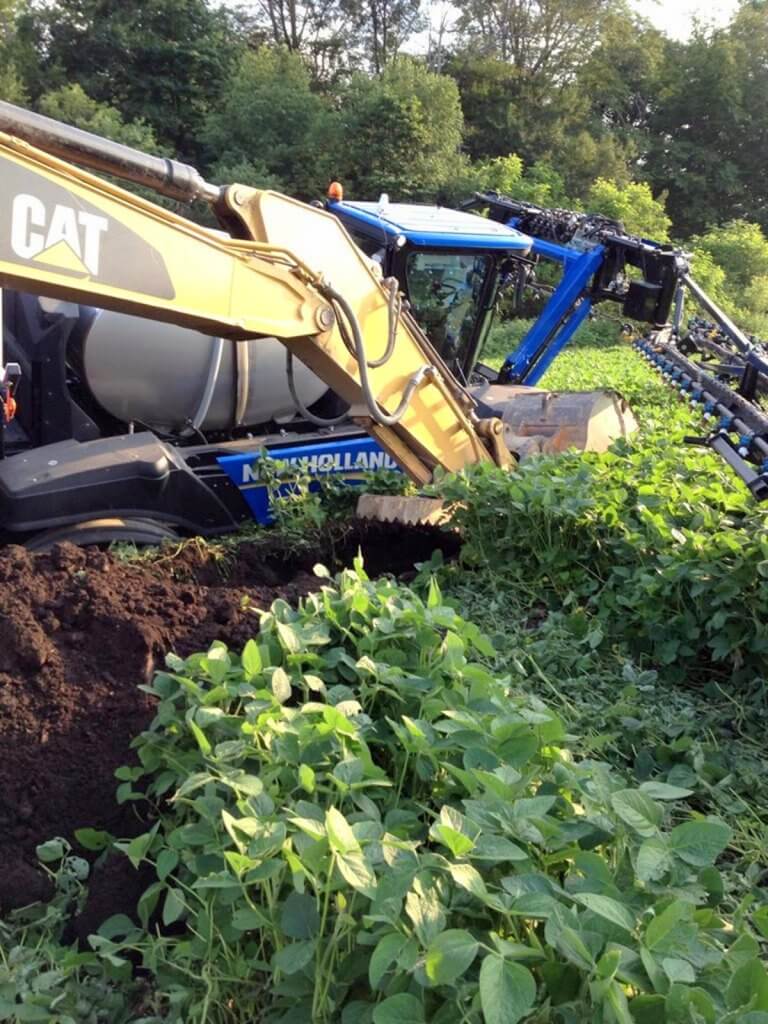
    @rmmathesonfarms – Stay out of the muck, it really is a buzzkill on productivity!
    rmmathesonfarms

    @T77HAM – Always organize a family day out when you want to go spraying to guarantee perfect spraying conditions.

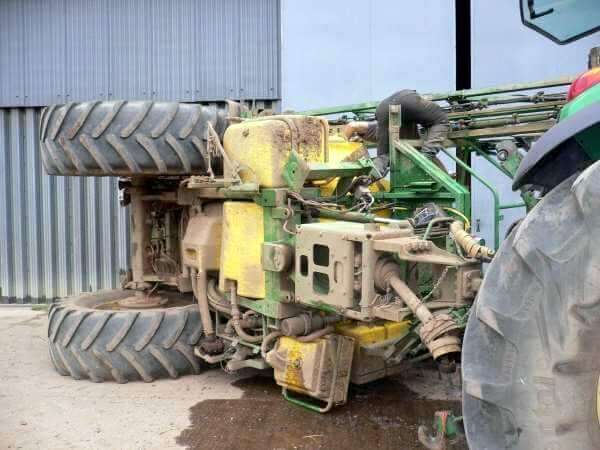
    ‏‏@T77HAM – Make sure everything it greased well… putting it on its side <is> easier than scrambling underneath.
    T77ham

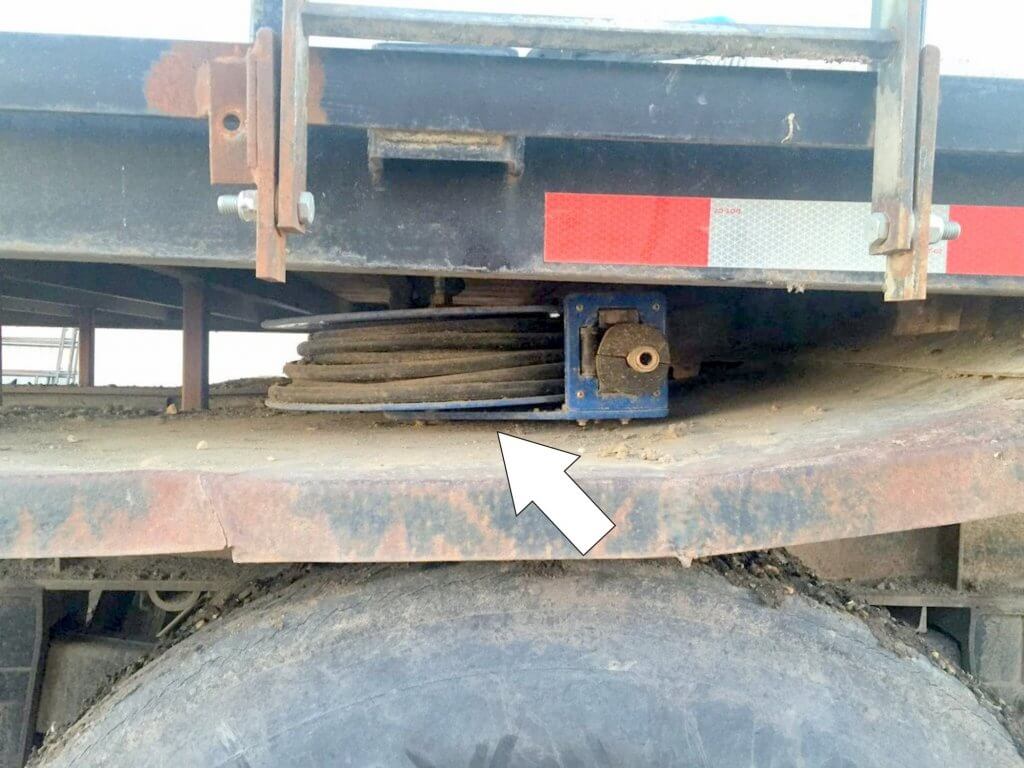
    @GlenHanks – Air reel mounted on water trailer. #no blowback
    Glenhanks

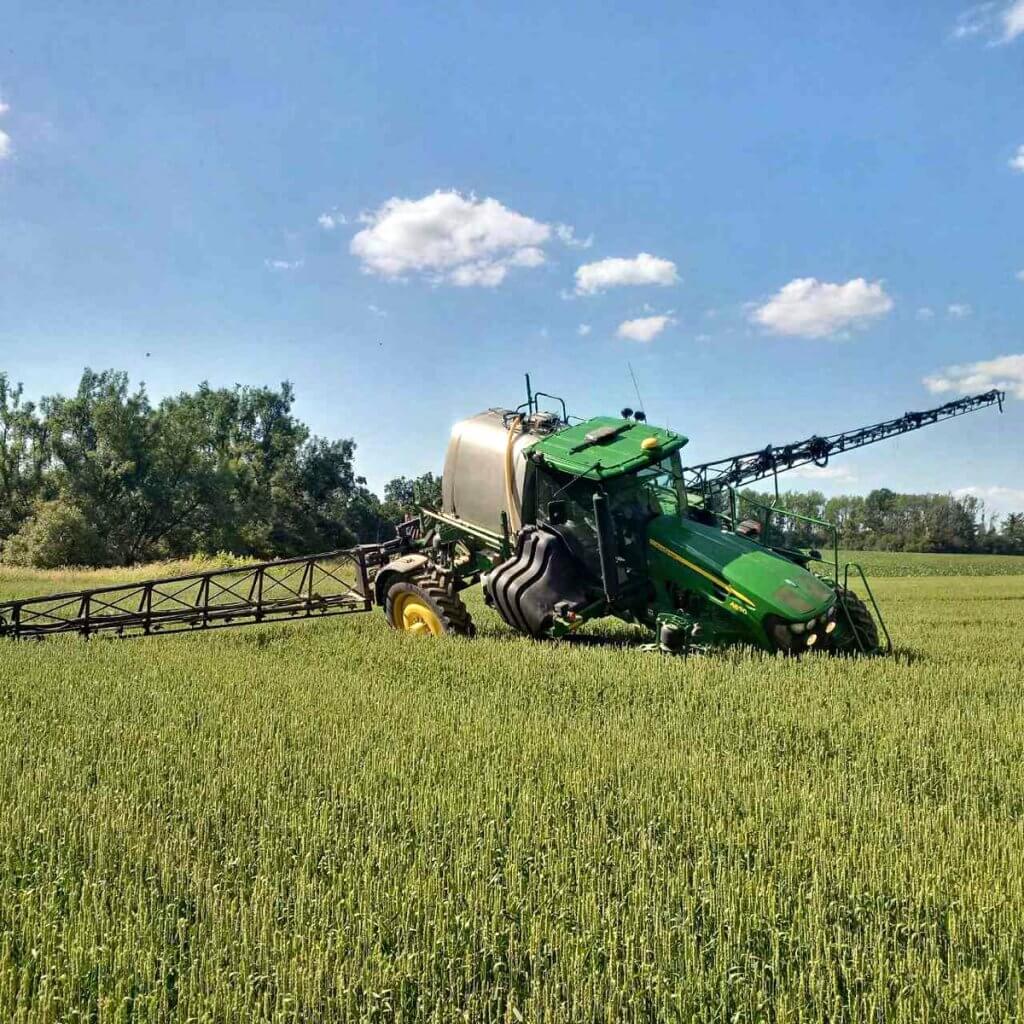
    @cfsdennis – Check <that> all wheels are on! <Editor’s note – This wasn’t just a photo lifted from the internet – this was his experience!>
    Cfsdennis

    @FreyTodd – It never hurts to double check that the field you are spraying is, in fact, all <RoundUp Ready> <More info here>

    FreyTodd

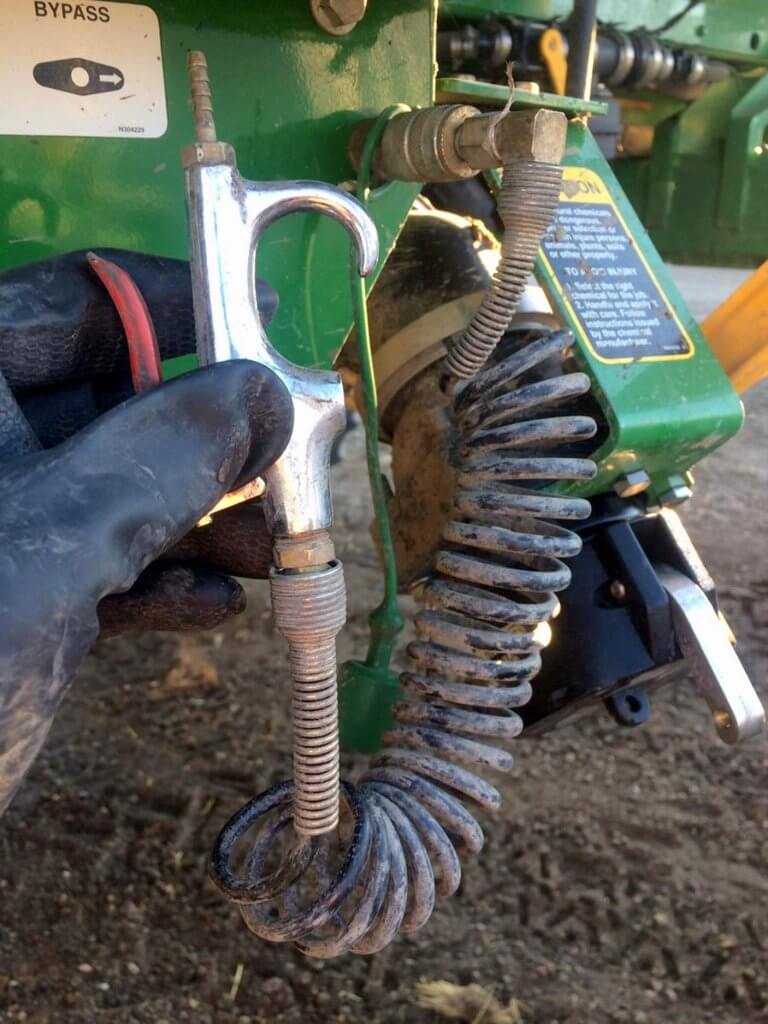
    @EnnsFarmsRuss – Small blow gun tied into sprayer air system makes cleaning nozzles a breeze (WIND METER WINNER)
    EnnsFarmsRuss_2

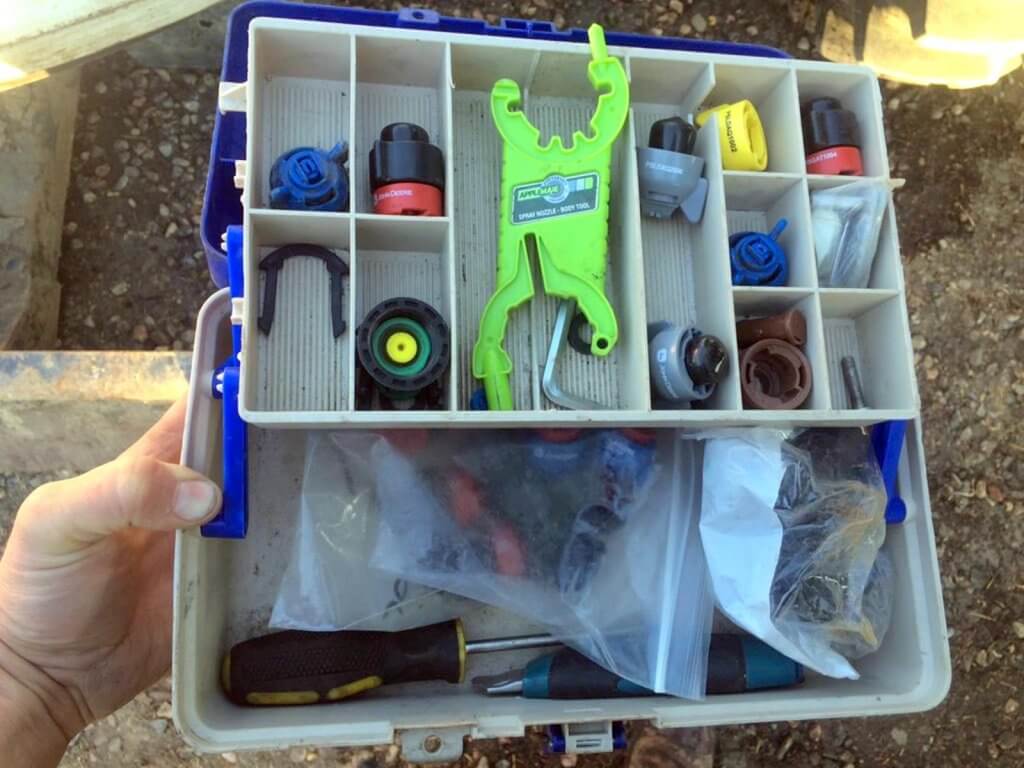
    @EnnsFarmsRuss – A tackle box is great for keeping spare nozzles and parts and tools organized.
    EnnsFarmsRuss

    This got a reply from @thecropdoctor – Neater than my plastic ice cream tubs!

    @thecropdoctor – Record headland sizes as well as landwork areas so if <you are> patch spraying, data is available.

    ‏@konopelskifarms – I spray #ReglonIon @ 20USgal/ac 6MPH 50PSI in evenings – awesome results!

    @konopelskifarms – I spray Liberty at 20 US gal/ac. Great results including less bronzing. Lots of fills, but oh well.

    This got two replies from ‏@skellerfarms  – We upped our water volume for Liberty from 10 to 13gpa, have fewer escapes now. More water is always the answer. <and> More water (10-13gpa) and slower speeds (<13mph) means better coverage and less drift.

    @skellerfarms – Getting “too windy” but need to spray? Up <the> water volume by 3-5gpa and slow to a speed near your minimum effective pressure.

    @landon707  – Eye/hand wash stations on sprayer and tender. We have a garden hose on tender for cleaning filters. <More info here>

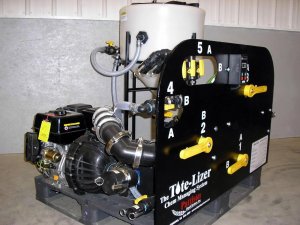
    @LegueeFarms – Pattison Totalizer – loads our R4045 in 7-8 min without hot loading.
    LegueeFarms

    ‏@ONspraysafety – If you can see the maple leaf in the <Canadian> flag, it is too windy to spray!

    @ONspraysafety – If you hear sounds from far away on a calm morning, beware of a temperature inversion. <More info here>.
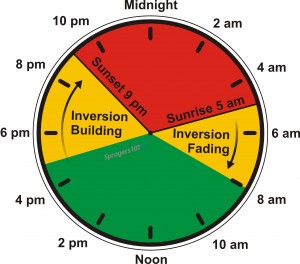
    Inversions occur to some extent every day. It’s the intense and prolonged inversions we want to be especially aware of. On this hypothetical 24 hour clock, we see the inversion fades in the morning and grows in intensity through the evening. Do you spray in the morning or at night? Be mindful or pollinating insects, but when there’s a strong inversion, consider night/morning spraying over evening/night.

    @WheatlanderJay – Use a 1,000 L tote with <the> top cut off for used jugs. We recycle all boxes so they never leave the shed.

    @WheatlanderJay – The four R’s of spraying stewardship: Right Product, Right Rate, Right Staging, Right Application. #dontsprayandpray

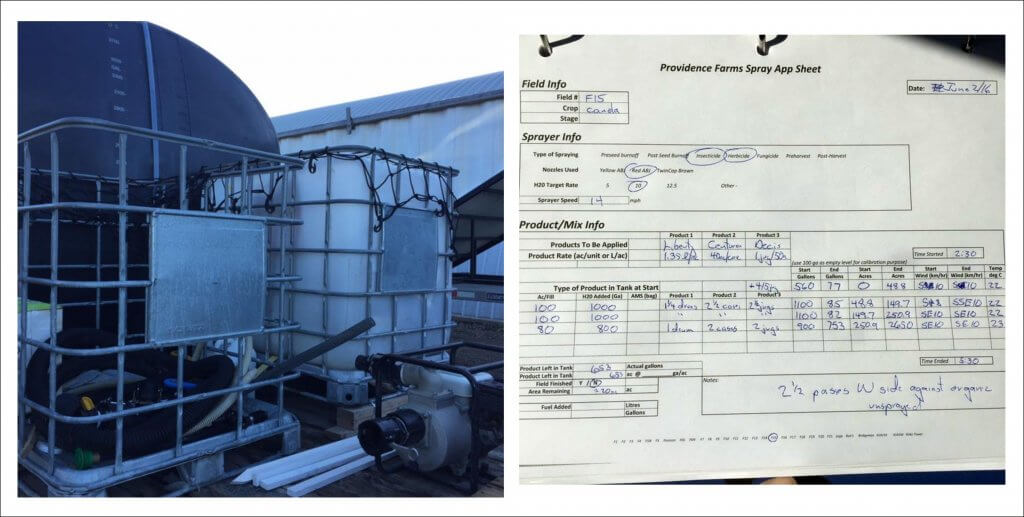
    @RonKrahn – 1,000L tote cages <with> nets for <storage> boxes <left image>. Use a spray record sheet to keep track of fills and <environment> <right image>.
    RonKrahn

    @redwoodacres – Plumb line directly into tank for pumping in bulk chemicals. <This> keeps big hoses chemical free.

    @redwoodacres – Install fresh water connection for eductor/handler rinse water <with anti-backflow>. Cleaner jugs = less exposure.

    @KeatingSeed -Keep a good custom operator on speed dial.

    @GavinHowley – <Install a> float valve in tender tank, hook up hose, go home for <image of a few frosty beers>.

    ‏@DarylTuck – When spraying at 15 MPH and spray drift starts to pass the sprayer, it’s nap time!

    @ehrinf – Reload, reload, reload? Cut that time to a minute and concentrate on spraying. <More info here>.

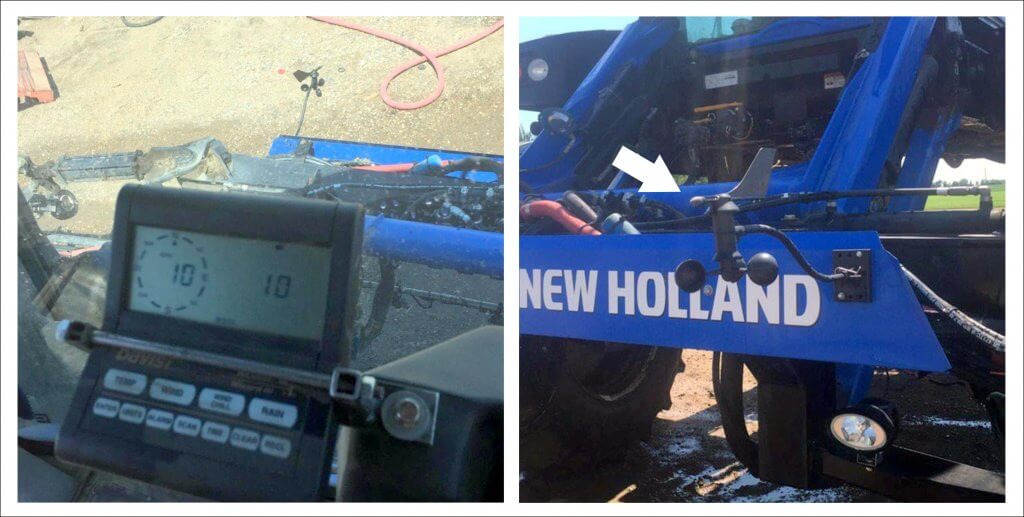
    @BlackwellBrad – Re-purpose your old Davis weather station. Know wind speed and direction.
    BlackwellBrad

    @a4nick – Mobile phone weather apps – very handy.

    Thanks to everyone that shared. Maybe we’ll do it again in 2017!
  • The Pressure Gauge Shows More Than Pressure

    The Pressure Gauge Shows More Than Pressure

    Kim Blagborne (formally with Slimline Manufacturing) has long said that the pressure gauge on an airblast sprayer indicates more than just pressure. It can be used to diagnose a number of pump and plumbing issues… if you know what to look for. Here’s Kim’s troubleshooting guide to reading into what your gauge is REALLY telling you:

    Scenario One

    “As the tank empties, the pressure drops”

    First, try adjusting the pressure regulator (assuming a positive displacement pump). If you can maintain the pressure up until the tank empties, your intake line may be loose and it’s sucking the bottom of the tank. Check the fitting between the suction filter and the pump. Apply a light coating of grease to the O-rings on the elbows and filter to ensure a complete seal.

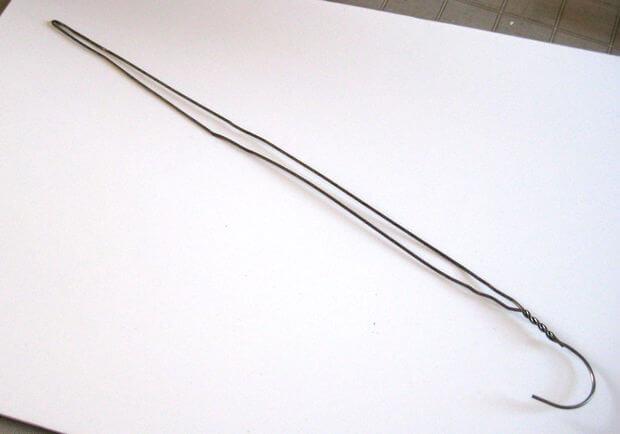
    Second, try stopping mid-tank (that is, turn off the tractor PTO and let the sprayer sit for a few minutes). Does the pressure gauge return to the original set pressure? If so, then the intake line inside sprayer has likely come loose entirely. Open the lid, and using a straightened-out coat hanger, hook the intake line and give a few gentle tugs – it should not be able to move. If it does, you’ll have to re-fasten the intake line so it’s not sucking the bottom of the tank.

    The humble coat hanger. It opens our cars and now fixes our sprayers. Remarkable!
    The humble coat hanger. It opens our cars and now fixes our sprayers. Remarkable!

    Scenario Two

    “When I first start the sprayer, the pressure drops or fails to maintain constant pressure as the tank empties”

    This might indicate improper mixing practices because the filter is probably plugging with product. Alternately, your PTO speed may be too slow to drive sufficient mechanical agitation. Check the suction filter as soon as the problem occurs (don’t finish spraying). If you wait to check when the tank is empty, the evidence of a plugged filter could be washed away before you can confirm it. This problem often happens when spraying nutrients, or when products aren’t compatible.

    If that’s not it, it could be a collapsed suction valve. The pump will sound like it’s “missing” (like an misfiring engine). The suction valve might need to be replaced.

    Or, perhaps you notice that you can compensate for the pressure drop by adjusting the regulator on the first tank. But it has to be dropped back down again for the second tank. In this case, the regulator might be sticking or jamming. Disassemble it and look for grit in the barrel of the regulator, then lubricate the parts.

    Scenario Three

    “I lose pressure when I turn my boom(s) on or off”

    In this scenario, the pressure is fine as you approach the end of the row. You turn off the outside boom (or both) and finish the turn. But, when you re-engage both booms, the pressure drops. Even when you adjust the pressure regulator to compensate (assuming a positive displacement pump), the unit only gains the lost pressure slowly. In this case, the regulator might be sticking or jamming. Disassemble it and look for grit in the barrel of the regulator, then lubricate the parts.

    Scenario Four

    “The pressure gauge spikes when I turn off the boom(s)”

    If you run a Turbomist, it could be the bypass balance. To solve this issue, head over to this article and pan down to see the step-by-step. If it isn’t the balance, then it’s likely the regulator. The issue of a spiking gauge and how to correct for it is covered thoroughly in this article by Ag mechanic extraordinaire Murray Thiessen.

    Scenario Five (a positive displacement pump issue)

    “My gauge pulses”

    Is it more than a 20 psi range? Have you noticed that the deviation gets less as the PTO speed increases? Well, the pump pressure check-valve may have collapsed. Check the pressure check valves in the pump for broken springs on the suction valve plate.

    Does the needle move rapidly through a 5 to 10 psi range? The accumulator pressure might be low. Try adjusting system pressure via the regulator and if that changes how the needle is responding, then set an air compressor to 90 psi (or manufacturer’s recommended pressure) and charge the accumulator.

    Perhaps the needle movement is not affected by system pressure changes or the PTO speed. In this case the accumulator may have failed entirely and the diaphragm will need replacement.

    Scenario Six

    “My calibration is going farther than expected”

    Sure, that sounds pretty good at first, but it may be that the gauge is stuck. With the PTO off and the spray boom on, the gauge must read “ZERO”. If it doesn’t, pony up the $50.00 and get a new one.

  • The Case for Low-Drift Sprays

    The Case for Low-Drift Sprays

    This article was written by Tom Wolf for “PEI Potato News Magazine”, a publication of the Prince Edward Island Potato Board (http://peipotato.org/). It is reprinted with permission.

    PEI Potato News Magazine

    “Should I be using low-drift nozzles?” It seems like a simple question with an obvious answer. We all want to reduce spray drift, and this easy-to-use technology is the fastest way to get there.

    And yet, the question is more complicated than it first appears. Yes, all applicators want to reduce drift, but many worry about the coarse sprays produced by low-drift nozzles. As a spray volume is divided into coarser (i.e. larger) droplets, there are fewer of them, and that can reduce coverage. It’s a legitimate concern.

    Let’s start with our shared value first – the desire to reduce spray drift.

    Given the economic, environmental and health impacts of spray drift, the importance is hard to over-state.  That’s why spray drift management is a primary concern of our federal regulators whose job is to protect the public interest. It’s also a concern for the neighbours who have a right to keep unwanted products off their property, whether it’s residential or agricultural.

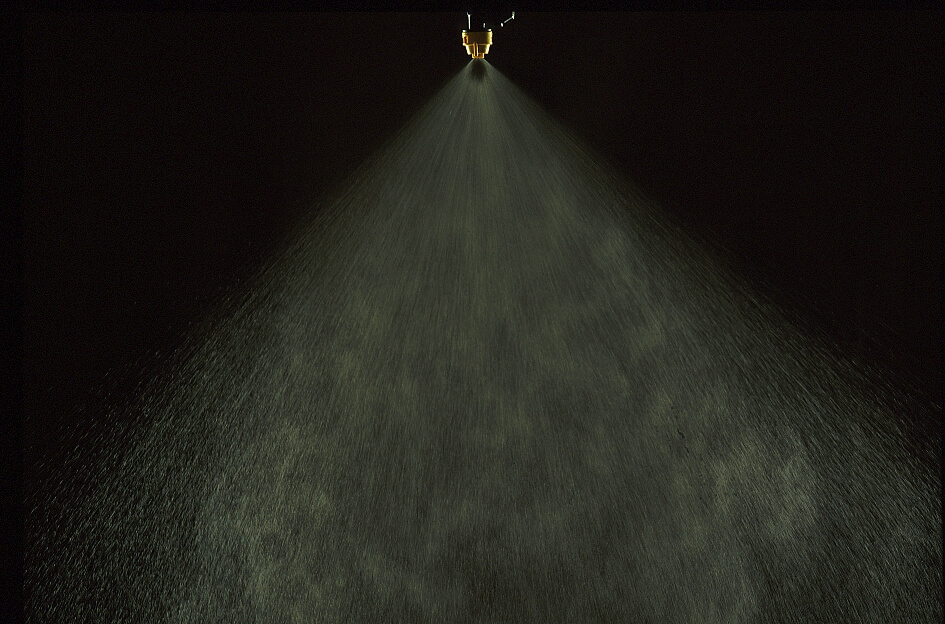
    Fig 1 (XR8004 40 psi)

    Conventional flat fan nozzles (XR8004) operating at 40 psi

    Fig 3 (XR8004 40 psi drift)

    Glyphosate drift with 20 km/h side wind, XR8004 40 psi

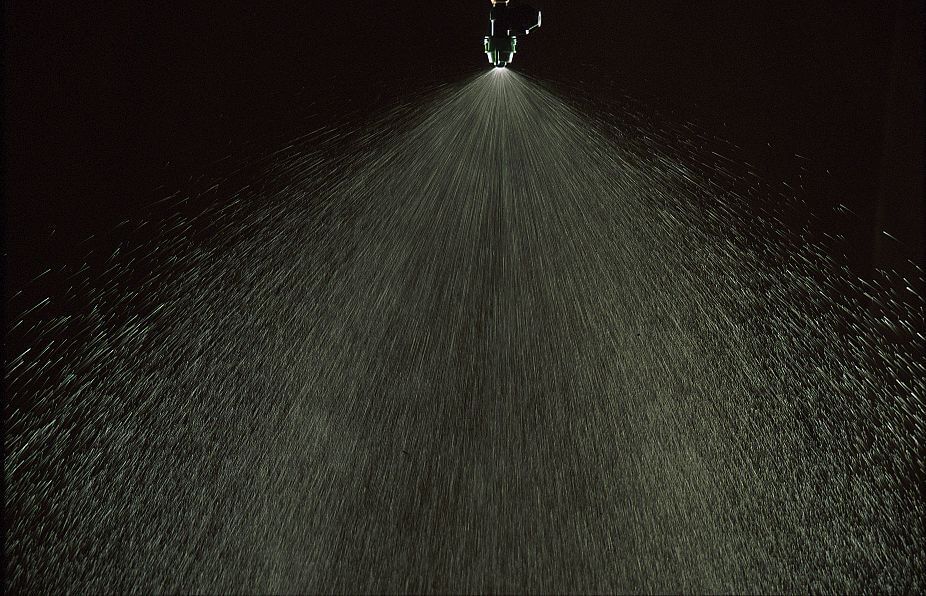
    Fig 2 (TD11004 60 psi)

    Low-drift nozzles (TD11004) operating at 60 psi

    Fig 4 (TD11004 60 psi)

    Glyphosate drift with 20 km/h side wind, TD11004 60 psi

    For these reason, managing drift should be a foremost concern for applicators. The technology is vital to the crop production industry, and if we don’t take care of the issue, someone else will take care of it for us. That’s not the best path.

    Much has been written about how to reduce drift. The key points are:

    • choosing days with better weather,
    • lowering booms and travel speeds,
    • watching spray pressure,
    • protecting the spray with shields,
    • using coarser spray qualities on the whole.

    Of these, the most economical and practical is using coarser sprays via low-drift nozzles. Engineered to emit fewer fine droplets, they are proven to reduce drift by anywhere from 50 to 95% compared to a standard flat fan of the same size.  When it comes to reducing drift, they work.

    When these tips first hit the mainstream as “pre-orifice” nozzles in the late 1980s, and later as “venturi” nozzles in the mid 1990s, we were impressed with their ability to reduce drift. And the obvious question was, what about product efficacy? Can fewer, larger droplets do the job? The answer, to our initial surprise, was yes.

    In the late 1990s, the crop protection industry (including governments, universities, and the private sector), participated in studies throughout Europe, Australasia, and North America looking at low-drift spray performance. In Canada alone, we conducted over 100 studies and concluded that pesticide efficacy was not harmed when a properly adjusted low-drift nozzle was used.  A surprising result showed that fungicides did not seem to need finer sprays, contrary to popular opinion, as long as water volumes were sufficient to provide adequate coverage.

    As we did more and more studies, it became apparent which points were critical:

    • When using venturi nozzles, spray pressure had to be increased from the industry standard of 40 psi to about 70 psi. This is because of a venturi nozzle’s two-stage design. The high pressure compensated for an internal pressure drop inside the nozzle. Sprays remained low-drift, but patterns and overall efficacy were better at this higher pressure.
    Fig 5 (XR8002 40 psi)

    Spray pattern of conventional spray (XR8002, 40 psi)

    Fig 6 (ULD 60 psi)

    Spray pattern of low-drift spray (ULD12002, 60 psi)

    Fig 7 (XR8002 40 psi)

    Spray deposit of conventional spray (XR8002, 40 psi. ~10 gpa)

    Fig 8 (ULD 60 psi)

    Spray deposit of low-drift spray (ULD12002, 60 psi, ~10 gpa)

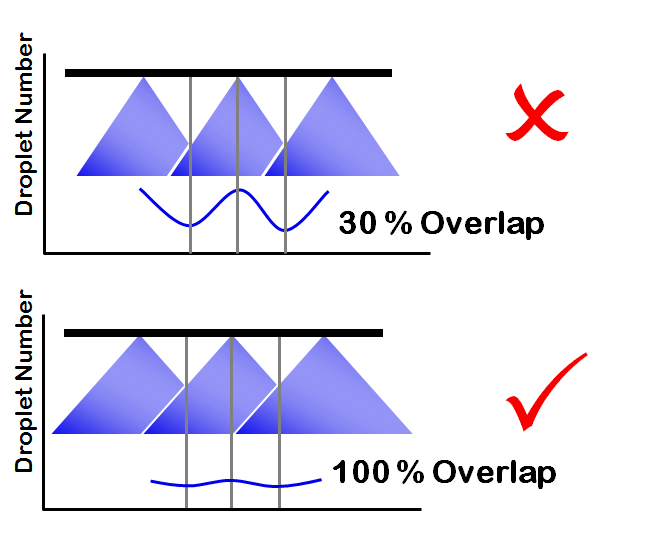
    • Spray pattern overlap needed to be greater with low-drift sprays – a full 100%. In other words, the edge of one nozzle’s spray pattern should reach the middle of the adjacent nozzles’ patterns. The pattern width at target height was now twice the nozzle spacing and this ensured good distribution of not only the spray volume, but droplet numbers, along the boom.
    Pattern Overlap
    • We needed to pay attention to the target plant architecture and leaf surface properties. Plants such as grasses (with vertical surfaces and difficult-to-wet leaves) often had less spray retention with coarser sprays. Low-drift nozzles worked, but we couldn’t go as coarse in these cases. Careful selection of low-drift nozzles as well as more attention paid to operating pressure solved these issues.
    • Our minimum water volumes had to increase slightly to compensate for the fewer drops produced by low-drift sprays. This was especially true for contact modes of action where too few droplets-per-area reduced performance. Using an Extremely Coarse spray at a very low water volume was asking for trouble.

    Much of my efforts in recent years have been to advise applicators just how coarse they can safely go without harming product performance. This involves things we’ve touched on in this article, like water volumes, modes of action in the tank mix, target plant or canopy architecture, growing conditions, and the like. We’ve arrived at a few rules of thumb, like those above, but as always, it’s dangerous to oversimplify and there are always new situations to grapple with.

    While we were learning how to tweak low drift nozzles to get them to perform, we also learned there were significant advantages to using coarser spray qualities.

    1. Foremost, there was an immediate reduction in drift. One applicator told me years ago that switching to a low-drift spray removed a huge burden of worry from him, and that alone was worth it.
    2. Low-drift sprays made it easier to spray on-time, even if weather conditions were marginal for conventional sprays. The result: the timely removal of weeds, or the correct staging of fungicides and insecticides. This has paid large dividends in terms of protected yield.
    3. Coarser sprays can protect product performance from some adverse conditions, such as days with high evaporation rates. On such days, fine sprays evaporate to dryness so quickly that uptake can be limited. Larger drops stay liquid longer, with more uptake the result.
    4. Directed sprays, be they banded sprays or twin fan nozzles for fungicides, make more sense from coarser nozzles. The reason is that these coarser sprays go where they’re pointed, whereas fine sprays lose their path in wind or through travel-induced deflection, very quickly.
    5. We also learned about the air-entrainment that coarser sprays can produce. Large droplets dragged air with them, and smaller droplets could hitch a ride in their wake. This provided a form of air-assistance that reduced drift and carried small droplets into the canopy. Finer sprays had a harder time producing this type of drag, and sustaining it in the canopy.

    When we analyzed the droplet size spectrum of coarse and fine sprays, we confirmed that the total number of droplets produced by any given volume of water had been reduced. Not a surprise. But two things struck us.

    First, even though the average size of droplets in coarse sprays were very large, they still contained a population of small droplets.  In fact, if you counted every single droplet in the spray, the vast majority were small and they were still taking care of coverage.

    Second, the critical amount of coverage (measured as the percent of the surface area covered by spray deposits) that was necessary for a given product to work was lower than what we’d been aiming for. In other words, we didn’t need as much coverage as we thought we did, and any excess didn’t actually add to product performance in most cases.

    We later analyzed the relationship between spray coverage and herbicide performance and found that the uniformity of the deposits was actually more important than the amount of coverage per se. So, if we focussed on proper overlap and spray pressure there was greater benefit than increased coverage alone. Deposit uniformity has become our research focus of late.

    So, should you be using low-drift nozzles? By adopting the changes in pressure, overlap, and water volume outlined above, and paying more attention to the plant architecture and pesticide mode of action, we’ve been very successful in implementing low-drift sprays in all field crops. In my view, we can safely retire Fine sprays for all field crop pesticides. This means conventional flat fan nozzles, hollow cone nozzles, and the like. Get rid of them.  All they do is add drift potential.

    It’s safe to adopt low-drift sprays. Research and experience from the field prove that they work. Low-drift sprays should be viewed as an agronomic tool that improves application timing and accuracy.  And with less drift, we show that agricultural practice can be both efficient and environmentally responsible. That’s going to be a very important story to tell, now and in the future.

  • Flag the Technology – Matching Herbicide to Genetics

    Flag the Technology – Matching Herbicide to Genetics

    We like to keep things simple ’round here and this poka-yoke from Arkansas is both simple and effective. What’s a poka-yoke?

    “Poka-Yoke”: a Japanese term that means “mistake-proofing”. It’s a mechanism that helps an equipment operator avoid (yokeru) mistakes (poka) by preventing, correcting, or drawing attention to human errors as they occur. Thanks, Wikipedia.

    The problem

    An aerial applicator has to spray a lot of fields. They consult their work orders, the plane is loaded, they spray and repeat. However, depending on which herbicide trait was introduced to which crop, accidents can happen. Imagine the mess when you spray a crop with glyphosate… and it isn’t a glyphosate-tolerant crop? This problem promises to become more of an issue as we introduce glyphosate+2,4-D and glyphosate+dicamba-tolerant crops. It may look like the right soybean plant, but you DO NOT want to mess up by spraying the wrong chemistry on the wrong genetics! You think a bit of residue in the lines can cause trouble…

    Yellow flags designate this field as a Clearfield rice field (Photo from UofA FSA2162)
    Yellow flags designate this field as a Clearfield rice field (Photo from UofA FSA2162)

    The solution

    In 2011 the University of Arkansas came up with a “quick and inexpensive” way to prevent this from happening. They used six-foot, colour-coded bicycle flags. Each colour or pattern represented a specific herbicide tolerance, as shown here. Aerial operators were given a copy of this visual key and the growers placed a couple of appropriate flags at the edge of the field on the approach vector at planting.

    The result

    Aerial applicators got one final check before they started to spray… just in case. In 2014 the innovative people behind this concept reported that it prevented countless acres of accidentally-damaged crops. Several (honest) aerial operators admitted to pulling up just before they started to spray because they realized there was a mismatch between what was in their tank and what the field was supposed to receive.

    Corn field with glyphosate (white) and glufosinate (bright green) stacked technology. (Photo from UofA FSA2162)
    Corn field with glyphosate (white) and glufosinate (bright green) stacked technology. (Photo from UofA FSA2162)

    The challenge

    This is the kind of elegant, simple tool that we all should be using for ground rigs as well as aerial sprayers as we begin to plant more crops with stacked traits. Canada, the US, Australia, anyone using these genetics, could benefit. We should consider adopting this method, complying with Arkansas’ existing colour scheme and adding to it as required. Seed companies and agrichemical companies should find a way to bundle the flags with the chemicals and seeds for the buyer.

    Read more about the Flag the Technology method from this University of Arkansas factsheet.

    …and one more time with gusto: “poka-yoke“.

  • Sprayer Nurse Truck Designs Part 2

    Sprayer Nurse Truck Designs Part 2

    One of our recent posts highlighted some great producer designed tender systems for the sprayer.  We posted four submissions, and are continuing the series with new submissions in this post.

    Our fifth submission comes from the folks at Pattison Liquid Systems of Lemberg, Saskatchewan

    I recently saw Phil Lingelbach of Pattison at a sprayer clinic. Pattison has been designing and building  transfer systems for years, and have valuable experience to share.

    I asked Phil and John Young these questions about transfer system designs:

    1. Why is filling faster important? How does it reduce your operating cost?

    “Idle time costs money. Consider that trade in cost of an average high-clearance sprayer is approximately $185/hr on the meter.  So 100 hours of idle time per year is costing nearly $20,000 in reduced trade-in value.

    We also need to maximize “best spray condition” time. We know that application timing is critical to success, and need to take advantage of good weather conditions. Spraying under marginal conditions reduces the chance of good pesticide performance.

    Efficient filling can also reduce labour costs, this is a “snowball number”. Every unnecessary hour spent spraying could be used to do something more productive, in essence a wasted hour costs you two.”

    1. When designing a transfer system, what are the key considerations that separate a good from a bad system?

    “Make sure that the water pumps pushes water to the inductor system.  Do not use a water pump to pump chemical. Contamination is a huge issue with this.

    Keep your transfer system away from the rear of an open deck to minimize dust exposure.

    Front cover - Inductor Pro

    A good transfer system will be easy to clean and very user friendly, valves separated and clearly marked.

    Get the biggest, fastest pump available. Loading water after the chemical is in is key.

    Make it simple to operate, there is lots of hired help on the farm.

    Design it to keep operator from being exposed to chemical. Keep trip hazards to a minimum.

    Include fast product induction. There is no point filling water quickly and having to wait on a slow product pump.”

    IMG_20160330_111710818 resize


    1. You mentioned the speed of filling product. What flow meters are most accurate and reliable?

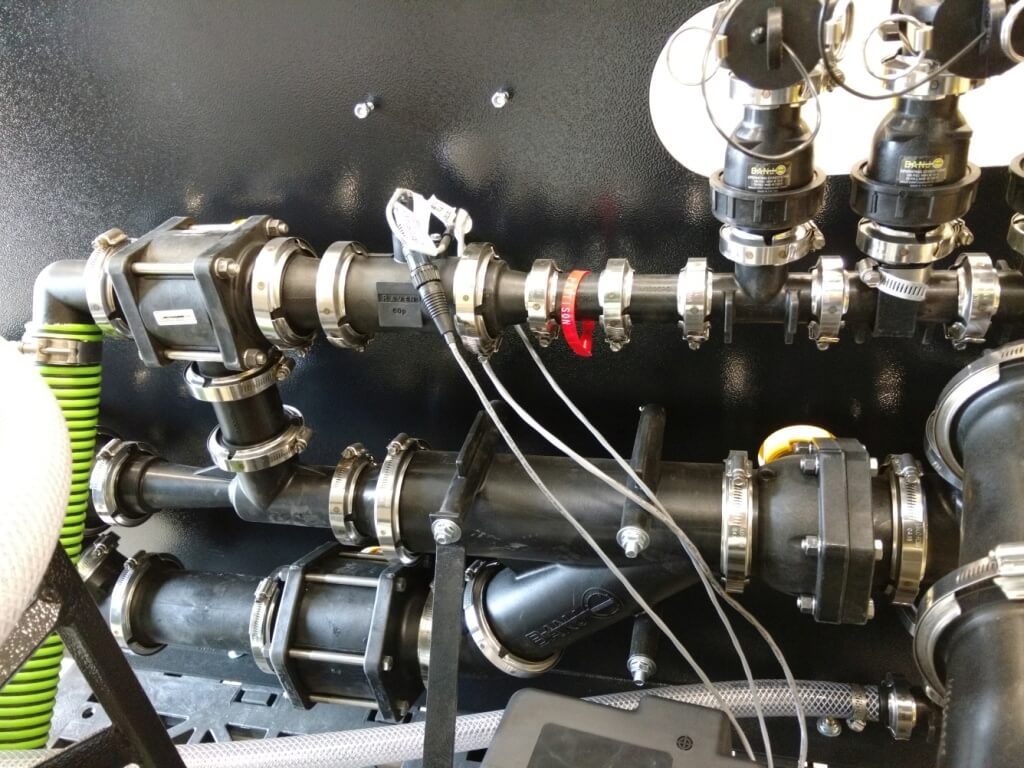
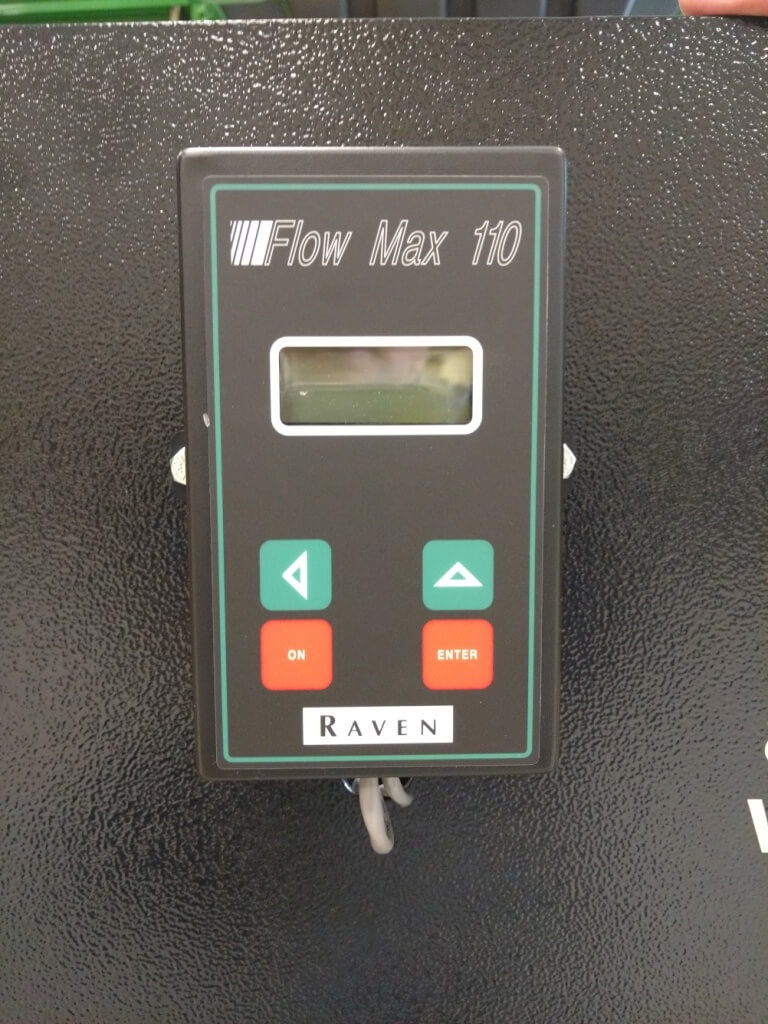
    “The Banjo Mag meters and the Raven FloMax 110 (combined with the 60P) and 221 are the most accurate that we have available, the Banjo is limited to non-petroleum based products though.

    IMG_20160330_111606467 resize

    Both the Raven 60P and Flomax 221 are turbine style meters, to be used with all ag chemicals, – 2” models.

    Banjo Mag meters should only be used with water based products – this meter is the best for measuring water when filling, comes in a 3” model.”

    1. What are the best ways to clean a transfer system? 

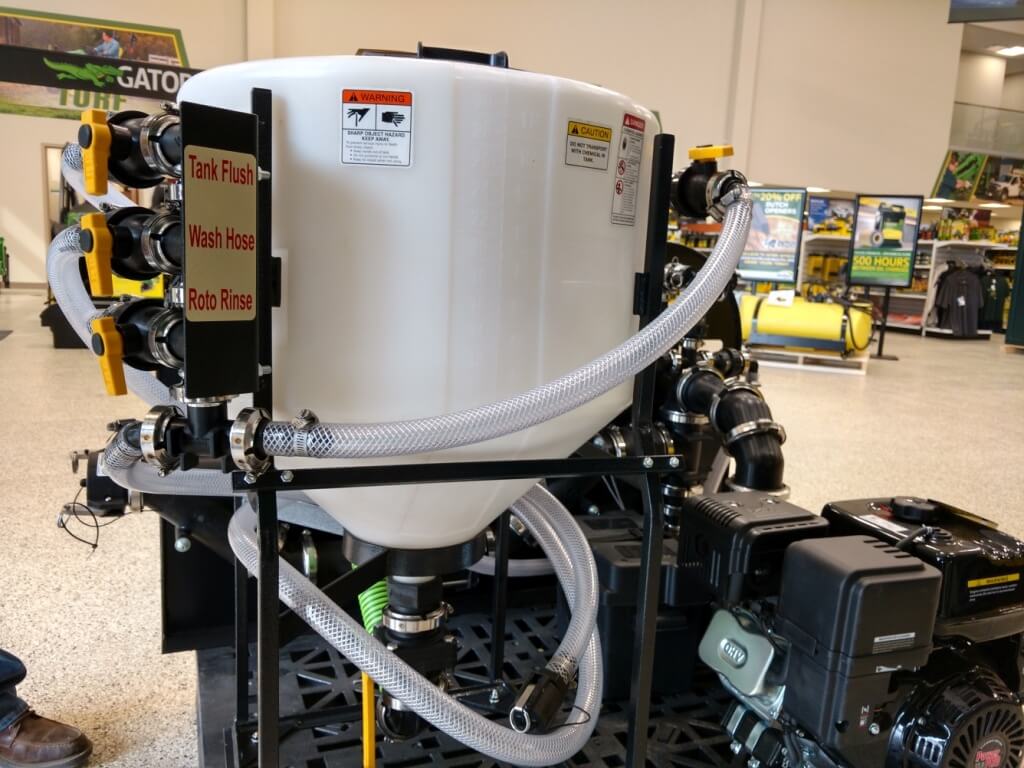
    “The best way to clean your jug rinse tank is THOROUGHLY!! There is no such thing as overkill when it comes to cleaning this tank, we use a tank that has no bulkhead (total drain, no bulkhead for product to get hung up on) in the drain, a rinser designed for an 800 gallon tank, and very minimal fittings for chemical to get hung up on.

    Use lots of water, when you think it’s clean, rinse it one more time!!

    All our inductor systems come with a quick attach clean water rinse system, that allows the operator to flush the complete metering/inductor system.”

    IMG_20160330_112122442_HDR resize


    1. What is usually the limiting factor when trying to fill a sprayer faster? 

    “Hose size, pump size, venturi efficiency, and planning are most critical. Consider your needs – a system should be designed specifically to the needs of the operator.”

    1. Do you need more than one inductor to handle multiple products in time?

    “Usually one will be sufficient so long as the suction line is of sufficient size and length.

    Our inductor systems are configured to handle more than one bulk product at one time. With just the turn of a valve you can switch from metering one product to another, or quickly change from metering a bulk product to handling jugs.”