OrchardMAX won the 2016 Canadian Agri-Marketing Association’s “Certificate of Merit” in the Mobile Apps Category.
OrchardMAX is a free decision-support tool that helps apple growers match airblast sprayer output to the size, shape, and density of an orchard canopy.
Rather than applying the same volume and pesticide dose to every block throughout the season, OrchardMAX uses the principles of Crop-Adapted Spraying to estimate settings appropriate for each orchard block. The objective is more consistent spray coverage with less avoidable waste. Ontario and Nova Scotia orchard trials demonstrated seasonal spray-volume savings of approximately 20 to 35%, without significant differences in pest activity and reported or fruit quality.
What OrchardMAX does
Using information supplied by the operator, OrchardMAX can:
Account for changes in canopy size, shape, and density
Estimate an appropriate carrier volume and pesticide dose
Suggest nozzle flow rates and sprayer settings
Calculate the amount of formulated product required per tank
Estimate work rate, tank requirements, and potential savings
What OrchardMAX does not do
OrchardMAX is a decision-support tool, not a substitute for calibration, operator judgement, or the pesticide label. It will not:
Recommend a rate above the pesticide label
Calibrate the sprayer
Confirm that adequate spray coverage was achieved
Account fully for wind, temperature, or relative humidity
Recommend less than 400 L/ha, approximately 42.5 US gal/ac
Recommend less than half the labelled pesticide rate
The results are only as reliable as the information entered. Operators must still maintain and calibrate the sprayer, match air settings to the canopy, work in reasonable weather conditions and confirm coverage using water-sensitive paper.
How to use it
For each spray scenario:
Select or enter the sprayer and orchard block.
Describe the current canopy size, shape, and density.
Enter the labelled pesticide rate and planned spray mixture.
Review the proposed carrier volume, pesticide dose, nozzle rates, and number of tanks.
Configure and calibrate the sprayer.
Confirm the resulting coverage in the orchard and adjust where necessary.
Start with a few representative blocks. Compare OrchardMAX recommendations with your current program, evaluate coverage, and make incremental changes as you gain confidence.
History
The original app was an excel-based tool created in 2010 and later developed into an app for iOS and Android systems by AgNition Inc. with funding from Growing Forward 2 in 2016. Compatibility with iOS and Android ended in 2020. We have now rebuilt the same functionality into this online version of the app.
A Veteran Applicator’s Questions about Pesticide Handling
Time and again, after years of working with dozens of different chemicals, I would wonder to myself “How dangerous is this chemical?”, “Is glyphosate as safe as they say it is?”, “How do I find out what type of safety gear I need while handling this chemical?”
Beyond the agrichemical dealer, ag. consultants, and university or government ag. extension specialists, a quick internet search reveals many sources of pesticide information. Collectively they identify the active ingredient(s) in formulated products, they detail which pests are best controlled by the pesticide, and they provide instruction for application. But it’s more difficult to find consistent, practical information about safe pesticide handling. Sometimes it’s excessive to the point of being impractical (try finding actual “chemical proof” gloves), and sometimes it’s minimal and vague – it depends where you look. No matter the level of precaution, pesticide safety is time consuming and involves some fussing, but it is the hallmark of responsible pesticide use. Just as we ensure that we are applying “safe rates” when spraying chemicals, we must also ensure we are respecting our own well-being while handling chemicals.
In Canada, the Pesticide Regulatory Directorate (PRD) is charged with protecting human health and safety by monitoring pesticides that are sold in this country. According to the Federal Pest Control Products Act all pesticides sold in Canada must be registered with the PRD. There’s a very nice overview of how that process works here. It is during this registration process that pesticide handling precautions are identified for the label. Further classification may take place under provincial acts.
All pesticides are designed to disrupt, repel, control or kill living organisms, but when it comes to safe handling, insecticides receive the most attention. This is because herbicides and fungicides target biochemical pathways that only exist in plants or fungi. However, most pesticides can be hazardous if they are not handled correctly. The handling precautions that appear on the label are based on five factors.
Five factors that affect handling precautions:
1. Pesticide Family
This factor is the broadest way to categorize potential risk to the handler. Generally, herbicides and fungicides are considered safer than insecticides, but there are notable exceptions. Do not rely solely on the pesticide family when making decisions on pesticide handling.
2. Pesticide Mode of Action
The mode of action gives further detail into how a pesticide should be handled. Modes of action that inhibit biochemical pathways that exist in the target pest, but not in mammals (people, in particular), have lower acute toxicities. Examples include herbicides that inhibit enzymes involved in amino acid synthesis or in photosynthesis – these enzymes do not exist in mammals. However, once again, there are always exceptions. Do not rely solely on mode of action when making decisions on pesticide handling.
3. Pesticide Formulation & Route of Entry
Pesticide formulation affects how a product can potentially be absorbed into the body. Emulsifiable Concentrates (ECs), for example, have higher rates of absorption than solutions or dry products. When it comes to the route of entry, dermal contact is considered safer than inhalation or ingestion. However, not all parts of your skin are created equal, and the point of dermal contact on the body matters a great deal.
4. Pesticide Toxicity
Taken collectively, the first three factors form the overall toxicity of the pesticide. The level of toxicity cannot be predicted – it has to be tested. The LD50 (defined below) values that are reported for a pesticide come from standardized experiments such as animal feeding. Although the chosen species (usually white rats for mammalian endpoints) are known to be similar to humans in their response, there is still the possibility of error. Nevertheless, toxicity forms an important basis for establishing handling precautions.
5. Operator Exposure
People handle toxic substances every day. Household bleach, for example is surprisingly toxic, and yet it can be readily found on kitchen shelves in many homes. The risk of being harmed by a toxic product can only be determined by the likelihood of exposure. While it is possible someone might accidentally consume a hazardous dose of bleach, it’s improbable. Exposure does not just refer to a single exposure to a substance – repeated exposures to small doses of a toxic substance can have a cumulative effect. The goal when handling any pesticide is to minimize exposure, but it becomes even more critical when that pesticide is highly toxic. Together, exposure and toxicity form the basis for risk.
Risk = Hazard x Exposure
Studies have shown that exposure is greatest for handlers of agricultural pesticides during the mixing and loading phase of spraying. During this phase, the risk to the handler may be increased due to:
physical stress
the denial of risk
a negative opinion of personal protective equipment (PPE)
The main method of pesticide exposure is dermal, and many of the surfaces on a piece of equipment are already contaminated.
Health effects of pesticides: Acute and Chronic
Acute: short term
High exposure, resulting in immediate reaction due to a high dosage of pesticide exposure. The severity depends on the toxicity of the molecule and entry into the body (dermal, oral, eyes, etc.). The most common acute reaction is skin irritation, although in certain cases respiratory, digestive, and neurological systems may be affected. Organophosphate (e.g. Lorsban, Malathion) and carbamate (e.g. Sevin, Lannate) insecticides inhibit the cholinesterase enzyme, which is found in humans and affects nerve function. Frequent users of these insecticides undergo regular blood tests to ensure their levels are normal.
Chronic: long term
Chronic affects are more prolonged as they are usually due to lower doses of pesticide exposure over a longer period of time. Although some rare cancers and disruption of the reproductive system have shown to be related to this type of exposure, when the general population and farming population have been compared in studies, the farming population has shown an under-representation in the majority of cancers. In the cases were reproductive malfunctions were observed, a different cause of the malfunction, such as genetic offset, was most often observed in these situations. However, cancer types such as skin cancer and brain cancer were overrepresented in the farming community. A study in France has shown that the onset of neurological disorders in Agriculture communities shows a strong connection between Parkinson’s disease and exposure to pesticides.
Label Information
The majority of information needed to safely handle pesticides is found on the label. Pesticide labels are legal documents, meaning they can be enforced by the federal government. The problem is that most sprayer operators rarely look at the label as they are not very reader friendly and easy to skim through. Most pesticide boxes even have the recommended rate, or acres/case on the side of the box now, so there is even less reason to look at the label.
LD50– the dose of pesticide in mg per kg of the test animals body weight that is lethal to 50 percent of the group of test animals. For example, if the pesticide has an acute oral LD50 value of 1000 mg/kg, and the test animals each weigh 1 kg, then 50 percent of the animals would die if they each ate 1000 mg of pesticide at once. A 100 kg animal would need to ingest 100,000 mg (100 g) of the pesticide for the same effect. LD50 is often expressed by the route of entry – dermal, inhalation, acute oral (ingestion) are the main examples.
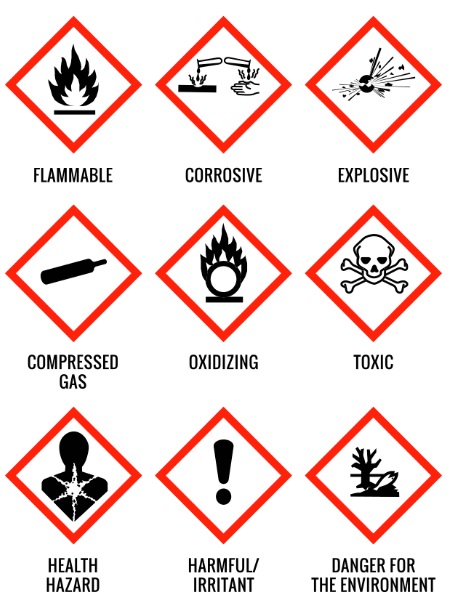
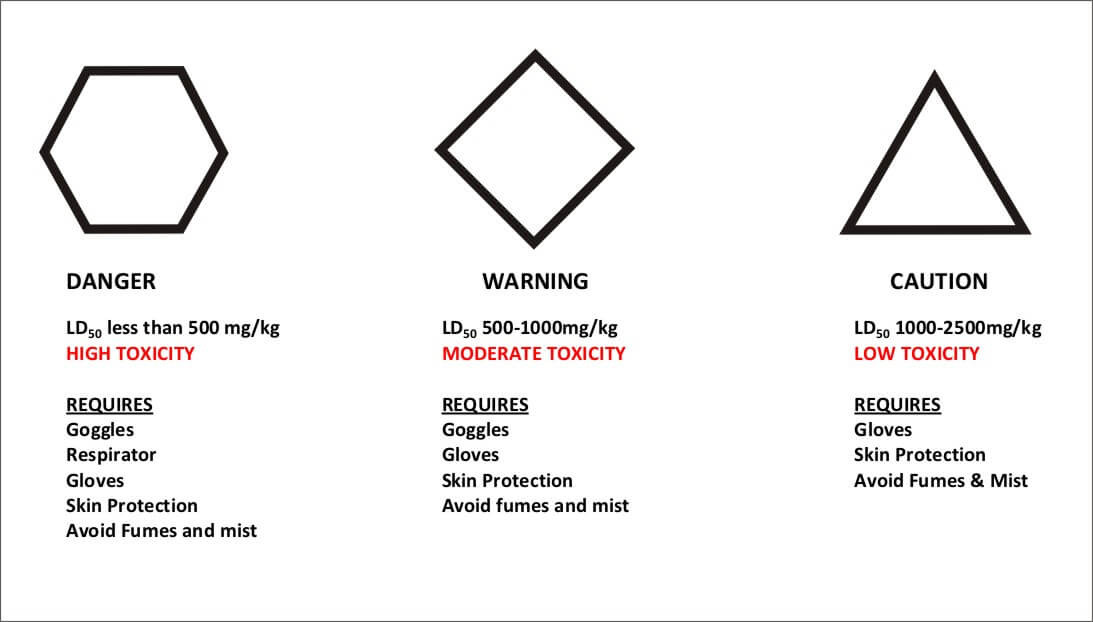
Degree of Risk and Hazard Symbols
Two Factors that Determine the Appropriate Level of PPE
The Hazard Rating (above) incorporates the minimum protection generally required for a substance with the rating.
The Label Recommendations will usually give the additional specific protective clothing and equipment needs for an applicator.
Degree of Exposure
This increases as the length of each pesticide application increases. As the number of pesticide applications increases, the time between exposures decreases. If an operator becomes exposed to spray, dust or fumes the degree of exposure increases. Essentially, more protective wear is needed as the degree of exposure becomes greater.
Knowledge
This encompasses all of the above information. In order for a pesticide applicator to avoid injury or the chances of adverse effects on the body, a pesticide applicator must be knowledgeable about pesticides. It can be overwhelming for an applicator to sort through all of the information on the label or on-line regarding pesticides. So much so, that most often applicators avoid the information altogether. Ongoing training and learning will ensure that they are effective in their work. Many aspects of pest control change continuously, as new studies are conducted on the effects of pesticide exposure.
A Safety Data Sheet (SDS) is available for each pesticides registered, and these are usually linked on manufacturers’ websites. It can be eye-opening what types of toxicity tests are done, and what the results are.
Denial that pesticides can potentially cause harm is also a major flaw in the behaviour of applicators. Maintaining a safe work environment and practicing personal safety will reduce the chances of an applicator experiencing serious injury throughout their farming career.
Unknowns
There is very little certainty in toxicology. For one, most testing is done using acute oral and dermal dosing. Basically, toxicologists expose test animals to the neat active ingredient and watch what happens. There is a lot of missing information – what about formulant like solvents, and surfactants? What about synergies in tank mixes? Some, but not all of these, undergo testing. We also have much less information on chronic (long-term) effects, and can only simulate these in quasi long-range tests. In addition, toxicological methodologies and statistical approaches can vary, and we should not be surprised that some reports disagree, and that there are outright conflicts between toxicologists and epidemiologists (scientists that study patterns of health in populations). Regulators are aware of these shortcomings and often use safety factors to account for them. But those of us that use these products regularly, the message is simple: be cautious, and protect yourself.
Avoid Cross-Contamination
Disposable nitrile gloves are the product of choice for handling pesticides. But one of the most common problems with the use of gloves is cross-contamination. You’re handling product with your gloves on, touching containers, hoses, valves, and couplers. When you’re done, you climb back into the cab where you take off your gloves. Later, someone climbs up into the cab to talk to you, using the railing and operating the door handle without gloves. Guess what’s on their hands? Even later, you put away the hose without gloves and return to the sprayer. Now it’s on the steering wheel and all the levers. There are a few solutions:
Double-glove so you can take the dirty outside glove off and still be protected.
Wipe down surfaces that you might touch with gloved or bare hands daily.
If using non-disposable gloves, avoid lined gloves and rinse the insides out daily.
Learn More
If you would like to learn more about pesticide safety, or to obtain pesticide application training, the Pesticide Applicator License can be obtained from the Ministry of Agriculture. This course offers in depth, valuable safety information for applicators, as well as general knowledge for pesticide applicators. The Pesticide Regulatory Directorate provides workers, employers, and the general public with a wide range of pesticide information. The PRD can be contacted from anywhere in Canada toll free at: 1-800-267-6315
Download this Quick Reference Guide for commonly used herbicides. Print, laminate and post it at the fill station or pesticide storage area for easy reference. Also, grab a copy of Health Canada’s “Stay Safe when using Pesticides” factsheet.
The time and attention spent during sprayer loading is a worthy investment. It ensures that the products in the tank perform as intended and reduces the chance of incompatibilities.
The label
Pesticide labels are always the first point of reference. Labelled mixing instructions should be obeyed even if they contradict conventional practices (see Mixing order, below). Consult this article on tank mix compatibility for more information on how to quickly and easily consult labels for each of your tank mix partners.
The carrier
Typically, the carrier is water, and understanding its role in pesticide performance is another article (or several). We’ve provided some links here for further reading.
You can also read about pH and water hardness. It should be noted that pH and the resultant hydrolysis that can affect product half-life is typically an insecticide issue (not fungicide or herbicide). The famous fungicide example is Captan, which has a half-life of 32 hours at pH 5, but only 10 minutes at pH 8. Michigan State did a great summary (in 2008 and on US product formulations) which you can find here.
Finally, learn how to read a water quality report, here.
Carrier volume
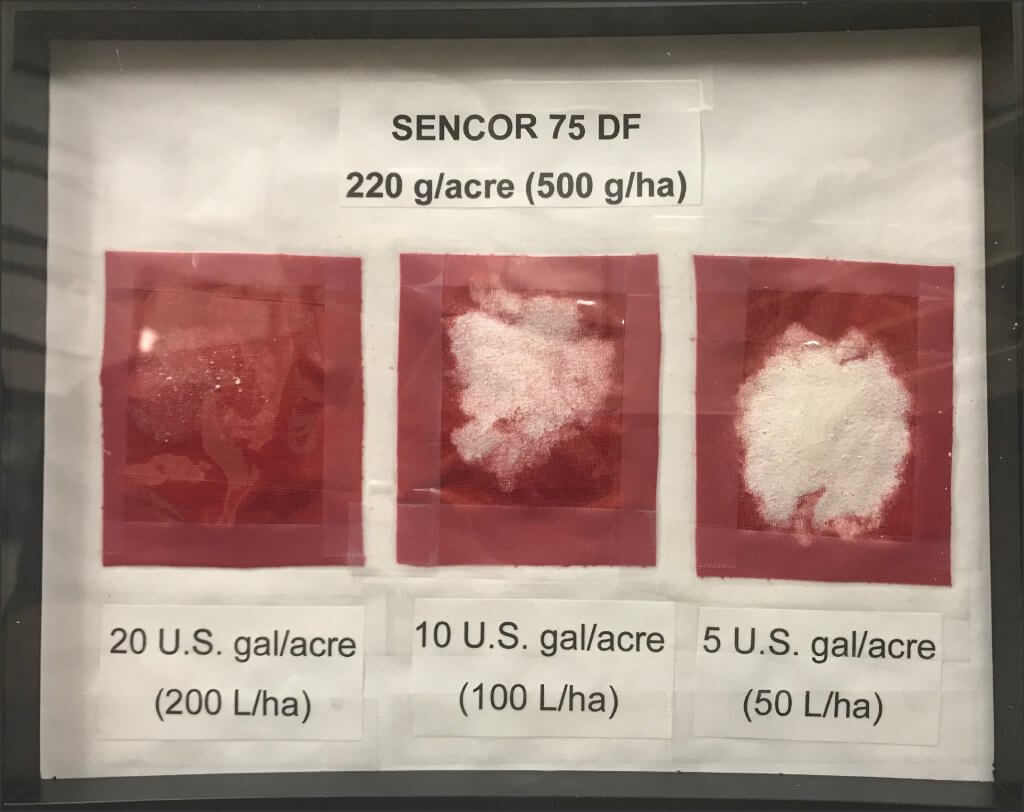
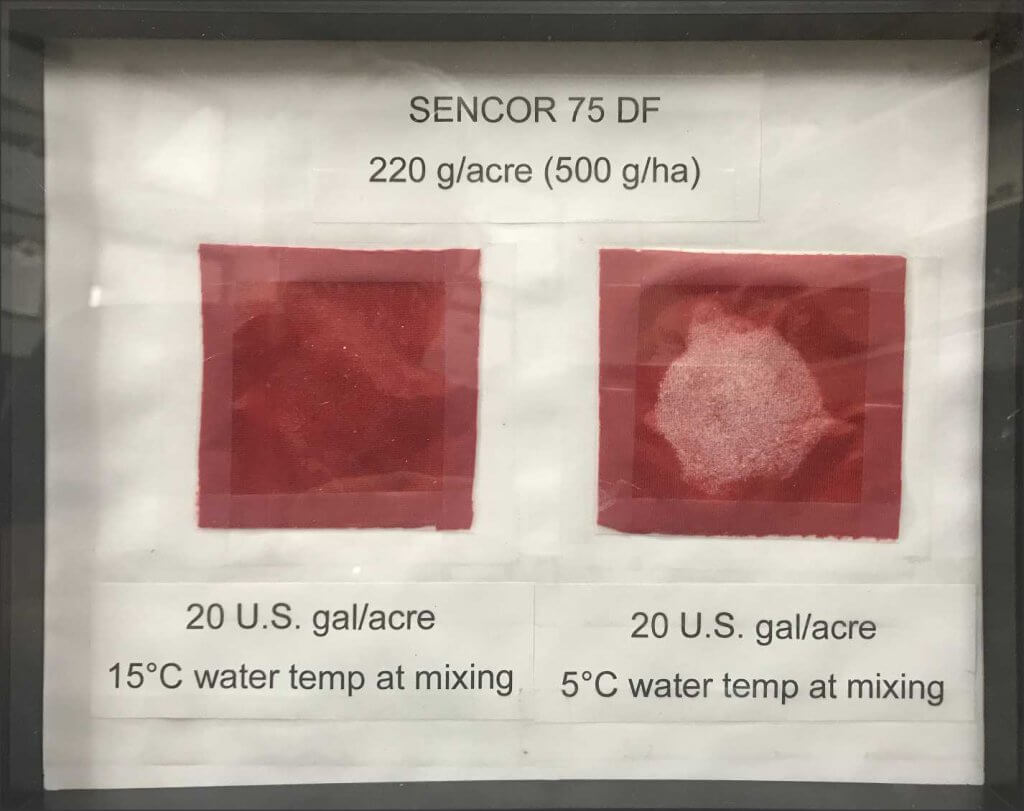
Products dissolve better in higher volumes. The sprayer tank (vat, inductor, etc.) should be at least ½ full or water before adding the first product. In the case of a fertilizer carrier, it may look like water, but it contains high levels of salts that tie up free water and reduce solubility. For fertilizers, a higher initial volume of ¾ full is required.
Note the undissolved residue collected on these swatches of red filter material. Products dissolve faster and better in higher carrier volumes.
The incomplete dissolution of products can leave hard-to-clean residues, plug fluid lines, and result in a non-uniform application that reduces efficacy. The risk of incompatibility is greater with low carrier volumes and high product rates (especially dry formulations). This is a common problem in regions that use low water volumes to apply multiple tank mix partners.
Carrier and product temperature
Both carrier and product temperature affect mixing. Imagine mixing sugar in hot tea versus iced tea – more sugar dissolves more quickly in hot liquid. Here are three common temperature-related issues:
Dry formulations and liquid flowables take more time
to disperse (consider using a pre-mixed slurry).
Emulsified concentrates and oil might form gels
rather than milky blooms.
Water soluble packages might not dissolve completely
and could plug filters and nozzles – or clog the pump intake.
Note the undissolved residue collected on these swatches of red filter material. Products dissolve faster and better when carrier and products are warmer.
Note: Water and fertilizer are very different carriers. Beware of carrier-specific incompatibilities
Agitation
Keep agitation running throughout mixing and spraying. Aim for a “simmer” on the liquid surface rather than a “rolling boil.”
Low agitation can cause products to settle, making them difficult or impossible to resuspend later. Conversely, aggressive agitation (especially in half-full tanks) can cause foaming, pump suction loss, or product separation / clumping.
Pace
Adding products too quickly can cause product separation / clumping or poor suspension, leading to tank mix incompatibilities. While loading quickly improves operational efficiency, complex mixes require patience; Sometimes over five minutes between additions, especially in cold water or when using dry products.
To save time without sacrificing quality, consider pre-hydrating dry products or using a separate nurse tank to pre-mix loads for quick transfer. Remember: even if dry products look dissolved, they may still need more time.
Product formulation
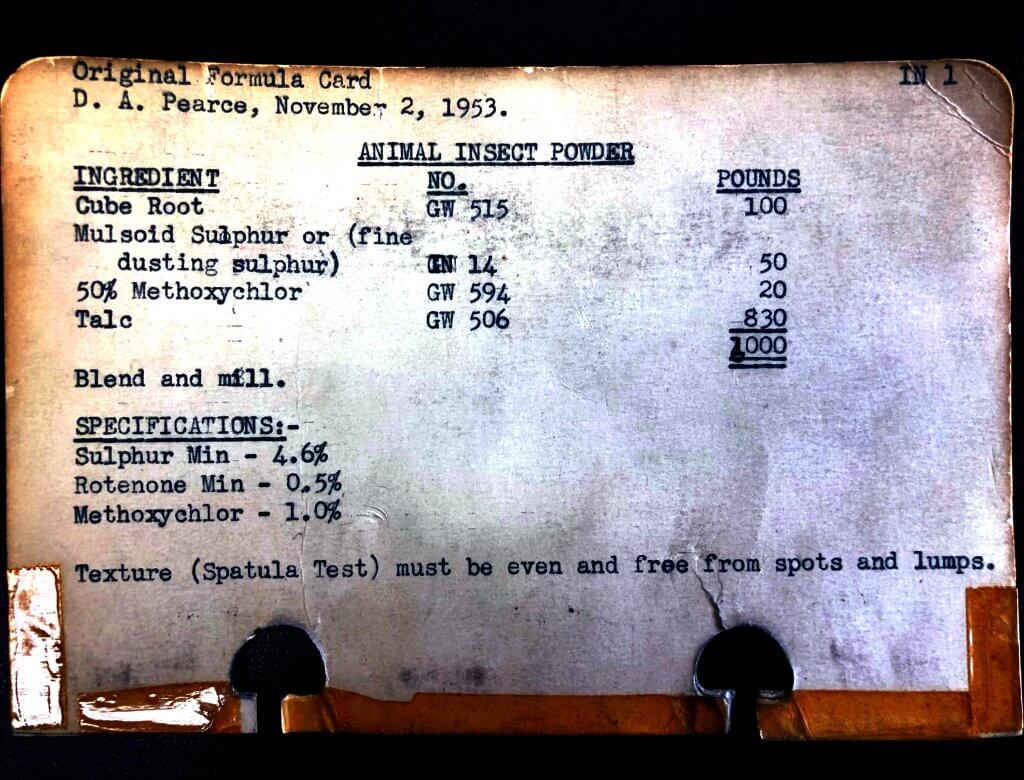
Product formulation is a complicated science. In the 1950s a formulation might have three active ingredients and an inert filler. See the historic formulation index card shared by Dr. M Doug Baumann (formally with Syngenta, Honeywood).
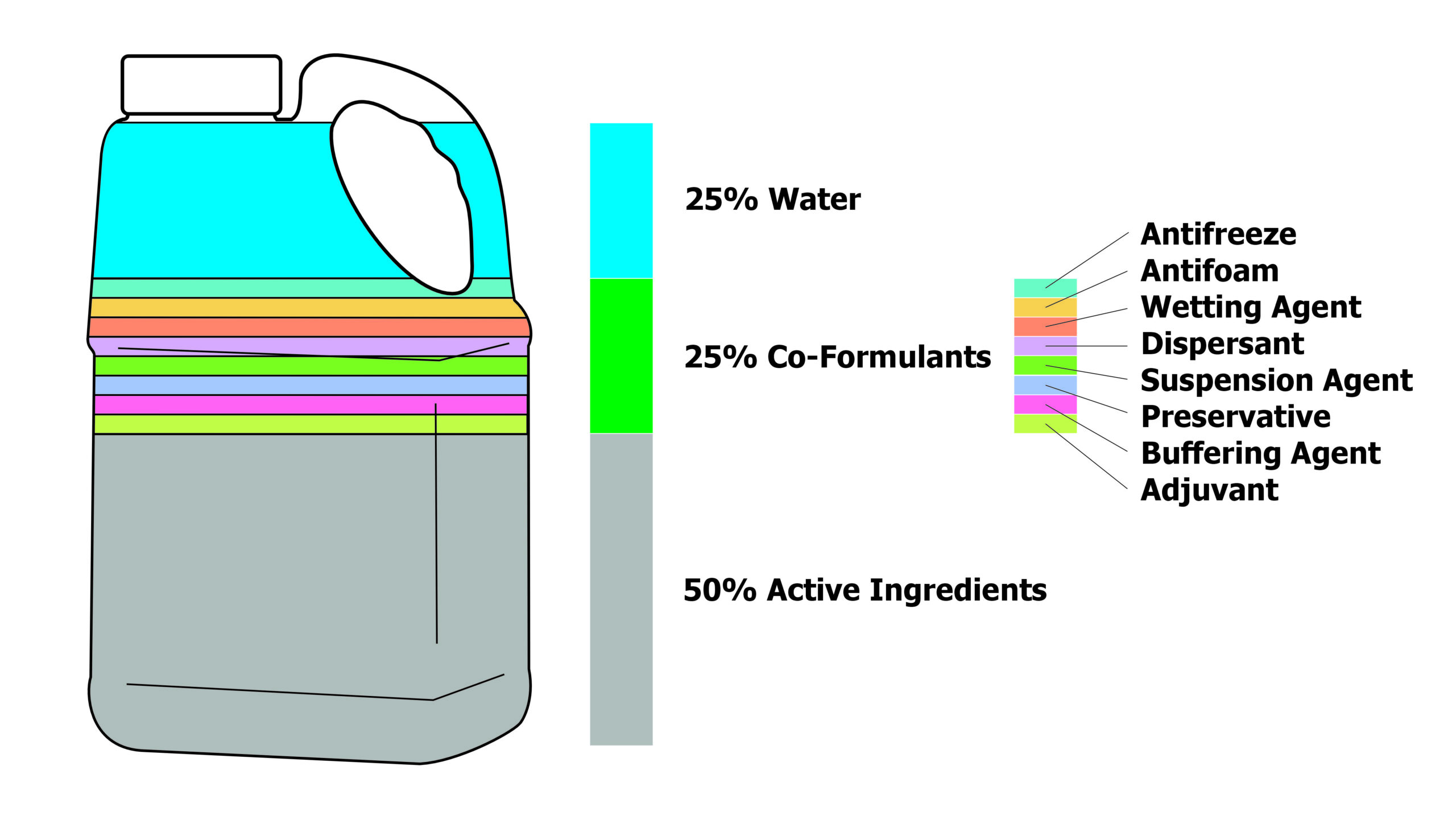
Today, a product can include as many as 40 ingredients with formulation testing lasting two to four years! Generally, only 25% of the volume is water, 50% is active ingredients and the remaining 25% is co-formulants. This is why the more products you add to the tank, the higher the risk of antagonism. This is also why operators should carefully consider the cost benefit of generics, which may include the active ingredient, but do not tend to include the co-formulants.
Illustration based on a slide by Dr. Samantha Francis, Formulation & Application Technology Lead at the Syngenta Honeywood Research Facility.
Mixing order
Tank mixing order is critical for chemical compatibility. While common acronyms like w.w.w.W.A.L.E.S., W.A.M.L.E.G.S., and A.P.P.L.E.S. serve as reliable guides 95% of the time, always defer to the pesticide label for specific instructions.
Expanded generic mixing order:
Water: Fill tank 1/2 full (or 3/4 if fertilizer carrier).
Agitation
Water-Soluble Bags (WSB): Allow to fully dissolve.
Water Conditioners (e.g. anti-foamers, compatibility agents): Add before pesticides.
Activator Surfactants (e.g. NIS, COC): Add after pesticides or by formulation type along with pesticides.
Drift Retardants: Add last.
Examples of mixing errors
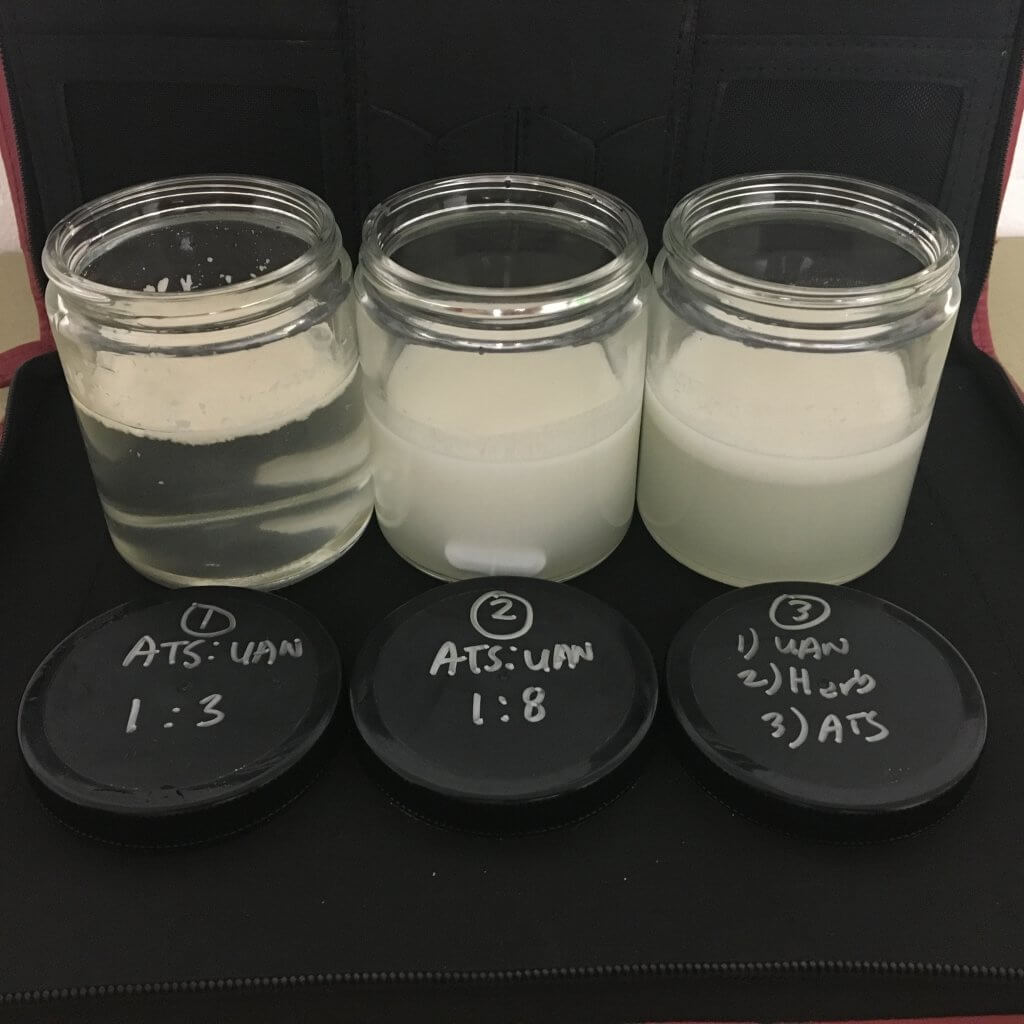
Micronutrients like sulfur (e.g. ATS) added to nitrogen-based formulations (e.g. UAN) can cause physical incompatibilities. This became a problem during “weed-and-feed” applications in Ontario corn in the late 2010s, and working with the registrants, we found a solution.
What follows is not only a good example of why mixing order is critical, but why growers should get into the habit of performing jar tests. Learn more about a real-world ATS example here.
Left: ATS and UAN premixed, followed by Primextra created curds. Centre: UAN, followed by low-load ATS followed by Primextra worked. Right: UAN followed by Primextra followed by high-load ATS worked.
Mixing errors are just as likely in small plot work as in commercial sprayers. Watch this short video by Mike Cowbrough describing his experience with mixing order for Elevore and glyphosate.
The jar test
A jar test is a small-scale version of tank mixing used to check for physical incompatibility. Always wear PPE and work in a well-ventilated area away from ignition sources.
Jar test steps:
Prepare: Read all labels for formulation details, water quality requirements (pH/hardness), and mixing order. Shake liquid containers to ensure consistency.
Initial Carrier: Fill a 1-litre glass jar with 250 ml of water (or 375 ml if using oil/fertilizer).
Add Products in Order: Add chemicals following the standard mixing sequence, stirring constantly. Scale rates to match your tank concentration (e.g., 1 kg per 1,000 L equals 0.5 g in a 500 ml test).
Wait and Observe: Allow 3–5 minutes between additions—especially for dry products—to ensure full dispersion. If testing water-soluble bags, include a small piece of the film.
Final Volume & pH: Top the jar up to 500 ml with your carrier. Check the pH with a digital meter and add adjusters if required by the label.
Evaluate: Let the jar stand for 15 minutes.
The mix is likely incompatible if it generates heat, forms gels or scum, or if solids settle out (excluding wettable powders). Note: Jar tests only identify physical issues; they do not guarantee biological efficacy or crop safety.
Compatibility kits
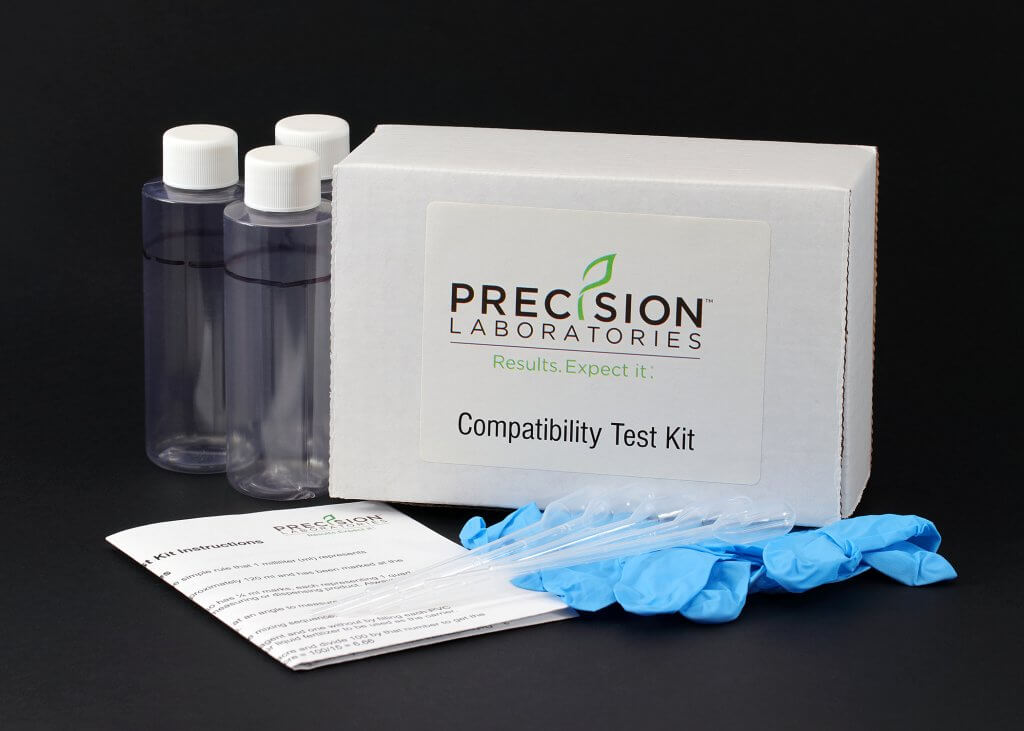
When performing a jar test you must maintain the same product-to-carrier ratio as in a full-sized sprayer tank. This math is made easier with commercial compatibility kits such as the one from Precision Laboratories (below).
Compatibility Test Kit: Five pipettes, three bottles, gloves, instructions. ~$10.00. (Photo: Precision Laboratories)
Such kits contain a few plastic “jars” and disposable micropipettes. By following the instructions included with the kit, you can easily reduce large labelled volumes (e.g. 1 kg of product in 1,000 litres) of multiple products to small volumes at the same ratio. In this case we assume the final volume would have been 1,000 L, and so we reduce all the quantities accordingly to get 500 ml. The following mixing order is provided as an example.
Order
Ingredient
Quantity for 500 ml or 500 g of product labeled for 1,000 L of final spray volume
1
Compatibility agents
5 ml (1 teaspoon)
2
Water soluble packets, wettable powders and dry flowables. Include a 1cm2 cutting of PVA packaging.
15 g (1 tablespoon)
3
Liquid drift retardants
5 ml (1 teaspoon)
4
Liquid concentrates, micro-emulsions and suspension concentrates
5 ml (1 teaspoon)
5
Emulsifiable concentrates
5 ml (1 teaspoon)
6
Water-soluble concentrates or solutions
5 ml (1 teaspoon)
7
Remaining adjuvants and surfactants
5 ml (1 teaspoon)
Records and delayed reactions
Maintain detailed mixing records for traceability and to track performance. These records help you replicate successes and avoid future failures.
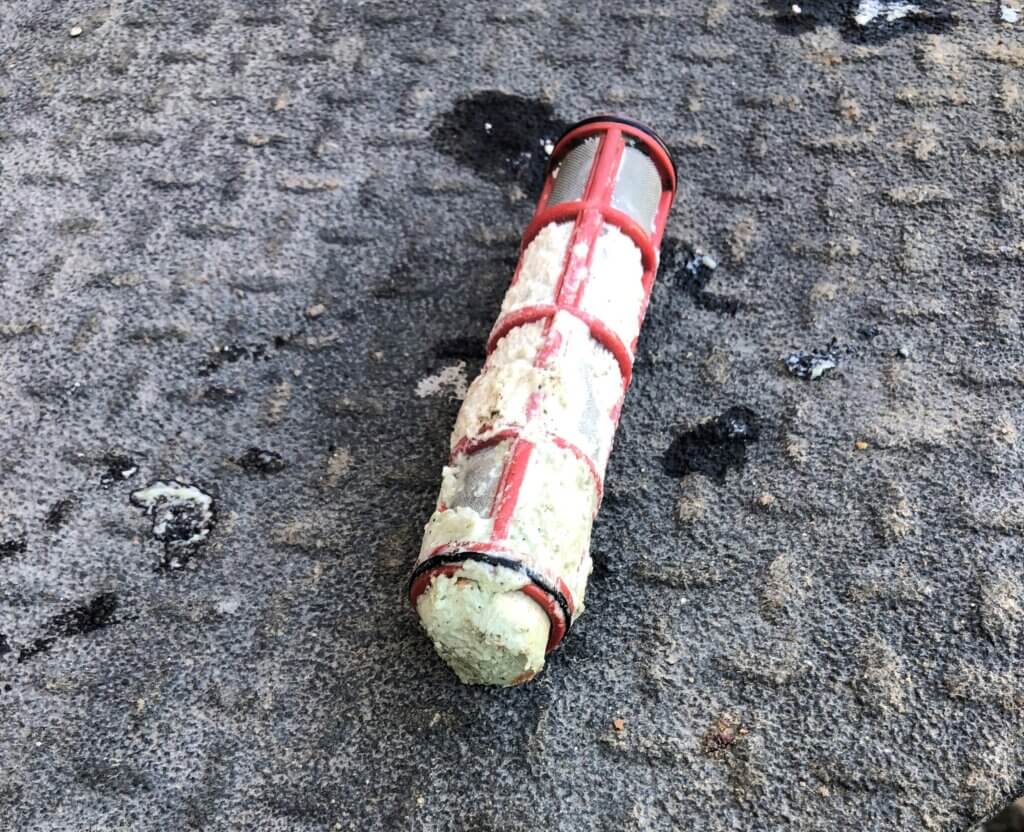
Labelled jar tests are also valuable; by leaving them in the chemical shed overnight, you can see if products separate or solidify over time. This indicates whether a mix can safely sit in the sprayer or if it requires immediate rinsing. For example, one grower’s Enlist and Manzinphos mix appeared fine until it sat during a rain delay. It turned into “lard,” clogging the entire system and requiring a manual teardown. They even had to dig some of the substance out with screwdrivers (see the picture of the filter below). An overnight jar test likely would have predicted this problem.
Some physical incompatibilities are not immediately apparent. This occurred overnight while the partially-full sprayer waited out a rain event.
Closed transfer
As a brief mention, an expansion of closed transfers systems for loading pesticides is on the horizon in North America. They have great potential to make loading more efficient, reduce operator exposure and reduce point-source contamination. Depending on the design, however, the operator may not be able to open pesticide containers to obtain samples for jar testing. This would be a great loss.
For more information
Learn more about physical and chemical incompatibility in our article on Tank mix compatibility. Be sure to download a copy of Purdue University’s 2018 “Avoid Tank Mixing Errors”. Finally, if you have questions about a specific product, contact the manufacturer, who have likely already performed the testing with common tank mix partners and can advise you.
This article was co-written with Mike Cowbrough, OMAFA Weed Management Specialist – Field Crops
The scuttlebut on coffee row is that acidifying a spray mixture improves its efficacy. There are also claims that pesticides break down in the sprayer tank if the pH is too high.
But it’s not that simple. Low pH has a strong impact on pesticide solubility, and that means mixing and cleanout are affected. Acidifying the mixture can have profound negative effects for many products.
It’s important to know what you’re doing.
What is pH?
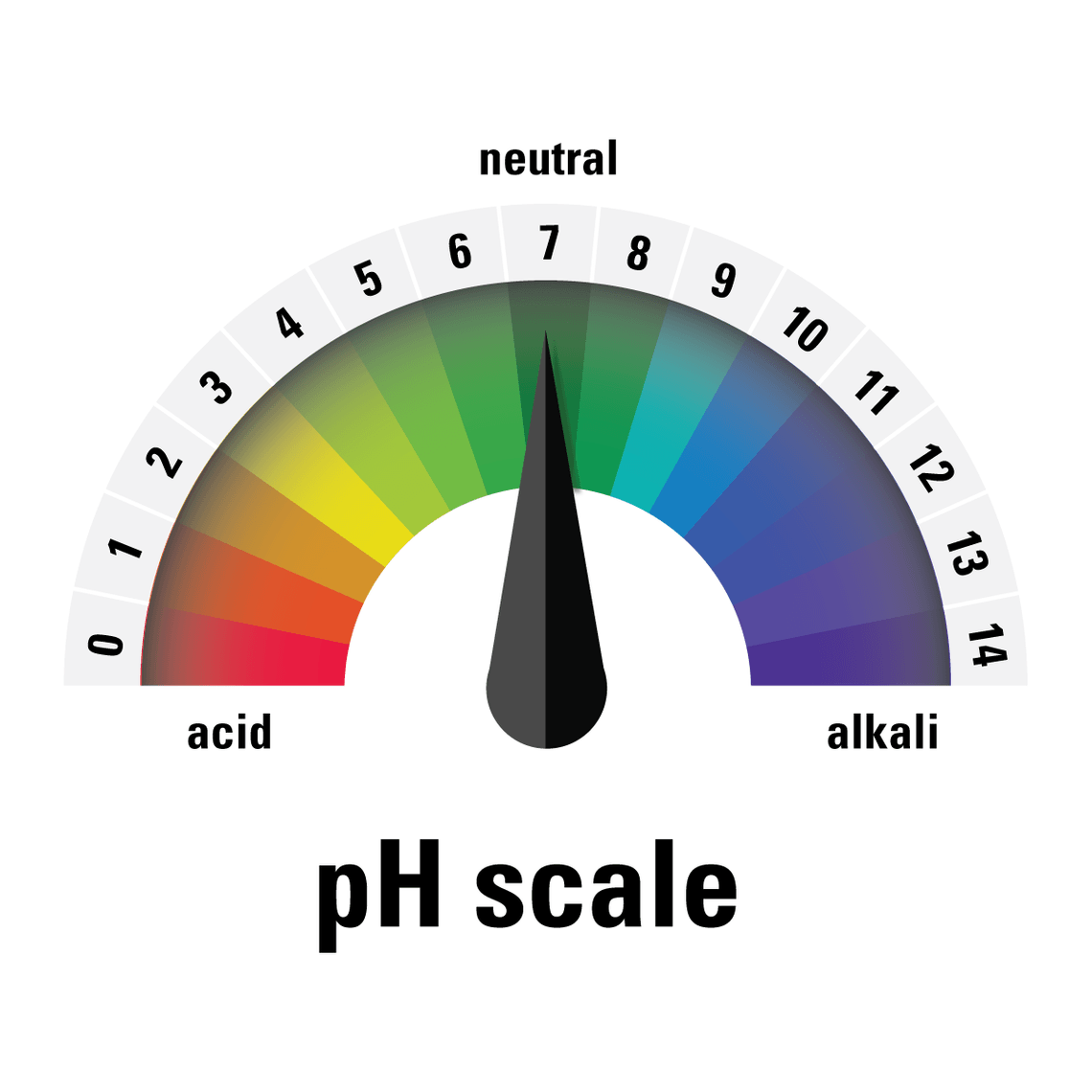
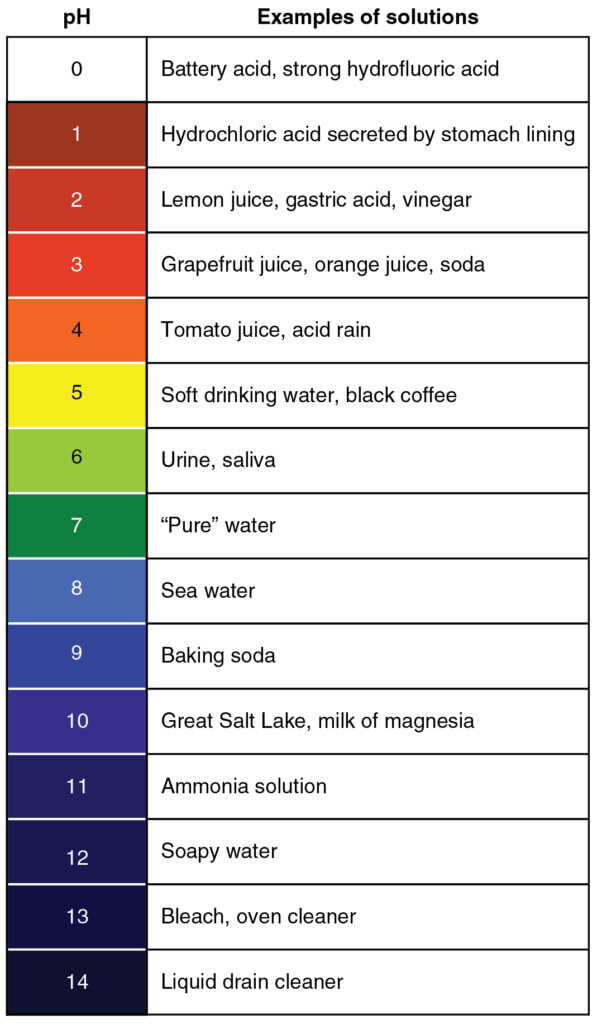
pH is defined as the negative log of the molar concentration of hydrogen ions in a water-based solution. The more abundant the hydrogen, the lower the pH. It’s a log scale, so every unit of pH refers to a 10-fold change in the concentration of hydrogen ions.
Both very low (acidic) or very high (basic) pH can be caustic. But having a low or high pH doesn’t mean it will burn your skin or clothes right away, it might just be a bit unpleasant. But at the extreme ends, protection is needed.
Why is pH Important in Spray Mixtures?
In spraying, the main effect of pH is on the pesticide’s solubility. Solubility matters when mixing and becomes important during cleanout as well.
A minor effect on pH, at least for herbicides, is on chemical breakdown, usually through hydrolysis, when the pH is too high. The effect on breakdown is rarely meaningful during any given spray day, but may play a role if a spray mix is stored overnight or longer.
The Basics: Strong vs Weak Acids
Strong acids like hydrochloric acid (HCl) ionize completely in solution. When added to water, only H+ and Cl– are present, there is no HCl. The water’s pH does not affect solubility of a strong acid.
But weak acids do not completely ionize. The water pH affects the degree of ionization and therefore solubility.
Most herbicides are weak acids. A weak acid is one that does not dissociate completely in solution. A typical example of a weak acid functional group is carboxylic acid (-COOH). In solution, compounds with a carboxylic moiety exist in an equilibrium, with some as -COOH (containing the hydrogen, also called “protonated”) and others as -COO– and H+. In the dissociated form, the acid is more water soluble than in its protonated form due to the negative charge that makes it ionic.
Weak acids have a dissociation constant known as the pKa. When the solution is at the molecule’s pKa, the acid is 50% dissociated. When the solution has a lower pH than the pKa, there is less dissociation and the protonated forms of the molecule dominate. That has two important implications for herbicides.
the molecule becomes less water-soluble at lower pH
the molecule has fewer opportunities to interact with positively charged items
pH Dependent Solubility
Water-solubility is a two-edged sword. On the one hand, having a highly water soluble product makes it easier to dissolve in water. This pays dividends when mixing a batch or cleaning a sprayer because a product formulated as a solution will easily go into a true solution and will stay mixed. Examples are glyphosate, glufosinate, and salts of 2,4-D, MCPA, and dicamba.
On the other hand, most pesticides need to enter a plant to reach their site of action. And a plant cell, with its waxy cuticle and oily membranes, creates an effective barrier for water, and for water-loving molecules dissolved in it. As a result, a formulation that allows the water-soluble product to interact with an oily barrier is needed.
The products that can do this are surfactants. Acting like detergents, surfactants have regions in their structure that are oil-loving (lipophilic) and other regions that are water-loving (hydrophilic). Surfactants can therefore bind to both oil and water and provide a bridge for water-soluble products across oily barriers.
That’s also one of the reason that the most water-soluble products such as glyphosate and glufosinate contain a lot of surfactants in their formulation, reducing the concentration of active ingredient in the jug and possibly leading to foaming with agitation.
Pesticides have a wide range of solubilities, and for some, water pH will play an important role. Below is a table of some water solubilities of selected herbicides.
Solubility (ppm)
Trade Name
Active Ingredient
Mode of Action Group
pH ~ 5
pH ~ 7
pH ~ 9
Select
clethodim
1
53
5,450
58,900
Ally 2
metsulfuron
2
550
2,800
313,000
Express
tribenuron
2
48
2,040
18,300
Pinnacle
thifensulfuron
2
223
2,240
8,830
Everest
flucarbazone
2
44,000
44,000
44,000
Simplicity
pyroxsulam
2
16
32,000
13,700
Frontline
florasulam
2
0.1
6
94
Varro
thiencarbazone
2
172
436
417
Raptor
imazamox
2
116,000
>626,000
>628,000
Pursuit
imazethapyr
2
2,570
12,870
7,500
2,4-D
2,4-D salt
4
29,934
44,558
43,134
dicamba
dicamba salt
4
>250,000
>250,000
>250,000
Roundup
glyphosate
9
>500,000
>500,000
>500,000
Liberty
glufosinate
10
>500,000
>500,000
>500,000
Heat
saflufenacil
14
30
2,100
>5000
Distinct
diflufenzopyr
19
63
5,900
10,550
Infinity
pyrasulfatole
27
4,200
69,100
49,000
Compare the solubility at pH 7 to that at pH 5. For most of these herbicides, water solubility is worse at lower pH. That is because they are more protonated and become more lipophilic.
I’ve placed a lot of Group 2 products in this table because those products are most often implicated in tank cleanout issues. All Group 2 products in this table, with the exception of Everest (flucarbazone-sodium) have lower solubility at pH 5 than they do at pH 7. For some, like pyroxsulam and floarsulam, it’s a big change. Those products, when acifified, are prime candidates for poor mixability and poor cleanout.
When it comes to dicamba, low pH has another side-effect. It makes the molecule more volatile, increasing danger to sensitive plants nearby. For that reason, acidification of dicamba in its Xtendimax and Engenia formulations is not permitted.
Note that the Group 4 examples, 2,4-D salt and dicamba salt, as well as glyphosate and glufosinate, are highly water-soluble and pH has very little effect on that.
Particularly for glyphosate, the claim that it becomes more oily at low pH and will therefore be taken up more easily, is not supported by these data. Considering that the most acidic pKa for glyphosate (it has four acidic groups) is 0.8, pH would need to be much lower for any noticeable impact on oilyness.
Tank Mixability
Given today’s environment of herbicide resistance, applications with multiple mode of action tank mixes are very common. Acidifying a spray mix to benefit one herbicide may create problems for its tank mix partners.
If there is a concern that spray water is too alkaline, it is recommended that the pH of the finished spray mix be measured. Since many herbicides are weak acids, they will lower the pH of the mixture by themselves. For example, the addition of glyphosate to water with pH 7.5 will drop the pH to about 5 or so, depending on the water’s buffering capacity.
As a result, glyphosate tank mix partners that are pH sensitive may suffer in the presence of glyphosate, and pH may actually need to be raised.
pH Dependent Half-life
Herbicides
There are a lot of claims that pesticides break down rapidly in alkaline spray water. And yet, in my career working primarily with herbicides, I do not recall this ever being a problem in practice.
Below is a table of herbicides for which I could find half-life information, with the help of this comprehensive list produced by Michigan State University.
Product
Active ingredient
Half Life
Atrazine
atrazine
More stable at high pH
Banvel
dicamba
Stable at pH 5 – 6
Bromoxynil
bromoxynil
pH 5 = 34 d; pH 9 = 1.7 d
Fusilade
fluazifop-p-butyl
pH 4.5 = 455 d; pH 9 = 17 d
Liberty
glufosinate-ammonium
Stable over wide range of pH
Gramoxone
paraquat
Not stable at pH above 7
Reglone
diquat
pH 5 = 178 d; pH 7 = 158 d; pH 9 = 34 d
MCPA
MCPA
pH 9 = < 5 days
Poast
sethoxydim
Stable at pH 4.0 to 10
Princep
simazine
pH 4.5 = 20 d; pH 5 = 96 d; pH 9 = 24 d
Prowl
pendimethalin
Stable over a wide range of pH values
Roundup
glyphosate
Stable over a wide range of pH values
Treflan
triflularin
Stable over a wide range of pH values
2,4-D
2,4-D
Stable at pH 4.5 to 7
Note that all of the herbicides are relatively stable. Some are a bit less stable at high pH, but none of the listed herbicides is in danger of breaking down on the day it is being applied. Only one is actually unstable at high pH – paraquat, a herbicide no longer registered in Canada and resticted in many other countries. Those with short half-lives experience them at quite high pH which are rarely seen in practice.
Insecticides
Insecticides are a different story. Several are very sensitive to pH. This table is again adapted from a comprehensive list published by Michigan State University, here.
Among insecticides, dimethoate, amitraz, and malathion stand out as breaking down rapidly in alkaline water. For these products in particular, it may be important to acifify the spray mix if there is any delay in spraying.
Recommendations
I’ve never been a fan of messing with solution pH unless recommended on the product label. Even when there is evidence that lower pH improves efficacy, consider the impact on tank mix partners.
We’ve seen improvements in solubility and tank cleranout of Group 2 products with raised pH, and ammonia is the most cost-effective way to achieve that. But again, following label recommendations is strongly recommended. The consequences of changes in pH, particularly acifification, can be very detrimental. To be safe, consider doing a jar test before committing to a whole tank to a pH adjustment.
It’s common advice: Test your water before using it as a spray carrier. You dutifully sample the well or dugout and await lab results. And what comes back is a whole lot of numbers. How to make sense of it all?
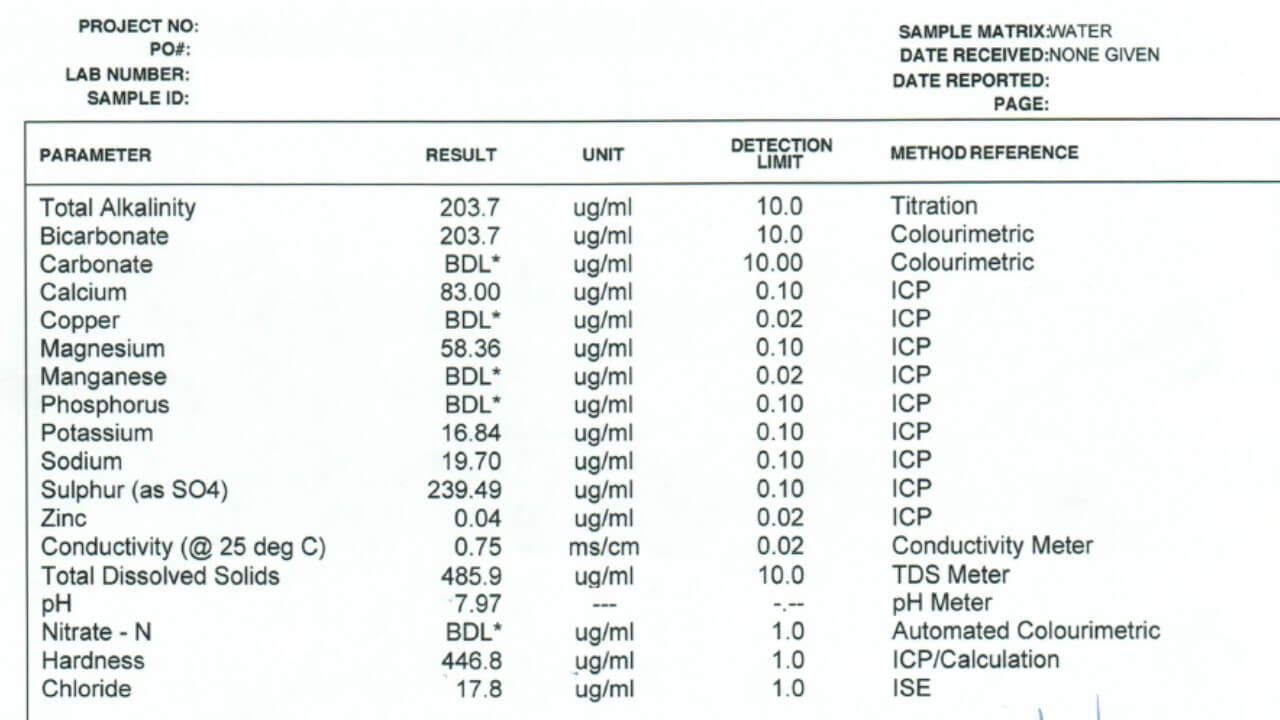
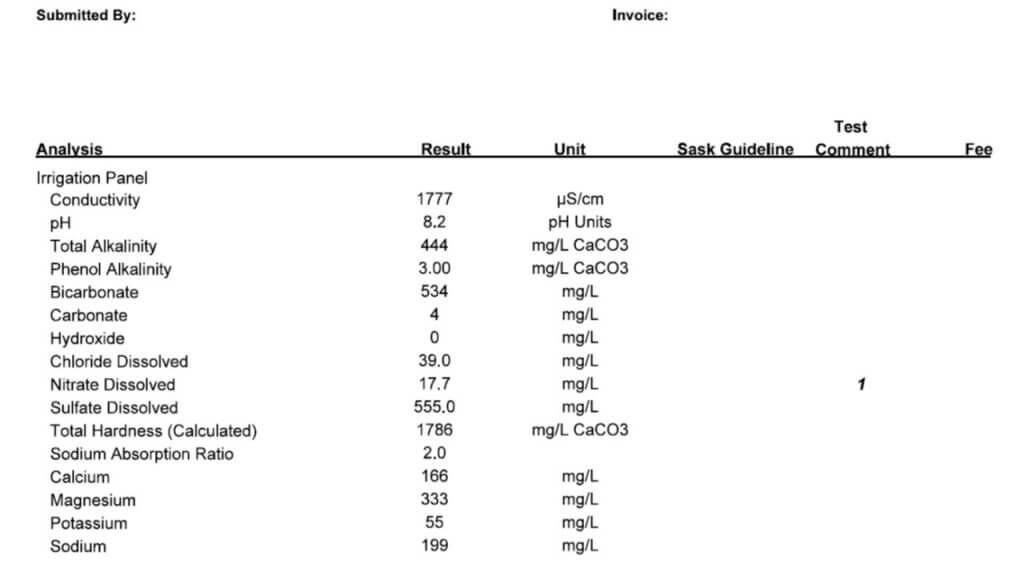
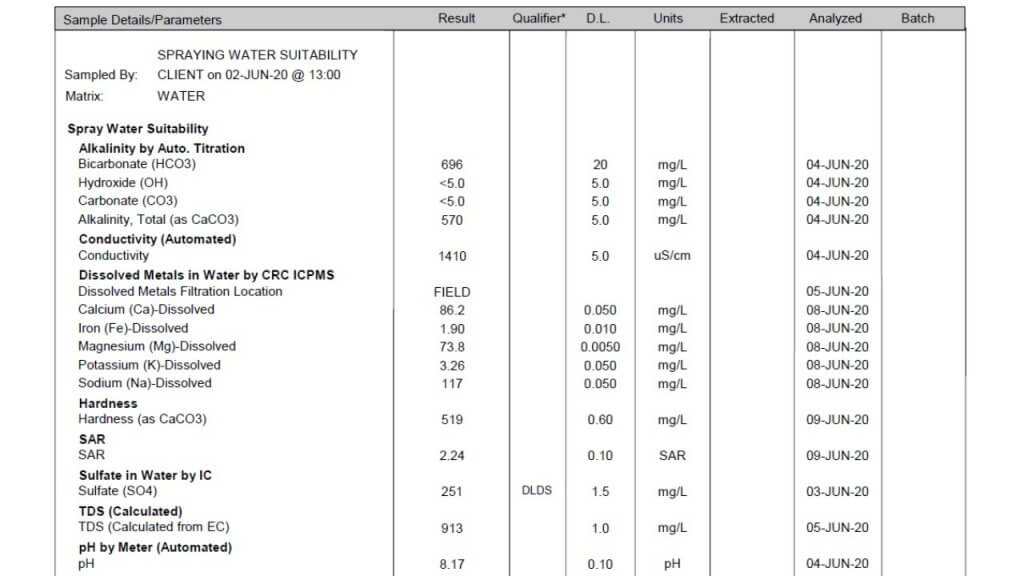
Three examples of water test results conducted by labs in Canada
All three of these tests report a large number of properties and identify specific minerals and other solutes. Which ones are important in spraying? Here is the order in which I look at the numbers.
Conductivity: This property is usually expressed as micro Siemens per cm (µS/cm) and simply identifies how many ionic solutes are in a sample (watch for alternate units such as mS/cm and convert if necessary). It doesn’t differentiate between any minerals or other molecules, and therefore has limited information. But it does tell us if there is a large or small issue with water quality. If conductivity is below 500 µS/cm, the water is probably good for spraying. If the value is around 1000 to 2000, further investigation is necessary. Some water samples return conductivity of more than 10,000 µS/cm, and it’s important to identify which salts are causing that problem.
Note that Total Dissolved Solids (TDS) are often listed, and these are related to conductivity. A common way to get TDS is to multiply conductivity by 0.65. The conversion factor depends on which salts are dissolved but the bottom line is that TDS and conductivity are closely related.
Bicarbonate: Bicarbonates are HCO3 and their concentration is measured in milligrams per Litre (mg/L), which is the same as parts per million (ppm). Bicarbonates can antagonize Group 1 modes of action and the common threshold is 500 ppm. Research at NDSU has shown that Urea -Ammonium-Nitrate (UAN or 28-0-0 liquid fertilizer) can reduce bicarbonate antagonism in some Group 1 herbicides.
Bicarbonates are negatively charged and are associated with a positive ion, often the hard water cations sodium (Na), calcium (Ca) or magnesium (Mg). As such, waters that are high in bicarbonates are often also hard.
Total Hardness (calculated): This is one of the important parameters. Hardness antagonizes most weak acid herbicides, most importantly glyphosate and g;ufosinate, and also ties up surfactants and emulsifiers which can result in problems with mixing and compatibility. Hardness is caused by metal cations, in order of strength these are iron (Fe++), magnesium (Mg++), calcium (Ca++), sodium (Na+), and potassium (K+). Of these, Mg and Ca are typically most abundant, although some water is high in Na.
The Total Hardness (ppm) reported in water tests is done by taking the most common two cations, calcium and magnesium, and using this formula: 2.497*Ca + 4.118*Mg. Note that some tests report hardness in Grains per Gallon, in this case, multiply grains by 17.1 to get ppm.
While this calculation usually gives an accurate prediction of hardness, you may need to have a look at iron and sodium as well. Iron is less common, but some well waters are high in sodium or potassium. These minerals are not captured in the Total Hardness measurement. A water test low in Total Hardness may still be high in sodium, these are typically the samples with high conductivity.
The threshold for Total Hardness depends on the herbicide, its rate, and the water volume. The most common quoted values are 350 ppm for the lower rates of glyphosate (1/2 L/acre equivalent), and 700 ppm for the higher rates. Lower water volumes increase the concentration of herbicide, and reduce the impact of water hardness or bicabonates.
pH: This parameter is a bit over-rated because it is later affected by the herbicide and adjuvant dissolved in it. There is usually no concern with pH between 6 and 8, and water is rarely outside this range. It is best not to change the pH of water unless it is required on the label for mixing, because some products require low, and others require high pH for optimum solubility. Compatibility is an ever greater concern as our tank mix complexity increases.
Water Conditioners
The most common water conditioner is ammonium sulphate [AMS, (NH4)2 SO4]. In its pure form (21-0-0-24), a concentration of 1% to 2% w/v (8 to 17 lbs AMS/100 US gallons of spray water) solves most hard water and bicarbonate issues. Be cautious of using too much AMS (>3%), when added at high concentrations to some herbicides it can burn crops.
Research has shown that AMS works in two ways: The sulphate ion binds with hard water cations, forming an insoluble precipitate that prevents the antagonistic cations from binding to, and inhibiting, the herbicide. The ammonium ion has been shown to improve cellular uptake by weak ion herbicides.
Some product labels call for UAN as an adjuvant. UAN contributes ammonium, but not sulphate ions. As a result, while it may improve herbicide performance, it does not remove antagonizing cations from the mixture.
Acids have been used to combat hard water. Most common herbicides are weak acids, and the acid constituent, usually a carboxilic acid, has a unique pKa. The pKa is the pH at which half the molecules are protonated (contain a hydrogen atom, resulting in an uncharged acid constituent) and the other half are not protonated (negatively charged). If the spray mixture has a pH below the pKa, the weak acid herbicides become protonated. This means the herbicide becomes less water-soluble, but also that it has less chance of interacting with a hard water cation. Acids that work in this way are less effective at ameliorating the effect of hard water than AMS.
A small group of acids that includes citric acid and sufphuric acid can sequester or bind with hard water cations. But they do not contribute the ammonium ion that assists in weak acid herbicide uptake.
If your water is questionable for spraying, there are four common choices:
Select a different well or dugout
If the problem is barbonates or hardness, treat water with a conditioner such as Ammonium Sulphate (AMS), available in pure form as 21-0-0-24. Some acids (citric, sulfuric) can form conjugate bases with hard water cations, removing them from solution. But the associated significant lowering of pH should be treated with an abundance of caution as it may affect solubility of some pesticides.
Reduce water volumes or increase herbicide rates.
Use a municipal treated water source or invest in a reverse-osmosis (RO) system. RO is neither cheap nor fast and requires additional investment in storage, and a way to deal with solute-enriched waste water. But it may be the best option for some.
An Ammonium Sulphate calculator, originally developed by Winfield United using data from NDSU, can be downloaded here: