Category: Multimedia

Videos, Books, Presentations, Songs and ePubs

  • Spray Window – Can you plan a spray week?

    Spray Window – Can you plan a spray week?

    Plan the day. Weigh the risks. Finish the job.

    Spray Window is a strategy game about spray planning. You have one sprayer and six working days of changeable weather. Depending on your role, you manage your own fields or a list of clients’ jobs.

    Each turn is one day. Read the forecast and what each field needs, choose which jobs to do and in what order, set up the sprayer, and see how the day unfolds. There’s no single right answer.

    It’s what every operator learns on the job: assess the work, plan ahead, weigh risk against reward, and get as much done as you safely can. A week takes about 20 minutes and plays best on a tablet or computer. At the end, a debrief shows what your decisions cost, what they saved, and how a benchmark operator planned the same week.

    Why a game?

    Sprayer training usually covers drift, Delta T, inversions, spray quality, water volume, travel speed one at a time. On a real morning they all arrive together, along with crop stage, a closing window, a neighbour, and someone waiting on the work.

    Those decisions rarely have one correct answer, so they’re hard to teach in an article or test with a quiz. An owner facing a closing disease window might reasonably accept more drift risk than a custom applicator whose business depends on reputation. Both may be making a sound call.

    A simulation lets you decide, live with the consequences and try again. In Spray Window, the opponent is the weather and the clock, not another player. And, of course, it’s a fun 16-bit style that reminds me of a lot of wasted quarters in my youth.

    How it plays

    The game is set in Ontario mostly on corn, soybeans and winter wheat, with canola, white beans, sugar beets, processing tomatoes and potatoes in some weeks. Every week is a new combination of fields, crops, pests and weather, in one of three seasons.

    Choose your role (owner-operator or custom applicator) and your level, outfit your sprayer on a limited budget, pick your tires, and dive in. The weather changes, and there are surprises to deal with.

    There are three levels.

    • Beginner is a quiet week of seven fields: honest work orders, no surprises, no tank cleanouts and nobody pushing you to spray, and the sprayer comes ready to go.
    • Intermediate has ten fields and adds wind gusts, an interruption, wet ground, cleanouts and people leaning on you.
    • Expert is the full game. Your week is saved each morning, so you can stop and come back to it.

    Micron Woman is back to be your guide.

    Choose your role and level – the scenarios change accordingly.

    Spring

    In mid-May, jobs include herbicide and fungicide in wheat, a pre-emergence herbicide before the corn comes up, a burndown ahead of soybean planting, and insecticide for cereal leaf beetle and black cutworm at threshold.

    Early Summer

    In mid-June, jobs include fusarium head blight at wheat flowering, a Group 4 herbicide before the corn’s crop-stage limit, post-emergence herbicides in soybeans, and armyworm in wheat.

    Mid-Summer

    In late July, jobs include tar spot at corn tassel, white mould and soybean aphid in soybeans, western bean cutworm, and a pre-harvest herbicide as wheat dries down. 

    Drift

    Every field borders something sensitive: open water, a neighbour’s home and garden, beehives in a flowering hedgerow, a vineyard or a certified organic farm. Each responds as it would in real life.

    When water or habitat is downwind, the label may require an unsprayed buffer, and coarser sprays shrink it. Coarser sprays also cut drift sharply, because each step coarser roughly halves the fine droplets that drift, but fungicides and insecticides lose some coverage, so more water helps them. Heat brings another risk: after application, dicamba can turn to vapour and move off target whatever the nozzle. In June, a cooler day or a pass after the heat of the day may be the safer call.

    Sometimes, not spraying is the right move.

    Outfit your sprayer for the week ahead.

    High scores, weekly scenarios and feedback

    Money keeps score. Beside your money, a second readout shows whether you’re ahead (▲) or behind (▼) the benchmark operator playing the same week. Every off-label pass is a label strike and a fine, so bad calls sting right away. If your balance falls below zero, you’re broke and the week ends with zero points.

    A score of 1,000 means you finished as well off as the benchmark. Both roles use the same yardstick, and weeks are drawn from scenarios of similar difficulty, so scores are comparable. Each level has its own benchmark and its own high scores, so beginners compete with beginners.

    Ranks are awarded as follows: 

    • Apprentice (0-499)
    • Operator (500+)
    • Pro (800+)
    • Ace (950+)
    • Legend (1,100+)
    Get your rank and scorecard. See what you might have done differently.

    At the end of the week you get your report card. “Turning points” shows the three decisions that cost you most and what the forecast would have allowed instead. If you want to understand how the game balances all these variables, check out the (assumptions) button.

    Enter your initials arcade-style. Your score is sent to the leaderboard automatically and once we review it, the leaderboard updates. Playing a downloaded copy? Email the code from the end screen to jason@sprayers101.com. Something odd, or a call you’d question? Copy the code and send it with a note: your exact week can be replayed. Only a week’s first play counts; “Play this week again” is for practice.

    Thanks to Dr. Ian McDonald for the inspiration to build a game. Ready to play?

    High Scores

    1. 1RKLegendCustom applicator1,102points
    2. 2JAYAceOwner-operator1,072points
    3. 3RKAceCustom applicator994points

    See the full leaderboard

    Version Updates:

    Updated November 6, 2026: Three levels, Beginner, Intermediate and Expert, each with its own high scores. A week in progress is saved on your device, so you can finish it later. And on still mornings, listen for a train in the distance. Scores from earlier versions count as Expert.

    Updated November 5, 2026: Refills and water volume now add up correctly, so more water never makes a job finish sooner (thanks, Lucas). Each job card now shows how the product moves, its Group and its rainfast time, and the day plan warns when rain could wash it off. Micron Woman’s tutorial is clearer and shorter. Scores from earlier versions still count.

    Updated November 2, 2026: Spray quality and walking the edges rebalanced so careful decisions pay off more, and the top three scores now appear on the title screen between rounds. Scores from earlier versions still count.


  • Exploding Sprayer Myths (ep.15): Where will it land?

    Exploding Sprayer Myths (ep.15): Where will it land?

    Celebrating 10 years of “thinking we’re funny”, Exploding Sprayer Myths is back with a new opening sequence! This video won silver at the 2026 Canadian Farm Writers’ and Broadcasters’ Awards in the Electronic Media-Video category (The Jack McPherson Award).

    Join cheesy game show host Wink Boomwobbly and his unsuspecting contestant Joe Mama as they discuss the factors that influence spray droplet fate. How do wind, travel speed, boom height and droplet size affect your pesticide application? Knowing how droplets respond to these forces makes the difference between coverage and drift. Brush up on your fundamentals in a fun way.

    Long-suffering RealAgriculture editor Dr. Jay Strove has also hidden an Easter Egg photo so you can play along! Bonus points if you know where it was taken and who it is.

    Thanks to our special guest from the UK, and be sure to stick around for the bloopers.

  • Celebrating 10 Years of Sprayers101

    Celebrating 10 Years of Sprayers101

    On May 29, 2015, we launched www.sprayers101.com. Actually, that date is practically correct, but not technically correct. To celebrate our anniversary, I thought I’d share the history of how of we got to where we are today.

    2013

    On December 21, 2013, I launched www.sprayers101.com… sort of. Back then, the website was different. I’d just developed a classroom -based course called “Airblast101” to teach applicators how to calibrate, operate and maintain their airblast sprayers. The website was a virtual and self-directed version for those that couldn’t attend in person.

    Screenshot of a template for the original Sprayers101.com website.

    The name “Sprayers101” sounded like a first-year university course, so it seemed an appropriate domain name. I could have called the site “Airblast101” but I had hope that the course might one day expand to include field crop, closed environment and aerial spraying systems. Being generic gave room to grow.

    After the launch, I lurked behind the scenes, addicted to Google Analytics (a diagnostic tool that lets us assess how the site was being used). It was a thrill to see a modest number of people around the Great Lakes and in British Columbia use this new resource. But they weren’t using it the way I’d envisioned. It was designed as an online course, so it was assumed the user would start at the first page and read it in order until they reached the end. Instead, they were jumping all over the place.

    Users would search for key words to find specific information, and once they had what they wanted, they left. This suggested the audience was more interested in a resource library. They were also interested in bite-sized morsels, not a long-term commitment.

    2014

    Around this time, I was fortunate to have been in communication with Dr. Tom Wolf. I took a flyer and proposed that we team up to re-create the website from the ground up. I knew it would benefit immensely from his experience as a global authority on application technology. Happily, Tom agreed and he brought an insight and creativity to the project that helped transform it. We worked for the next six months to develop and assemble new content as well as beta test website designs. Then we re-launched.

    Mock-up of the new Sprayers101.com concept.

    In the 17 months B.T. (Before Tom) I had a total 31,500 page views. Only six months A.T. (After Tom) we gained 70,000 more. We were on to something good. The numbers continued to climb as we added calculators, opinion pieces, research results and invited content from contributing authors.

    2015

    In 2014 Tom encouraged me to explore social media. By 2015 we were deeply involved in Twitter, using it to learn from farmers, discuss their issues and draw inspiration for some of our articles. Our handles “Nozzle_Guy” and “Spray_Guy” were entirely coincidental – seriously. There was another bump in website use in 2018 when we created “Exploding Sprayer Myths”, which are parody-based educational videos for our companion YouTube channel. Incidentally, we’re still hoping to one day find a legit educational reason to blow up a sprayer.

    2021

    In July, 2021 we decided to refresh and relaunch the site. Most of the changes addressed stability, improved smart phone access, and allowed us to cross-reference and re-organize content (an ongoing administrative task). We adopted a cleaner look and lost the drop-down menus to focus on a more powerful search engine to help users access the now 250+ articles.

    2025

    Today, ten years since we reimagined the site, sprayers101.com has grown beyond what might be considered “101”. It receives >250,000 page views annually from users all over the world. Of the 325+ posted articles, our most popular have been viewed more than 20,000 times. We have more than 2,000 subscribers. We’re often contacted by people who tell us how much it has helped their spraying practice, or how it’s been used to train new industrial, agronomic and regulatory staff.

    Our original goal was to provide the best information on agricultural spray application, and that remains true today; from humble backpack sprayers and fundamental skills through to drones and autonomous sprayers with optics, prescription maps and algorithms. The site is, and has always been, entirely impartial to preserve the integrity of the content we offer.

    Our heartfelt thanks to our readers, to our sponsors, and to our contributing authors.

    Happy Spraying.

    2026 ADDENDUM

    Just for completeness, and given that this article is something of a historical record, we relaunched the website in March of 2026. New features include:

    • All-new look and feel, including an animated logo
    • Bulleted, AI-generated summaries
    • Far better search engine with predicative text and the ability to search titles and tags
    • Referenced and printable articles
    • Better layout on mobile devices

    And we have lots of ideas to takes us into the next ten years.

  • Stan and Blade’s Drone Emporium

    Stan and Blade’s Drone Emporium

    In this parody of SCTV’s Tex and Edna Boil we have some tongue-in-cheek fun while reminding people to maintain a healthy skepticism when reading RPAS marketing materials. Always be sure to ask questions and see the data before you believe what might be too good to be true.

    Special thanks to Jason Strove for his masterful post-editing magic.

  • Think Before Adding Adjuvants

    Think Before Adding Adjuvants

    It’s odd to begin an article by suggesting the reader consult another, but Dr. Tom Wolf wrote a great summary about adjuvants for SaskPulse in 2023 and you can and should download it here. While I’m at it, also grab this article by Rich Zollinger, Emeritus Extension Weed Scientist, North Dakota State University.

    OK, back to the article at hand. An adjuvant is “any substance in a formulation or added to the spray tank to modify the biological activity or application characteristics”. This means they have an array of functions, such as masking pesticide odor, conditioning carrier water, improving mixing and reducing drift (Utility modifier adjuvants). They can also improve the degree of contact between droplets and the plant surface, or enhance product uptake or rainfastness (Activator adjuvants which include a subset of products referred to as Surfactants [SURFace ACTive agENTS]).

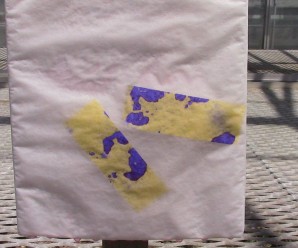
    For example, this short video was filmed in 2015 to demonstrate how a sticker surfactant reduces runoff and how a penetrant surfactant can help a product pass through a waxy plant surface. This video was filmed and edited by former OMAFA summer student, Victoria Radauskas.

    Generally, pesticides already come preformulated with the requisite inerts, which include the utility modifier and activator adjuvants that ensure ease of use and optimal product performance. But sometimes the pesticide label requires the operator to add a particular name brand or category of adjuvant. In this case, the pesticide does not include the adjuvant because it might negatively impact product stability, increase bulk and/or increase expense.

    Canada is seeing an increase in the number of adjuvants for purchase (particularly utility modifiers). Claims of improved performance make it tempting to reflexively and proactively throw them in the mix. The grower is free to use any adjuvant provided it is registered for use on the crop and in combination with the pesticide being applied. You can learn more about the regulatory realities in our tank mix article.

    We suggest that adding any adjuvant is an optional last step in optimizing a sprayer’s performance. Dialing in all other aspects tend to reap the greatest rewards. Here are a few general guidelines when using surfactants in horticultural crops:

    • Do not use penetrant surfactants (including oils) with copper, sulphur or captan fungicides.
    • Do not use penetrant surfactants with contact or surface pesticides.
    • Stickers may impede the movement of systemic products.
    • Stickers may prevent redistribution to newly emerging leaves early in the growing season (but they may be desirable during wet springs).
    • Deposition utility modifiers may negatively affect canopy penetration when employing multi row or alternate row traffic patterns.
    • Spreaders are more likely to incur runoff so adjust volumes accordingly.

    Additional Resources

    The following video presentation was recorded for a 2021 adjuvant conference in Argentina. It’s a primer to introduce what adjuvants are and why we might consider using them. You’ll note that I speak slowly during the presentation – that’s because it was being translated and I wanted to make that process as easy as possible. Also, I think I mistakenly said captan was an insecticide – in fact it’s a fungicide. Oops.

    And here’s a 2022 interview from Real Agriculture’s “The Agronomists” featuring Tom Wolf of Agrimetrix, and Greg Dahl of Winfield United. For the adjuvant-related part of the conversation, you can pan ahead to the six-minute mark.

    And here’s a 2025 interview from Real Agriculture’s “The Agronomists” featuring Jason Deveau and and Austin Anderson of Helena.